

blog

From “Pay and Chase” to “Detect and Prevent”: Why Identity is Healthcare Infrastructure

November 11, 2026

Fraud prevention can't start after money moves. It has to begin much earlier, with confidence that the person behind an enrollment, login, claim, account-recovery request, or provider interaction is who they claim to be.

‍

That was a central theme of a recent Federal News Network discussion on fraud, waste, and abuse prevention, featuring leaders from the Centers for Medicare & Medicaid Services, GDIT, and CLEAR. The conversation explored a broader change with implications far beyond federal programs: preventing losses before they occur instead of recovering them after the fact.

‍

For healthcare organizations, the lesson is simple: security starts with identity, and it can no longer be treated as a one-time checkpoint or siloed IT function.


Prevention Starts Before the Payment


At CMS, that shift is taking shape through a “detect and prevent” approach: using data and analytics to intervene earlier in the payment lifecycle rather than relying primarily on “pay and chase.”

‍

According to Kim Brandt, CMS deputy administrator and chief operating officer, CMS reported $41.9 billion in total recoveries and cost avoidance in fiscal year 2025, a 59% increase over the previous year. Of that total, 68%—roughly $28.5 billion—came from cost avoidance: stopping dollars before they went out the door.

‍

Healthcare organizations face the same challenge: spotting risk before it becomes a loss. Connecting patient portals, provider directories, and other systems can make access and coordination easier, but every connection also creates another place where a compromised identity could be used to gain access.


Data Matters When it Drives Action


During the discussion, Dave Merrill, Vice President and General Manager for CMS programs at GDIT, described how artificial intelligence and machine learning are helping CMS move from analysis to intervention faster than traditional methods could. Models that once took weeks or months to develop and tune can now be adapted in days or even minutes, helping investigators focus on the highest-value cases and emerging hotspots.

‍

And yet, speed doesn't replace judgment. Data and AI can strengthen the signal, but they don't replace agency accountability, human investigation, or program rules. The goal isn't to automate every decision. It’s to help the right people act more quickly and with greater confidence.

‍

That distinction matters in healthcare, where blocking a legitimate patient, provider, or caregiver can create its own operational risk. Effective security has to protect critical systems while preserving access to care and services.


A Document is Not an Identity


No single credential can establish trust. A document, device, or password may appear valid while the person using it isn’t the rightful identity holder.

‍

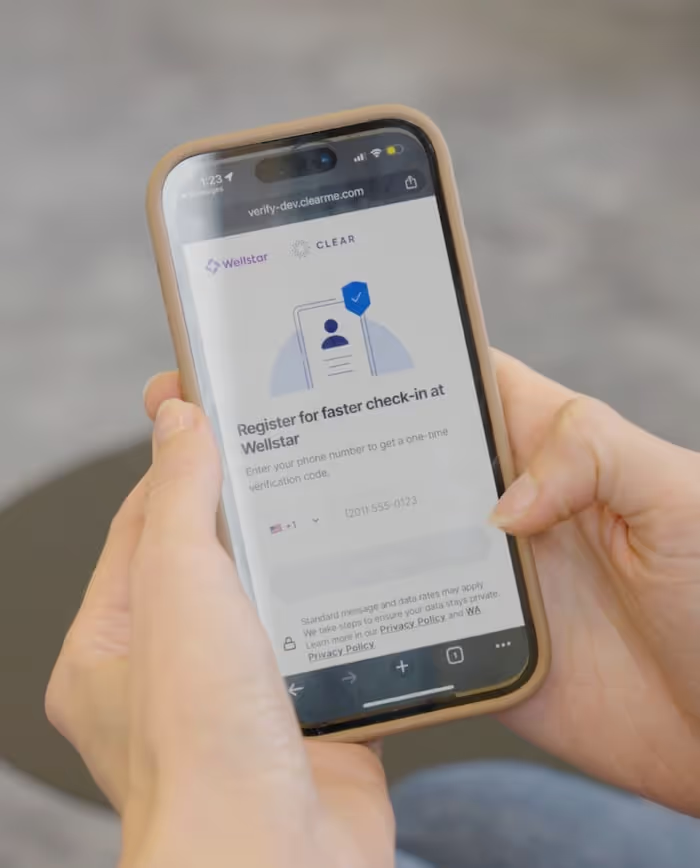
David Bardan, CLEAR’s SVP, GM & Head of Healthcare, explained that CLEAR1 takes a multi-layered approach to identity assurance. Biometric verification, document authenticity, source validation, device signals, and other contextual information can work together to build a more complete picture of the person behind an interaction.

‍

For organizations, that means applying the right level of assurance at the moments that matter most: creating an account, recovering access, enrolling in a program, scheduling an appointment, accessing sensitive information, or authorizing a payment. The goal isn’t more friction—it’s stronger identity assurance.


Identity Has to Travel


Healthcare is a connected ecosystem, and patients move among hospitals, health plans, pharmacies, federal programs, and public health agencies. Providers, administrators, and caregivers navigate the same fragmented landscape, often across systems that were never designed to share a common identity layer.

‍

When trusted identity doesn’t carry from one interaction to the next, friction grows and gaps open. Patients and providers may have to repeatedly prove who they are, making access more cumbersome without necessarily making it more secure.

‍

Reusable identity can strengthen protection across touchpoints while making legitimate journeys simpler over time. CMS’s work with CLEAR offers one example, applying stronger identity controls to Medicare beneficiaries and building a more reliable source of truth for the people who use its programs, including through its national provider directory.

‍

The larger opportunity is to make trusted identity part of the infrastructure connecting federal programs, health systems, and the people they serve, strengthening protection without adding unnecessary friction.


Build Security Around the Moments That Matter


For healthcare leaders, the path forward isn’t more verification everywhere. It’s treating identity as measurable infrastructure, strengthening assurance where risk is highest and failure would have the greatest impact.

‍

That means:

  • Starting with high-risk access points, such as account recovery, privileged access, sensitive records, and payment-related workflows.
  • Layering signals behind the scenes so stronger assurance doesn't create unnecessary friction for legitimate users.
  • Measuring performance across security, operations, and experience—not just verification completion.
  • Establishing clear accountability. CLEAR can provide an identity signal; the agency or healthcare organization remains accountable for its program, access, payment, and investigative decisions.

‍

Privacy and consent belong in that foundation, too. Users should understand what’s being requested and explicitly consent before each verification. CLEAR handles the sensitive part of identity verification—biometrics—so organizations don’t have to, while sharing only the information the user has consented to provide and the organization has requested.


The Next Phase of Healthcare Security Starts With Identity


Data analytics can help agencies see patterns sooner, and AI can help defenders adapt faster. But both depend on a stronger foundation: knowing who is behind each interaction and giving decision-makers the context to act.

‍

When identity is designed this way, healthcare organizations don’t have to choose between stronger security and a better experience. A multi-layered, reusable approach to identity assurance can protect critical systems, reduce unnecessary friction, and keep legitimate patients, providers, and caregivers moving.

‍

Watch the full webinar discussion.

Maximize security, minimize friction with CLEAR

Reach out to uncover what problems you can solve when you solve for identity.

By submitting my personal data, I consent to CLEAR collecting, processing, and storing my information in accordance with the CLEAR Privacy Notice.
blog

From “Pay and Chase” to “Detect and Prevent”: Why Identity is Healthcare Infrastructure

November 11, 2026

Fraud prevention can't start after money moves. It has to begin much earlier, with confidence that the person behind an enrollment, login, claim, account-recovery request, or provider interaction is who they claim to be.

‍

That was a central theme of a recent Federal News Network discussion on fraud, waste, and abuse prevention, featuring leaders from the Centers for Medicare & Medicaid Services, GDIT, and CLEAR. The conversation explored a broader change with implications far beyond federal programs: preventing losses before they occur instead of recovering them after the fact.

‍

For healthcare organizations, the lesson is simple: security starts with identity, and it can no longer be treated as a one-time checkpoint or siloed IT function.


Prevention Starts Before the Payment


At CMS, that shift is taking shape through a “detect and prevent” approach: using data and analytics to intervene earlier in the payment lifecycle rather than relying primarily on “pay and chase.”

‍

According to Kim Brandt, CMS deputy administrator and chief operating officer, CMS reported $41.9 billion in total recoveries and cost avoidance in fiscal year 2025, a 59% increase over the previous year. Of that total, 68%—roughly $28.5 billion—came from cost avoidance: stopping dollars before they went out the door.

‍

Healthcare organizations face the same challenge: spotting risk before it becomes a loss. Connecting patient portals, provider directories, and other systems can make access and coordination easier, but every connection also creates another place where a compromised identity could be used to gain access.


Data Matters When it Drives Action


During the discussion, Dave Merrill, Vice President and General Manager for CMS programs at GDIT, described how artificial intelligence and machine learning are helping CMS move from analysis to intervention faster than traditional methods could. Models that once took weeks or months to develop and tune can now be adapted in days or even minutes, helping investigators focus on the highest-value cases and emerging hotspots.

‍

And yet, speed doesn't replace judgment. Data and AI can strengthen the signal, but they don't replace agency accountability, human investigation, or program rules. The goal isn't to automate every decision. It’s to help the right people act more quickly and with greater confidence.

‍

That distinction matters in healthcare, where blocking a legitimate patient, provider, or caregiver can create its own operational risk. Effective security has to protect critical systems while preserving access to care and services.


A Document is Not an Identity


No single credential can establish trust. A document, device, or password may appear valid while the person using it isn’t the rightful identity holder.

‍

David Bardan, CLEAR’s SVP, GM & Head of Healthcare, explained that CLEAR1 takes a multi-layered approach to identity assurance. Biometric verification, document authenticity, source validation, device signals, and other contextual information can work together to build a more complete picture of the person behind an interaction.

‍

For organizations, that means applying the right level of assurance at the moments that matter most: creating an account, recovering access, enrolling in a program, scheduling an appointment, accessing sensitive information, or authorizing a payment. The goal isn’t more friction—it’s stronger identity assurance.


Identity Has to Travel


Healthcare is a connected ecosystem, and patients move among hospitals, health plans, pharmacies, federal programs, and public health agencies. Providers, administrators, and caregivers navigate the same fragmented landscape, often across systems that were never designed to share a common identity layer.

‍

When trusted identity doesn’t carry from one interaction to the next, friction grows and gaps open. Patients and providers may have to repeatedly prove who they are, making access more cumbersome without necessarily making it more secure.

‍

Reusable identity can strengthen protection across touchpoints while making legitimate journeys simpler over time. CMS’s work with CLEAR offers one example, applying stronger identity controls to Medicare beneficiaries and building a more reliable source of truth for the people who use its programs, including through its national provider directory.

‍

The larger opportunity is to make trusted identity part of the infrastructure connecting federal programs, health systems, and the people they serve, strengthening protection without adding unnecessary friction.


Build Security Around the Moments That Matter


For healthcare leaders, the path forward isn’t more verification everywhere. It’s treating identity as measurable infrastructure, strengthening assurance where risk is highest and failure would have the greatest impact.

‍

That means:

  • Starting with high-risk access points, such as account recovery, privileged access, sensitive records, and payment-related workflows.
  • Layering signals behind the scenes so stronger assurance doesn't create unnecessary friction for legitimate users.
  • Measuring performance across security, operations, and experience—not just verification completion.
  • Establishing clear accountability. CLEAR can provide an identity signal; the agency or healthcare organization remains accountable for its program, access, payment, and investigative decisions.

‍

Privacy and consent belong in that foundation, too. Users should understand what’s being requested and explicitly consent before each verification. CLEAR handles the sensitive part of identity verification—biometrics—so organizations don’t have to, while sharing only the information the user has consented to provide and the organization has requested.


The Next Phase of Healthcare Security Starts With Identity


Data analytics can help agencies see patterns sooner, and AI can help defenders adapt faster. But both depend on a stronger foundation: knowing who is behind each interaction and giving decision-makers the context to act.

‍

When identity is designed this way, healthcare organizations don’t have to choose between stronger security and a better experience. A multi-layered, reusable approach to identity assurance can protect critical systems, reduce unnecessary friction, and keep legitimate patients, providers, and caregivers moving.

‍

Watch the full webinar discussion.

Fraud prevention can't start after money moves. It has to begin much earlier, with confidence that the person behind an enrollment, login, claim, account-recovery request, or provider interaction is who they claim to be.

‍

That was a central theme of a recent Federal News Network discussion on fraud, waste, and abuse prevention, featuring leaders from the Centers for Medicare & Medicaid Services, GDIT, and CLEAR. The conversation explored a broader change with implications far beyond federal programs: preventing losses before they occur instead of recovering them after the fact.

‍

For healthcare organizations, the lesson is simple: security starts with identity, and it can no longer be treated as a one-time checkpoint or siloed IT function.


Prevention Starts Before the Payment


At CMS, that shift is taking shape through a “detect and prevent” approach: using data and analytics to intervene earlier in the payment lifecycle rather than relying primarily on “pay and chase.”

‍

According to Kim Brandt, CMS deputy administrator and chief operating officer, CMS reported $41.9 billion in total recoveries and cost avoidance in fiscal year 2025, a 59% increase over the previous year. Of that total, 68%—roughly $28.5 billion—came from cost avoidance: stopping dollars before they went out the door.

‍

Healthcare organizations face the same challenge: spotting risk before it becomes a loss. Connecting patient portals, provider directories, and other systems can make access and coordination easier, but every connection also creates another place where a compromised identity could be used to gain access.


Data Matters When it Drives Action


During the discussion, Dave Merrill, Vice President and General Manager for CMS programs at GDIT, described how artificial intelligence and machine learning are helping CMS move from analysis to intervention faster than traditional methods could. Models that once took weeks or months to develop and tune can now be adapted in days or even minutes, helping investigators focus on the highest-value cases and emerging hotspots.

‍

And yet, speed doesn't replace judgment. Data and AI can strengthen the signal, but they don't replace agency accountability, human investigation, or program rules. The goal isn't to automate every decision. It’s to help the right people act more quickly and with greater confidence.

‍

That distinction matters in healthcare, where blocking a legitimate patient, provider, or caregiver can create its own operational risk. Effective security has to protect critical systems while preserving access to care and services.


A Document is Not an Identity


No single credential can establish trust. A document, device, or password may appear valid while the person using it isn’t the rightful identity holder.

‍

David Bardan, CLEAR’s SVP, GM & Head of Healthcare, explained that CLEAR1 takes a multi-layered approach to identity assurance. Biometric verification, document authenticity, source validation, device signals, and other contextual information can work together to build a more complete picture of the person behind an interaction.

‍

For organizations, that means applying the right level of assurance at the moments that matter most: creating an account, recovering access, enrolling in a program, scheduling an appointment, accessing sensitive information, or authorizing a payment. The goal isn’t more friction—it’s stronger identity assurance.


Identity Has to Travel


Healthcare is a connected ecosystem, and patients move among hospitals, health plans, pharmacies, federal programs, and public health agencies. Providers, administrators, and caregivers navigate the same fragmented landscape, often across systems that were never designed to share a common identity layer.

‍

When trusted identity doesn’t carry from one interaction to the next, friction grows and gaps open. Patients and providers may have to repeatedly prove who they are, making access more cumbersome without necessarily making it more secure.

‍

Reusable identity can strengthen protection across touchpoints while making legitimate journeys simpler over time. CMS’s work with CLEAR offers one example, applying stronger identity controls to Medicare beneficiaries and building a more reliable source of truth for the people who use its programs, including through its national provider directory.

‍

The larger opportunity is to make trusted identity part of the infrastructure connecting federal programs, health systems, and the people they serve, strengthening protection without adding unnecessary friction.


Build Security Around the Moments That Matter


For healthcare leaders, the path forward isn’t more verification everywhere. It’s treating identity as measurable infrastructure, strengthening assurance where risk is highest and failure would have the greatest impact.

‍

That means:

  • Starting with high-risk access points, such as account recovery, privileged access, sensitive records, and payment-related workflows.
  • Layering signals behind the scenes so stronger assurance doesn't create unnecessary friction for legitimate users.
  • Measuring performance across security, operations, and experience—not just verification completion.
  • Establishing clear accountability. CLEAR can provide an identity signal; the agency or healthcare organization remains accountable for its program, access, payment, and investigative decisions.

‍

Privacy and consent belong in that foundation, too. Users should understand what’s being requested and explicitly consent before each verification. CLEAR handles the sensitive part of identity verification—biometrics—so organizations don’t have to, while sharing only the information the user has consented to provide and the organization has requested.


The Next Phase of Healthcare Security Starts With Identity


Data analytics can help agencies see patterns sooner, and AI can help defenders adapt faster. But both depend on a stronger foundation: knowing who is behind each interaction and giving decision-makers the context to act.

‍

When identity is designed this way, healthcare organizations don’t have to choose between stronger security and a better experience. A multi-layered, reusable approach to identity assurance can protect critical systems, reduce unnecessary friction, and keep legitimate patients, providers, and caregivers moving.

‍

Watch the full webinar discussion.

More product updates

VIEW ALL RELEASE NOTES
No items found.
blog

From “Pay and Chase” to “Detect and Prevent”: Why Identity is Healthcare Infrastructure

November 11, 2026

Fraud prevention can't start after money moves. It has to begin much earlier, with confidence that the person behind an enrollment, login, claim, account-recovery request, or provider interaction is who they claim to be.

‍

That was a central theme of a recent Federal News Network discussion on fraud, waste, and abuse prevention, featuring leaders from the Centers for Medicare & Medicaid Services, GDIT, and CLEAR. The conversation explored a broader change with implications far beyond federal programs: preventing losses before they occur instead of recovering them after the fact.

‍

For healthcare organizations, the lesson is simple: security starts with identity, and it can no longer be treated as a one-time checkpoint or siloed IT function.


Prevention Starts Before the Payment


At CMS, that shift is taking shape through a “detect and prevent” approach: using data and analytics to intervene earlier in the payment lifecycle rather than relying primarily on “pay and chase.”

‍

According to Kim Brandt, CMS deputy administrator and chief operating officer, CMS reported $41.9 billion in total recoveries and cost avoidance in fiscal year 2025, a 59% increase over the previous year. Of that total, 68%—roughly $28.5 billion—came from cost avoidance: stopping dollars before they went out the door.

‍

Healthcare organizations face the same challenge: spotting risk before it becomes a loss. Connecting patient portals, provider directories, and other systems can make access and coordination easier, but every connection also creates another place where a compromised identity could be used to gain access.


Data Matters When it Drives Action


During the discussion, Dave Merrill, Vice President and General Manager for CMS programs at GDIT, described how artificial intelligence and machine learning are helping CMS move from analysis to intervention faster than traditional methods could. Models that once took weeks or months to develop and tune can now be adapted in days or even minutes, helping investigators focus on the highest-value cases and emerging hotspots.

‍

And yet, speed doesn't replace judgment. Data and AI can strengthen the signal, but they don't replace agency accountability, human investigation, or program rules. The goal isn't to automate every decision. It’s to help the right people act more quickly and with greater confidence.

‍

That distinction matters in healthcare, where blocking a legitimate patient, provider, or caregiver can create its own operational risk. Effective security has to protect critical systems while preserving access to care and services.


A Document is Not an Identity


No single credential can establish trust. A document, device, or password may appear valid while the person using it isn’t the rightful identity holder.

‍

David Bardan, CLEAR’s SVP, GM & Head of Healthcare, explained that CLEAR1 takes a multi-layered approach to identity assurance. Biometric verification, document authenticity, source validation, device signals, and other contextual information can work together to build a more complete picture of the person behind an interaction.

‍

For organizations, that means applying the right level of assurance at the moments that matter most: creating an account, recovering access, enrolling in a program, scheduling an appointment, accessing sensitive information, or authorizing a payment. The goal isn’t more friction—it’s stronger identity assurance.


Identity Has to Travel


Healthcare is a connected ecosystem, and patients move among hospitals, health plans, pharmacies, federal programs, and public health agencies. Providers, administrators, and caregivers navigate the same fragmented landscape, often across systems that were never designed to share a common identity layer.

‍

When trusted identity doesn’t carry from one interaction to the next, friction grows and gaps open. Patients and providers may have to repeatedly prove who they are, making access more cumbersome without necessarily making it more secure.

‍

Reusable identity can strengthen protection across touchpoints while making legitimate journeys simpler over time. CMS’s work with CLEAR offers one example, applying stronger identity controls to Medicare beneficiaries and building a more reliable source of truth for the people who use its programs, including through its national provider directory.

‍

The larger opportunity is to make trusted identity part of the infrastructure connecting federal programs, health systems, and the people they serve, strengthening protection without adding unnecessary friction.


Build Security Around the Moments That Matter


For healthcare leaders, the path forward isn’t more verification everywhere. It’s treating identity as measurable infrastructure, strengthening assurance where risk is highest and failure would have the greatest impact.

‍

That means:

  • Starting with high-risk access points, such as account recovery, privileged access, sensitive records, and payment-related workflows.
  • Layering signals behind the scenes so stronger assurance doesn't create unnecessary friction for legitimate users.
  • Measuring performance across security, operations, and experience—not just verification completion.
  • Establishing clear accountability. CLEAR can provide an identity signal; the agency or healthcare organization remains accountable for its program, access, payment, and investigative decisions.

‍

Privacy and consent belong in that foundation, too. Users should understand what’s being requested and explicitly consent before each verification. CLEAR handles the sensitive part of identity verification—biometrics—so organizations don’t have to, while sharing only the information the user has consented to provide and the organization has requested.


The Next Phase of Healthcare Security Starts With Identity


Data analytics can help agencies see patterns sooner, and AI can help defenders adapt faster. But both depend on a stronger foundation: knowing who is behind each interaction and giving decision-makers the context to act.

‍

When identity is designed this way, healthcare organizations don’t have to choose between stronger security and a better experience. A multi-layered, reusable approach to identity assurance can protect critical systems, reduce unnecessary friction, and keep legitimate patients, providers, and caregivers moving.

‍

Watch the full webinar discussion.

Fraud prevention can't start after money moves. It has to begin much earlier, with confidence that the person behind an enrollment, login, claim, account-recovery request, or provider interaction is who they claim to be.

‍

That was a central theme of a recent Federal News Network discussion on fraud, waste, and abuse prevention, featuring leaders from the Centers for Medicare & Medicaid Services, GDIT, and CLEAR. The conversation explored a broader change with implications far beyond federal programs: preventing losses before they occur instead of recovering them after the fact.

‍

For healthcare organizations, the lesson is simple: security starts with identity, and it can no longer be treated as a one-time checkpoint or siloed IT function.


Prevention Starts Before the Payment


At CMS, that shift is taking shape through a “detect and prevent” approach: using data and analytics to intervene earlier in the payment lifecycle rather than relying primarily on “pay and chase.”

‍

According to Kim Brandt, CMS deputy administrator and chief operating officer, CMS reported $41.9 billion in total recoveries and cost avoidance in fiscal year 2025, a 59% increase over the previous year. Of that total, 68%—roughly $28.5 billion—came from cost avoidance: stopping dollars before they went out the door.

‍

Healthcare organizations face the same challenge: spotting risk before it becomes a loss. Connecting patient portals, provider directories, and other systems can make access and coordination easier, but every connection also creates another place where a compromised identity could be used to gain access.


Data Matters When it Drives Action


During the discussion, Dave Merrill, Vice President and General Manager for CMS programs at GDIT, described how artificial intelligence and machine learning are helping CMS move from analysis to intervention faster than traditional methods could. Models that once took weeks or months to develop and tune can now be adapted in days or even minutes, helping investigators focus on the highest-value cases and emerging hotspots.

‍

And yet, speed doesn't replace judgment. Data and AI can strengthen the signal, but they don't replace agency accountability, human investigation, or program rules. The goal isn't to automate every decision. It’s to help the right people act more quickly and with greater confidence.

‍

That distinction matters in healthcare, where blocking a legitimate patient, provider, or caregiver can create its own operational risk. Effective security has to protect critical systems while preserving access to care and services.


A Document is Not an Identity


No single credential can establish trust. A document, device, or password may appear valid while the person using it isn’t the rightful identity holder.

‍

David Bardan, CLEAR’s SVP, GM & Head of Healthcare, explained that CLEAR1 takes a multi-layered approach to identity assurance. Biometric verification, document authenticity, source validation, device signals, and other contextual information can work together to build a more complete picture of the person behind an interaction.

‍

For organizations, that means applying the right level of assurance at the moments that matter most: creating an account, recovering access, enrolling in a program, scheduling an appointment, accessing sensitive information, or authorizing a payment. The goal isn’t more friction—it’s stronger identity assurance.


Identity Has to Travel


Healthcare is a connected ecosystem, and patients move among hospitals, health plans, pharmacies, federal programs, and public health agencies. Providers, administrators, and caregivers navigate the same fragmented landscape, often across systems that were never designed to share a common identity layer.

‍

When trusted identity doesn’t carry from one interaction to the next, friction grows and gaps open. Patients and providers may have to repeatedly prove who they are, making access more cumbersome without necessarily making it more secure.

‍

Reusable identity can strengthen protection across touchpoints while making legitimate journeys simpler over time. CMS’s work with CLEAR offers one example, applying stronger identity controls to Medicare beneficiaries and building a more reliable source of truth for the people who use its programs, including through its national provider directory.

‍

The larger opportunity is to make trusted identity part of the infrastructure connecting federal programs, health systems, and the people they serve, strengthening protection without adding unnecessary friction.


Build Security Around the Moments That Matter


For healthcare leaders, the path forward isn’t more verification everywhere. It’s treating identity as measurable infrastructure, strengthening assurance where risk is highest and failure would have the greatest impact.

‍

That means:

  • Starting with high-risk access points, such as account recovery, privileged access, sensitive records, and payment-related workflows.
  • Layering signals behind the scenes so stronger assurance doesn't create unnecessary friction for legitimate users.
  • Measuring performance across security, operations, and experience—not just verification completion.
  • Establishing clear accountability. CLEAR can provide an identity signal; the agency or healthcare organization remains accountable for its program, access, payment, and investigative decisions.

‍

Privacy and consent belong in that foundation, too. Users should understand what’s being requested and explicitly consent before each verification. CLEAR handles the sensitive part of identity verification—biometrics—so organizations don’t have to, while sharing only the information the user has consented to provide and the organization has requested.


The Next Phase of Healthcare Security Starts With Identity


Data analytics can help agencies see patterns sooner, and AI can help defenders adapt faster. But both depend on a stronger foundation: knowing who is behind each interaction and giving decision-makers the context to act.

‍

When identity is designed this way, healthcare organizations don’t have to choose between stronger security and a better experience. A multi-layered, reusable approach to identity assurance can protect critical systems, reduce unnecessary friction, and keep legitimate patients, providers, and caregivers moving.

‍

Watch the full webinar discussion.

PARTNER SPOTLIGHT
INDUSTRY
Healthcare
COMPANY SIZE
INDUSTRY
Healthcare
COMPANY SIZE

Maximize security, minimize friction with CLEAR

Reach out to uncover what problems you can solve when you solve for identity.

By submitting my personal data, I consent to CLEAR collecting, processing, and storing my information in accordance with the CLEAR Privacy Notice.
blog
Person looking at CLEAR Multi-Layered Identity Screen
By submitting my personal data, I consent to CLEAR collecting, processing, and storing my information in accordance with the CLEAR Privacy Notice.
Gartner®, Deepfake Identity Threats: Mitigate Risk in Identity Verification and Face Biometrics, Akif Khan, Nayara Sangiorgio, James Hoover, 11 May 2026

‍Gartner® is a trademark of Gartner, Inc. and/or its affiliates.

blog
By submitting my personal data, I consent to CLEAR collecting, processing, and storing my information in accordance with the CLEAR Privacy Notice.
Thank you! You are being redirected

Thank you! View the webinar below.

Oops! Something went wrong while submitting the form.
blog

From “Pay and Chase” to “Detect and Prevent”: Why Identity is Healthcare Infrastructure

November 11, 2026

More webinars

VIEW ALL WEBINARS
No items found.