







Gartner®, Deepfake Identity Threats: Mitigate Risk in Identity Verification and Face Biometrics, Akif Khan, Nayara Sangiorgio, James Hoover, 11 May 2026
Gartner® is a trademark of Gartner, Inc. and/or its affiliates.


Share


Share
Introducing Vertix: The New Standard for Trusted Identity
Identity fraud doesn't look the way it used to. Attackers are more sophisticated, document fraud is cheaper than ever before, and generative AI has made it easy to create convincing synthetic identities at scale. As a result, verifying identity with a single signal—even a government-issued document—is no longer enough.
At CLEAR1, we've long believed that true identity can't be established through a single signal alone. That's why we're introducing Vertix: a standardized foundation for identity assurance across the CLEAR network that ensures every identity meets a consistent level of trust.
A Document ≠ Identity
For years, document verification has been a foundational component of digital identity. But in today’s threat environment, it can no longer stand on its own.
Authentic U.S. driver’s licenses can be purchased on dark web marketplaces for thousands of dollars, while high-quality digital replicas can cost as little as $10. At the same time, synthetic identities—stitched together from real and fabricated information—are becoming increasingly difficult to detect through single-signal verification.
Modern identity assurance requires multiple signals working together to answer three critical questions:
- Is the person real and present?
- Is the document authentic?
- Does the identity exist beyond the document itself?
Organizations that rely on only one of these signals leave gaps that sophisticated fraudsters can exploit. Closing those gaps requires a consistent approach to identity assurance—one that validates not just the document, but the person and identity behind it.
How Vertix Defines Trusted Identity
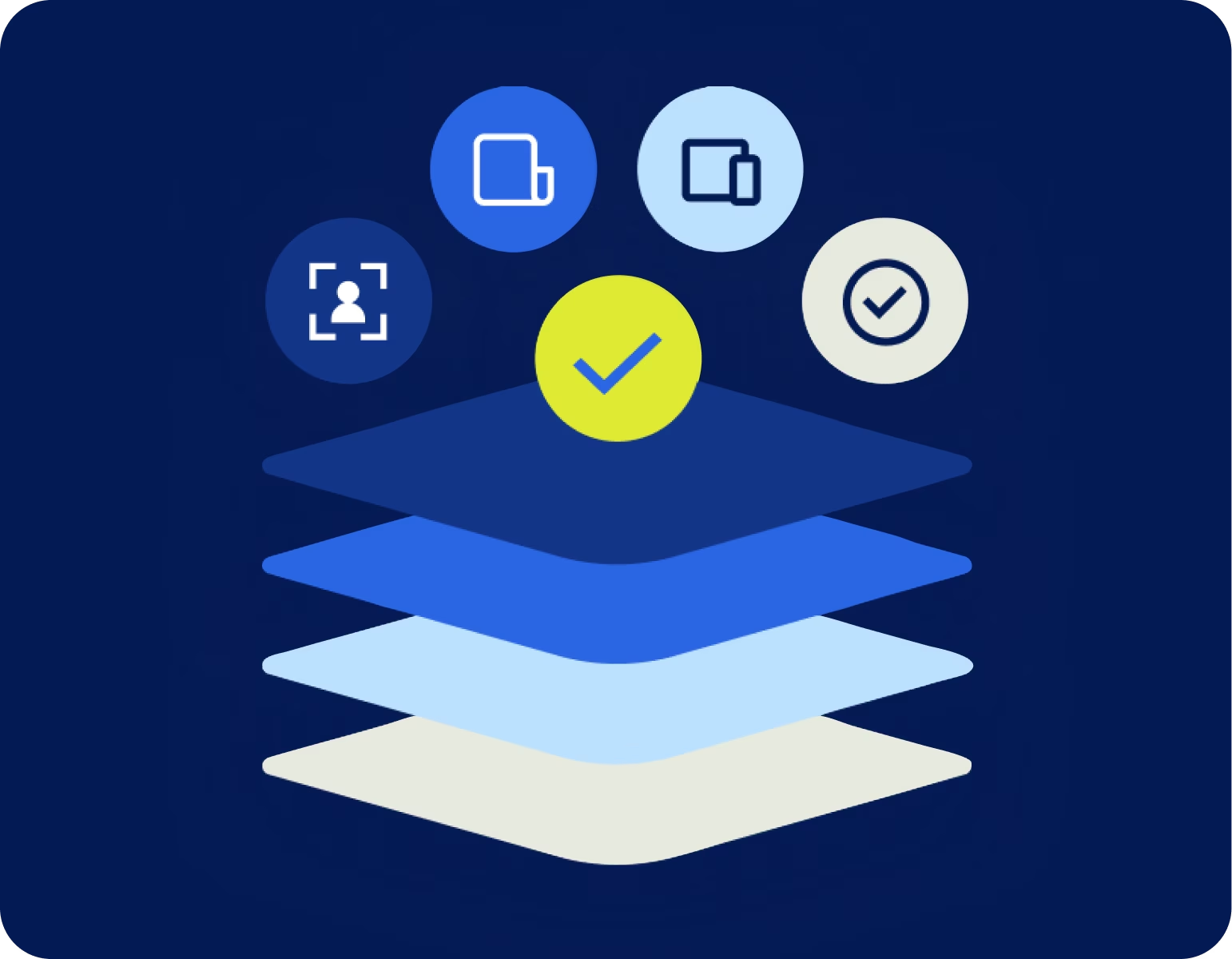
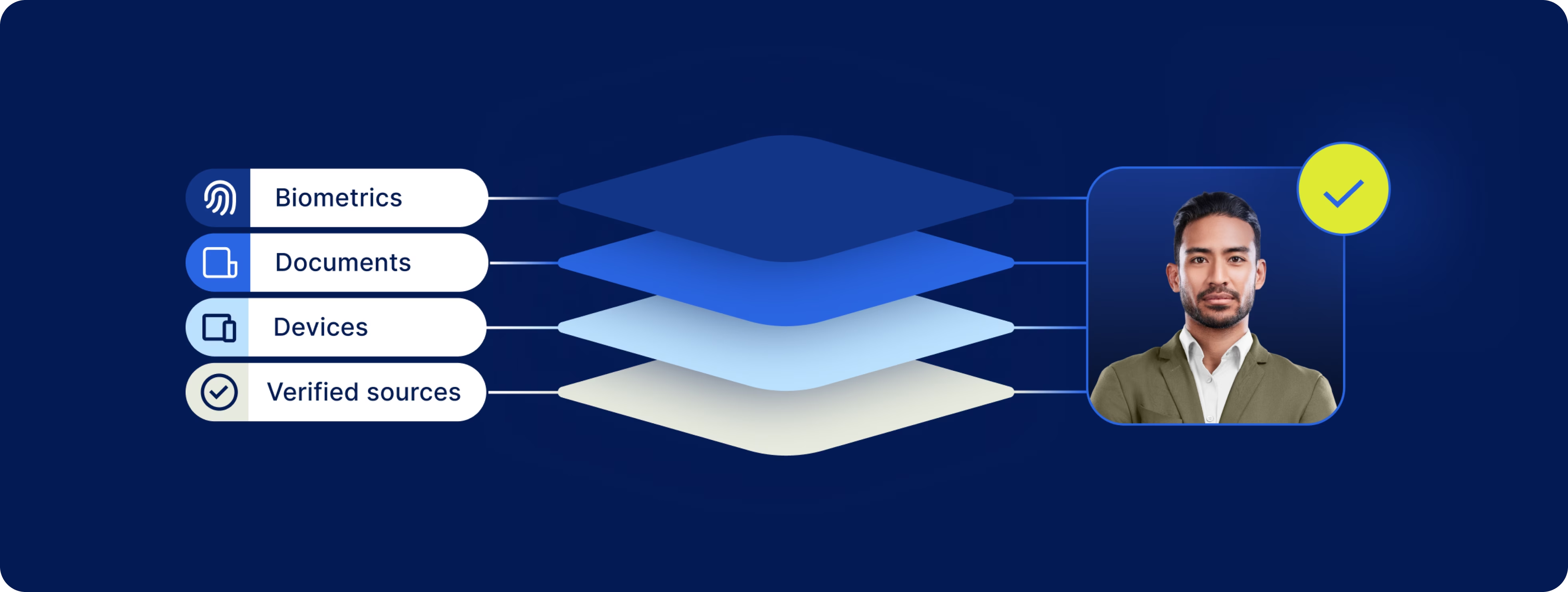
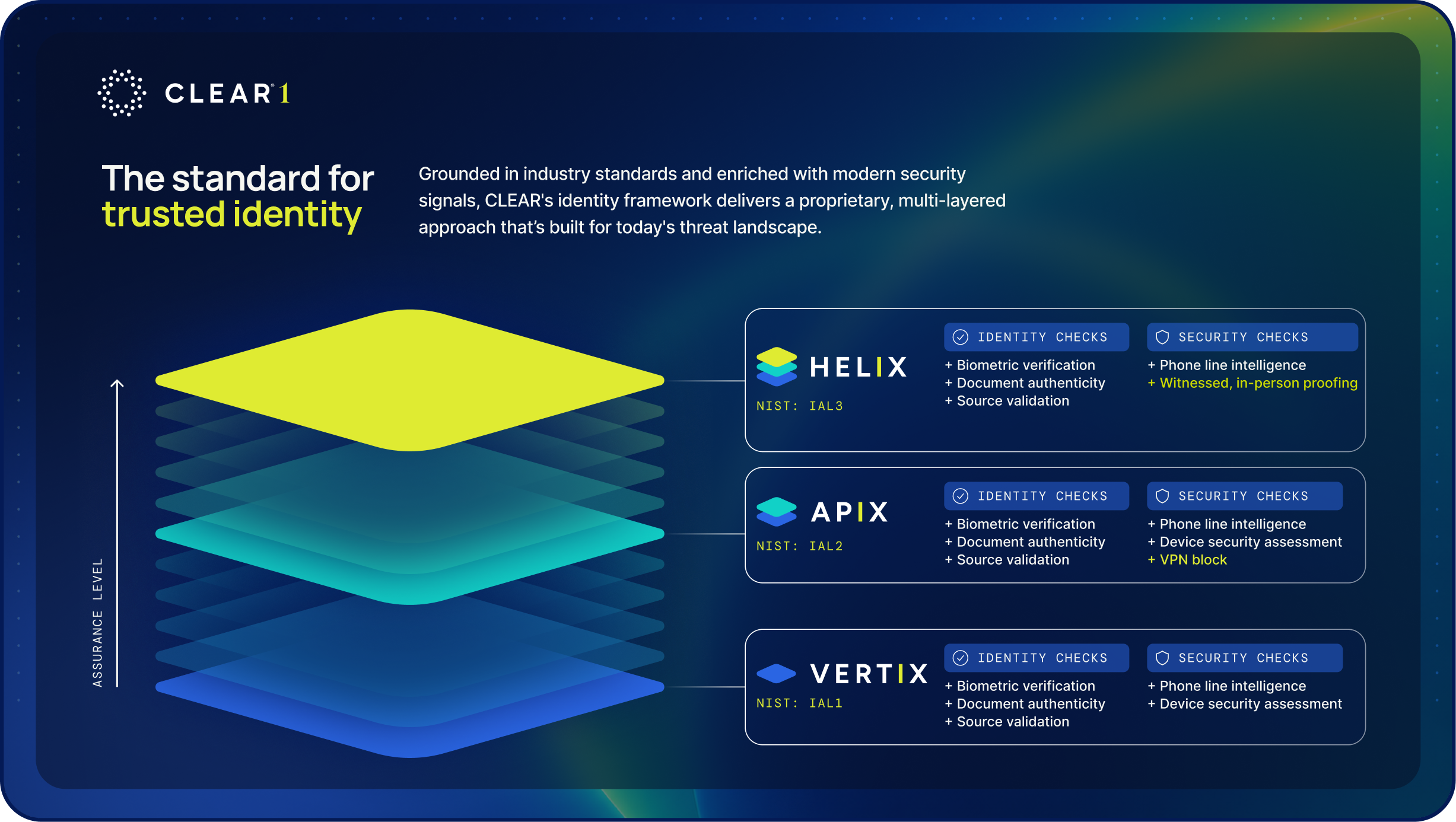
Vertix defines the baseline for trusted identity within CLEAR1, with these three layers at its core:
- Biometric verification: Confirms that a real person is present and matches the identity being claimed, using PAD Level 2-certified liveness detection and facial matching.
- Document authenticity: Scans government-issued ID to detect non-original documents and validates against fonts, marks, holograms, and other tamper indicators.
- Source validation: Corroborates identity details against authoritative and credible data sources to help ensure that the information is legitimate, consistent, and tied to the real individual.
While Vertix aligns with NIST IAL1 requirements, today's threat landscape demands more than compliance alone. That's why Vertix incorporates additional security signals that help detect potentially suspicious activity during verification:
- Phone line intelligence: prevents use of landlines and VoIP numbers, helping ensure the phone signal is tied to a real, traceable identity rather than an easily manipulated input
- Device security assessment: detects signs of tampering or emulation, helping confirm the verification is coming from a legitimate, uncompromised device
For organizations with higher-risk use cases, additional checks—including Email Security Assessment, Regulatory Screening, and SSN Validation—can be layered on to further strengthen security.
Stronger Security, Without Added Friction
Stronger identity assurance often comes with a tradeoff: more friction for legitimate users. Vertix is designed to avoid that tradeoff.
From the end-user's perspective, the verification flow remains unchanged. Behind the scenes, however, additional signals strengthen verification outcomes without introducing new steps or complexity.
For organizations, that means stronger protection against synthetic and stolen identities, greater confidence in who they're onboarding or transacting with, and alignment with emerging identity assurance best practices.
Built on a Broader Assurance Framework
Vertix serves as the foundation of assurance within CLEAR1. For many organizations, it provides the right balance of security and usability. For those with stricter risk or compliance requirements, CLEAR offers additional assurance levels built on the Vertix foundation:
- Apix builds on Vertix with enhanced controls and an expanded source validation framework designed to meet NIST IAL2 requirements.
- Helix represents the highest level of identity assurance within the CLEAR ecosystem. It incorporates all Vertix and Apix capabilities while adding witnessed, in-person proofing to establish the strongest level of trust and meet NIST IAL3 requirements. Today, Helix is available through CLEAR+.
Making the Standard Easier to Meet
A stronger identity standard only works if it's practical to implement. That's why, alongside Vertix, we're introducing a restructured verification framework that simplifies how identity checks are configured and managed within CLEAR1.
While the underlying verification capabilities remain the same, they're now organized into a simpler framework that improves usability, orchestration, and transparency.
Key improvements include:
- Checks organized into clear, intuitive categories
- Decoupling checks from steps and failure reasons
- More transparent outcome reporting, with detailed metadata on how each check was evaluated
The result is a configuration experience that better reflects how teams think about verification—making it easier to build, manage, and scale.
What’s Next
If you're a CLEAR1 customer, you'll receive guidance from our team on what this means for your organization. The rollout will be phased, with clear timelines and support at every step.
Identity fraud will continue to evolve. Trusted identity must evolve with it.
Vertix reflects CLEAR's belief that establishing trust requires more than a document, a selfie, or any single verification signal. By creating a consistent foundation for identity assurance—and making that foundation easier to implement—we're helping organizations stay ahead of emerging threats while building greater trust in every digital interaction.
Introducing Vertix: The New Standard for Trusted Identity
Identity fraud doesn't look the way it used to. Attackers are more sophisticated, document fraud is cheaper than ever before, and generative AI has made it easy to create convincing synthetic identities at scale. As a result, verifying identity with a single signal—even a government-issued document—is no longer enough.
At CLEAR1, we've long believed that true identity can't be established through a single signal alone. That's why we're introducing Vertix: a standardized foundation for identity assurance across the CLEAR network that ensures every identity meets a consistent level of trust.
A Document ≠ Identity
For years, document verification has been a foundational component of digital identity. But in today’s threat environment, it can no longer stand on its own.
Authentic U.S. driver’s licenses can be purchased on dark web marketplaces for thousands of dollars, while high-quality digital replicas can cost as little as $10. At the same time, synthetic identities—stitched together from real and fabricated information—are becoming increasingly difficult to detect through single-signal verification.
Modern identity assurance requires multiple signals working together to answer three critical questions:
- Is the person real and present?
- Is the document authentic?
- Does the identity exist beyond the document itself?
Organizations that rely on only one of these signals leave gaps that sophisticated fraudsters can exploit. Closing those gaps requires a consistent approach to identity assurance—one that validates not just the document, but the person and identity behind it.
How Vertix Defines Trusted Identity
Vertix defines the baseline for trusted identity within CLEAR1, with these three layers at its core:
- Biometric verification: Confirms that a real person is present and matches the identity being claimed, using PAD Level 2-certified liveness detection and facial matching.
- Document authenticity: Scans government-issued ID to detect non-original documents and validates against fonts, marks, holograms, and other tamper indicators.
- Source validation: Corroborates identity details against authoritative and credible data sources to help ensure that the information is legitimate, consistent, and tied to the real individual.
While Vertix aligns with NIST IAL1 requirements, today's threat landscape demands more than compliance alone. That's why Vertix incorporates additional security signals that help detect potentially suspicious activity during verification:
- Phone line intelligence: prevents use of landlines and VoIP numbers, helping ensure the phone signal is tied to a real, traceable identity rather than an easily manipulated input
- Device security assessment: detects signs of tampering or emulation, helping confirm the verification is coming from a legitimate, uncompromised device
For organizations with higher-risk use cases, additional checks—including Email Security Assessment, Regulatory Screening, and SSN Validation—can be layered on to further strengthen security.
Stronger Security, Without Added Friction
Stronger identity assurance often comes with a tradeoff: more friction for legitimate users. Vertix is designed to avoid that tradeoff.
From the end-user's perspective, the verification flow remains unchanged. Behind the scenes, however, additional signals strengthen verification outcomes without introducing new steps or complexity.
For organizations, that means stronger protection against synthetic and stolen identities, greater confidence in who they're onboarding or transacting with, and alignment with emerging identity assurance best practices.
Built on a Broader Assurance Framework
Vertix serves as the foundation of assurance within CLEAR1. For many organizations, it provides the right balance of security and usability. For those with stricter risk or compliance requirements, CLEAR offers additional assurance levels built on the Vertix foundation:
- Apix builds on Vertix with enhanced controls and an expanded source validation framework designed to meet NIST IAL2 requirements.
- Helix represents the highest level of identity assurance within the CLEAR ecosystem. It incorporates all Vertix and Apix capabilities while adding witnessed, in-person proofing to establish the strongest level of trust and meet NIST IAL3 requirements. Today, Helix is available through CLEAR+.
Making the Standard Easier to Meet
A stronger identity standard only works if it's practical to implement. That's why, alongside Vertix, we're introducing a restructured verification framework that simplifies how identity checks are configured and managed within CLEAR1.
While the underlying verification capabilities remain the same, they're now organized into a simpler framework that improves usability, orchestration, and transparency.
Key improvements include:
- Checks organized into clear, intuitive categories
- Decoupling checks from steps and failure reasons
- More transparent outcome reporting, with detailed metadata on how each check was evaluated
The result is a configuration experience that better reflects how teams think about verification—making it easier to build, manage, and scale.
What’s Next
If you're a CLEAR1 customer, you'll receive guidance from our team on what this means for your organization. The rollout will be phased, with clear timelines and support at every step.
Identity fraud will continue to evolve. Trusted identity must evolve with it.
Vertix reflects CLEAR's belief that establishing trust requires more than a document, a selfie, or any single verification signal. By creating a consistent foundation for identity assurance—and making that foundation easier to implement—we're helping organizations stay ahead of emerging threats while building greater trust in every digital interaction.


