



















From patient check-in to password recovery to EHR access, CLEAR1 enables real-time healthcare identity verification while reducing fraud and strengthening trust.
Built for today’s complex healthcare systems, CLEAR1 goes beyond credentials––verifying the person beyond the device with advanced biometrics, document checks, and authoritative source corroboration. This multi-layered approach enables faster, more secure access for the right individuals while protecting patient information from impersonation and social engineering attacks.
CLEAR1 integrates seamlessly with leading IAM systems and Epic (including MyChart) to support a wide range of clinical and administrative workflows without disrupting existing tech infrastructure. It meets HIPAA, IAL2, and AAL2 requirements, enabling compliant access to health records, clinical systems, and other protected resources.
Unlike legacy verification tools that rely on passwords or devices, CLEAR1 confirms identity at the individual level––protecting health data, reducing data breaches, and enabling secure user access across high-risk touchpoints. And because CLEAR creates a reusable identity, patients and providers can verify with the snap of a selfie anywhere CLEAR is used––unlocking efficiency while elevating patient safety and continuity of care.
Whether you’re seeking to enhance patient identity management or secure provider onboarding, see how CLEAR is modernizing healthcare identity verification by combining security, speed, and simplicity to support safe and connected experiences across healthcare.
Why is healthcare identity verification important?
Healthcare identity verification is essential because identity fraud, cyber threats, and impersonation attacks are on the rise. Accurate verification protocols protect patients and providers by ensuring only authorized individuals can access care, systems, and sensitive data.
How does identity verification from CLEAR1 work?
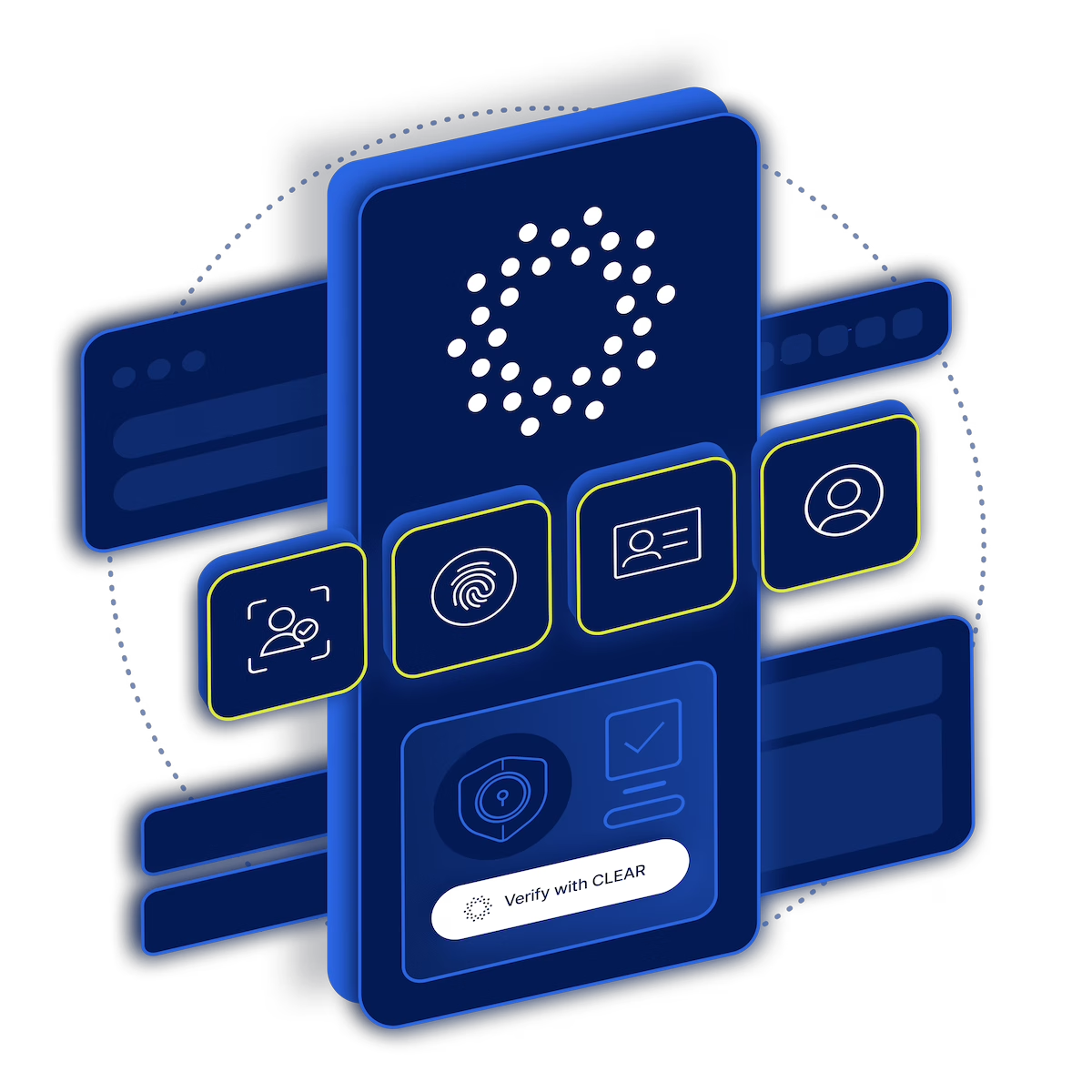
CLEAR1 confirms identity by analyzing hundreds of real-time signals across biometrics, documents, devices, and verified data sources to establish a strong, reusable digital identity. This multi-layered approach ensures each person is who they claim to be across healthcare systems, access points, and workflows.
Why are traditional identity verification methods no longer enough?
Traditional methods that rely on physical ID checks or knowledge-based questions are vulnerable to modern threats like stolen credentials, synthetic identities, and deepfakes. Digital identity verification adds stronger protections that scale across today’s complex healthcare environments.
Can identity verification improve operational efficiency?
Yes. Automated identity verification systems reduce the need for manual reviews, lessen the administrative burden, and help with field desk calls. This empowers healthcare staff to focus on patient care.


