








Gartner®, Deepfake Identity Threats: Mitigate Risk in Identity Verification and Face Biometrics, Akif Khan, Nayara Sangiorgio, James Hoover, 11 May 2026
Gartner® is a trademark of Gartner, Inc. and/or its affiliates.


Share


Share
Across retail, one trend has become increasingly visible: more products are moving behind locked cases. Nearly 70% of retailers report locking more merchandise year over year as shoplifting incidents continue to rise.1 Products once considered too low-value to secure—such as cosmetics, razors, batteries, OTC medications, and detergents—have become common theft targets, and many retailers are now locking entire departments. What used to be an occasional unlock is now a constant task for store teams as more everyday items move behind lock and key.
Protecting inventory is non-negotiable, but the traditional model of waiting for an associate with a key adds friction, frustrates shoppers, pulls staff away from higher-value work, and ultimately costs retailers sales. CLEAR and InVue are partnering to change that. CLEAR1, CLEAR’s secure identity platform, and InVue’s Customer Self-Access technology replaces keys and long waits with a secure, mobile-first experience—making identity the new key.
When Protection Slows Down the Aisle
Locked cases were designed to protect high-value items, but in practice they often slow everyone down: shoppers wait an average of 7.7 minutes for the right associate with the right key, turning moments of high purchase intent into frustration and abandoned baskets, while associates spend valuable time managing keys and escorting shoppers.2
At the same time, customer expectations are shifting: more than 70% of shoppers prefer self‑service when it’s available, putting pressure on retailers to meet those expectations without compromising on loss prevention.3
Controlled Self-Access, Powered by Trusted Identity
CLEAR1, CLEAR’s secure identity platform and InVue’s smart access technology work together to create a streamlined self-access model for secured merchandise, putting trusted identity at the center of how customers unlock what they need. CLEAR’s multi-layered approach analyzes signals from biometrics, documents, devices, and verified data sources—a process that’s rigorous behind the scenes but fast and simple for the shopper.
Here’s how the joint in‑aisle experience works:
- A customer wants to access a locked item.
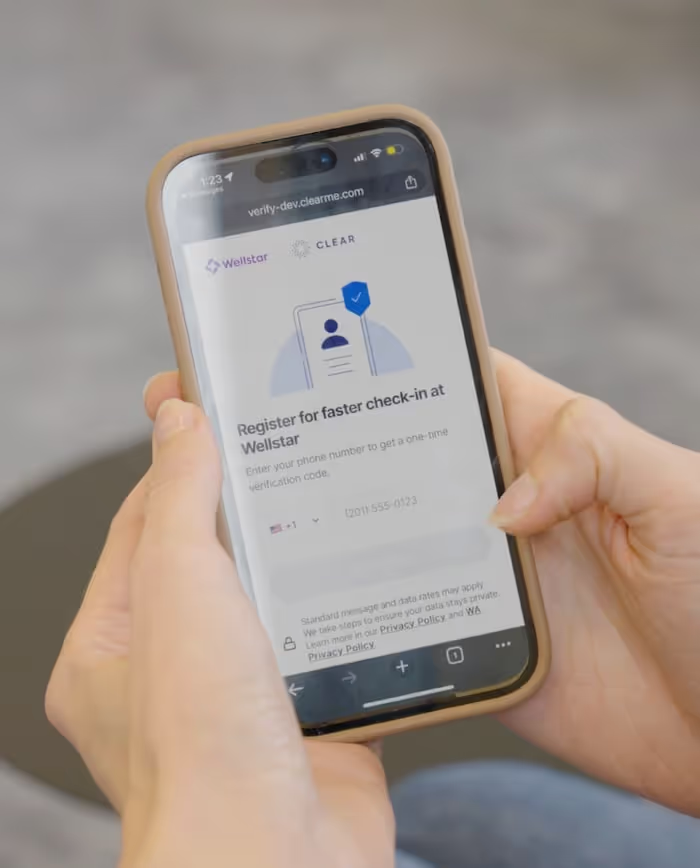
- Instead of searching for an associate, the shopper scans the QR code on the cabinet or fixture and is routed through a digital verification flow powered by CLEAR.
- With just a selfie for existing CLEAR members or a quick, one-time setup that includes scanning a government-issued ID for new users, CLEAR verifies that the person requesting access is who they say they are.
- Once the shopper’s identity is verified and approved under the retailer’s rules, they can tap to “Unlock.”
- InVue’s smart access infrastructure enables the cabinet to unlock, following the policies the retailer has defined for that fixture or category.
For shoppers who have used CLEAR before, unlocking fixtures takes just seconds. More than 43 million people in CLEAR’s network can verify with just a selfie, without necessarily re-entering documents or sensitive information. New users complete a quick, one-time setup to create a reusable identity that they can leverage on future visits.
What This Unlocks for Retailers
Through the CLEAR1 and InVue partnership, retailers can turn locked cases from a friction point into a strategic advantage.
Protect merchandise without sacrificing convenience
As theft and shrink rise, CLEAR1-powered Customer Self-Access lets retailers keep more products locked without slowing shoppers down. One leading retailer has suggested they’ve seen a 50% reduction in shrink after embedding CLEAR1 into its access flow.
Keep shoppers moving
By replacing the “wait for an associate” reality with a short, simple CLEAR flow, retailers cut drop-off caused by long waits. The result is a modern, self-directed experience that keeps customers moving toward checkout.
Free associates to focus where they’re needed most
Shifting routine unlocks into a secure, self-service experience takes associates off key duty and lets them spend more time helping customers, stocking shelves, and selling products.
Build trust with a brand shoppers recognize
Since 89% of people associate CLEAR with security and reliability and 74% say they are more likely to trust a brand that partners with CLEAR, bringing CLEAR into the self‑access experience signals that retailers take identity and safety seriously while also keeping users in control of their own data.
Powering the Next Chapter of Self-Service Retail
Locked cases are not going away, but the way shoppers interact with them can change.
By combining CLEAR1’s multi-layered identity assurance with InVue’s smart access infrastructure, retailers can protect high-risk inventory, reduce friction for shoppers and staff, and make self-access a trusted part of the in-store journey.
Together, CLEAR and InVue are setting a new standard for secure, self-service retail—one that protects inventory without slowing customers down.
——————
1Source: RDSolutions, 2024
2Source: RDSolutions field study (shopper wait-time data from 626 drug, grocery, and mass-market retailers across the U.S. and Canada).
3Source: InVue, *The Retailer’s Guide to Smart Access* (shopper self-service preference data).
Across retail, one trend has become increasingly visible: more products are moving behind locked cases. Nearly 70% of retailers report locking more merchandise year over year as shoplifting incidents continue to rise.1 Products once considered too low-value to secure—such as cosmetics, razors, batteries, OTC medications, and detergents—have become common theft targets, and many retailers are now locking entire departments. What used to be an occasional unlock is now a constant task for store teams as more everyday items move behind lock and key.
Protecting inventory is non-negotiable, but the traditional model of waiting for an associate with a key adds friction, frustrates shoppers, pulls staff away from higher-value work, and ultimately costs retailers sales. CLEAR and InVue are partnering to change that. CLEAR1, CLEAR’s secure identity platform, and InVue’s Customer Self-Access technology replaces keys and long waits with a secure, mobile-first experience—making identity the new key.
When Protection Slows Down the Aisle
Locked cases were designed to protect high-value items, but in practice they often slow everyone down: shoppers wait an average of 7.7 minutes for the right associate with the right key, turning moments of high purchase intent into frustration and abandoned baskets, while associates spend valuable time managing keys and escorting shoppers.2
At the same time, customer expectations are shifting: more than 70% of shoppers prefer self‑service when it’s available, putting pressure on retailers to meet those expectations without compromising on loss prevention.3
Controlled Self-Access, Powered by Trusted Identity
CLEAR1, CLEAR’s secure identity platform and InVue’s smart access technology work together to create a streamlined self-access model for secured merchandise, putting trusted identity at the center of how customers unlock what they need. CLEAR’s multi-layered approach analyzes signals from biometrics, documents, devices, and verified data sources—a process that’s rigorous behind the scenes but fast and simple for the shopper.
Here’s how the joint in‑aisle experience works:
- A customer wants to access a locked item.
- Instead of searching for an associate, the shopper scans the QR code on the cabinet or fixture and is routed through a digital verification flow powered by CLEAR.
- With just a selfie for existing CLEAR members or a quick, one-time setup that includes scanning a government-issued ID for new users, CLEAR verifies that the person requesting access is who they say they are.
- Once the shopper’s identity is verified and approved under the retailer’s rules, they can tap to “Unlock.”
- InVue’s smart access infrastructure enables the cabinet to unlock, following the policies the retailer has defined for that fixture or category.
For shoppers who have used CLEAR before, unlocking fixtures takes just seconds. More than 43 million people in CLEAR’s network can verify with just a selfie, without necessarily re-entering documents or sensitive information. New users complete a quick, one-time setup to create a reusable identity that they can leverage on future visits.
What This Unlocks for Retailers
Through the CLEAR1 and InVue partnership, retailers can turn locked cases from a friction point into a strategic advantage.
Protect merchandise without sacrificing convenience
As theft and shrink rise, CLEAR1-powered Customer Self-Access lets retailers keep more products locked without slowing shoppers down. One leading retailer has suggested they’ve seen a 50% reduction in shrink after embedding CLEAR1 into its access flow.
Keep shoppers moving
By replacing the “wait for an associate” reality with a short, simple CLEAR flow, retailers cut drop-off caused by long waits. The result is a modern, self-directed experience that keeps customers moving toward checkout.
Free associates to focus where they’re needed most
Shifting routine unlocks into a secure, self-service experience takes associates off key duty and lets them spend more time helping customers, stocking shelves, and selling products.
Build trust with a brand shoppers recognize
Since 89% of people associate CLEAR with security and reliability and 74% say they are more likely to trust a brand that partners with CLEAR, bringing CLEAR into the self‑access experience signals that retailers take identity and safety seriously while also keeping users in control of their own data.
Powering the Next Chapter of Self-Service Retail
Locked cases are not going away, but the way shoppers interact with them can change.
By combining CLEAR1’s multi-layered identity assurance with InVue’s smart access infrastructure, retailers can protect high-risk inventory, reduce friction for shoppers and staff, and make self-access a trusted part of the in-store journey.
Together, CLEAR and InVue are setting a new standard for secure, self-service retail—one that protects inventory without slowing customers down.
——————
1Source: RDSolutions, 2024
2Source: RDSolutions field study (shopper wait-time data from 626 drug, grocery, and mass-market retailers across the U.S. and Canada).
3Source: InVue, *The Retailer’s Guide to Smart Access* (shopper self-service preference data).


