











Gartner®, Deepfake Identity Threats: Mitigate Risk in Identity Verification and Face Biometrics, Akif Khan, Nayara Sangiorgio, James Hoover, 11 May 2026
Gartner® is a trademark of Gartner, Inc. and/or its affiliates.



Share


Share
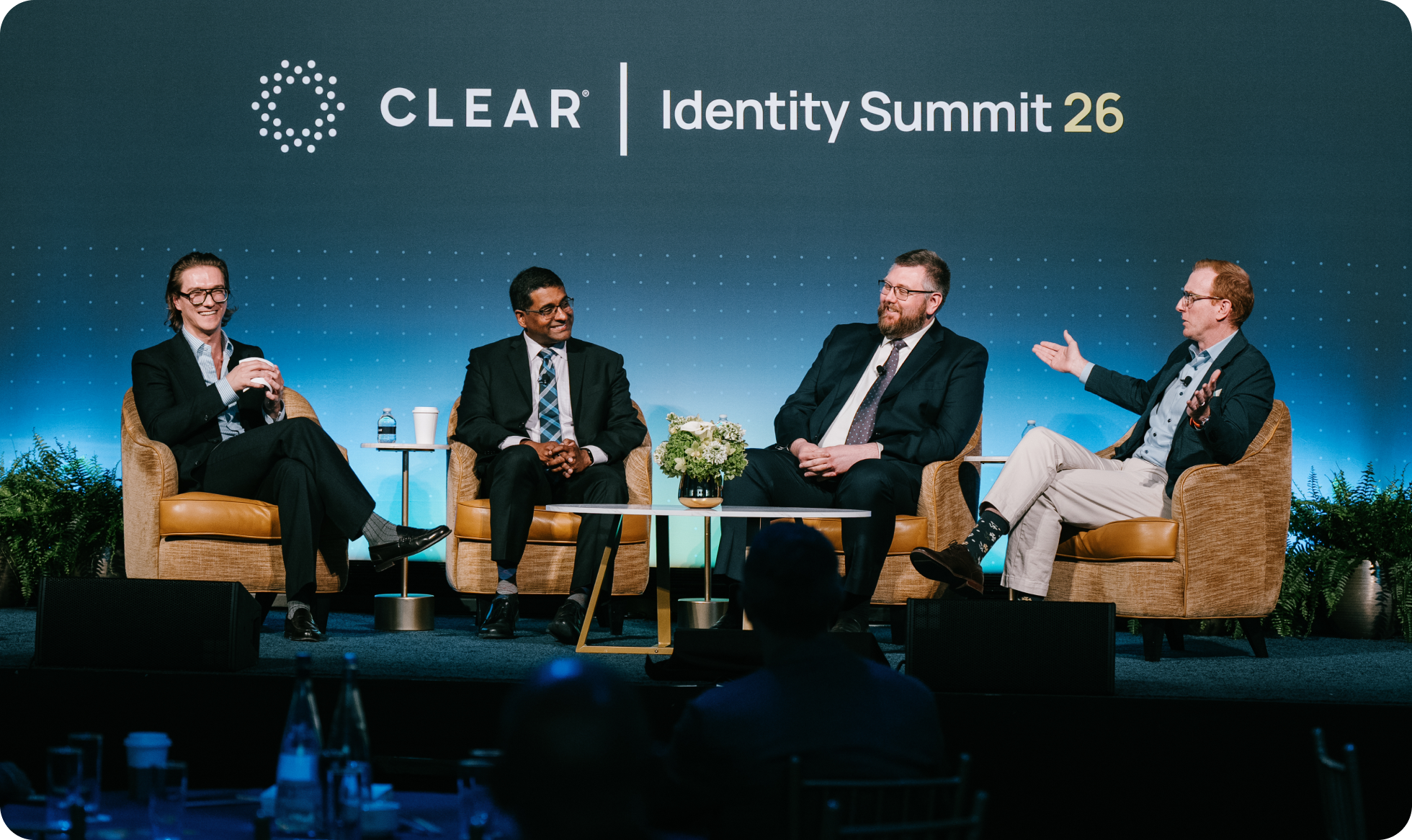
On June 9th in New York City, CLEAR hosted its inaugural Identity Summit, Mission-Ready Identity: The New Standard of Defense in the AI Era. Security leaders, government officials, and business executives came together around a shared question: in a world where attackers are no longer breaking in—they’re logging in—are today's identity controls strong enough to defend against modern threats?
As the day unfolded, speakers challenged conventional assumptions about identity and security. As AI makes impersonation easier, fraud more scalable, and traditional authentication methods increasingly vulnerable, the consensus was clear: organizations must move beyond passwords, devices, and one-time checks toward a multi-layered approach that continuously verifies the person behind critical actions.
From Football to Finance: Identity in Motion
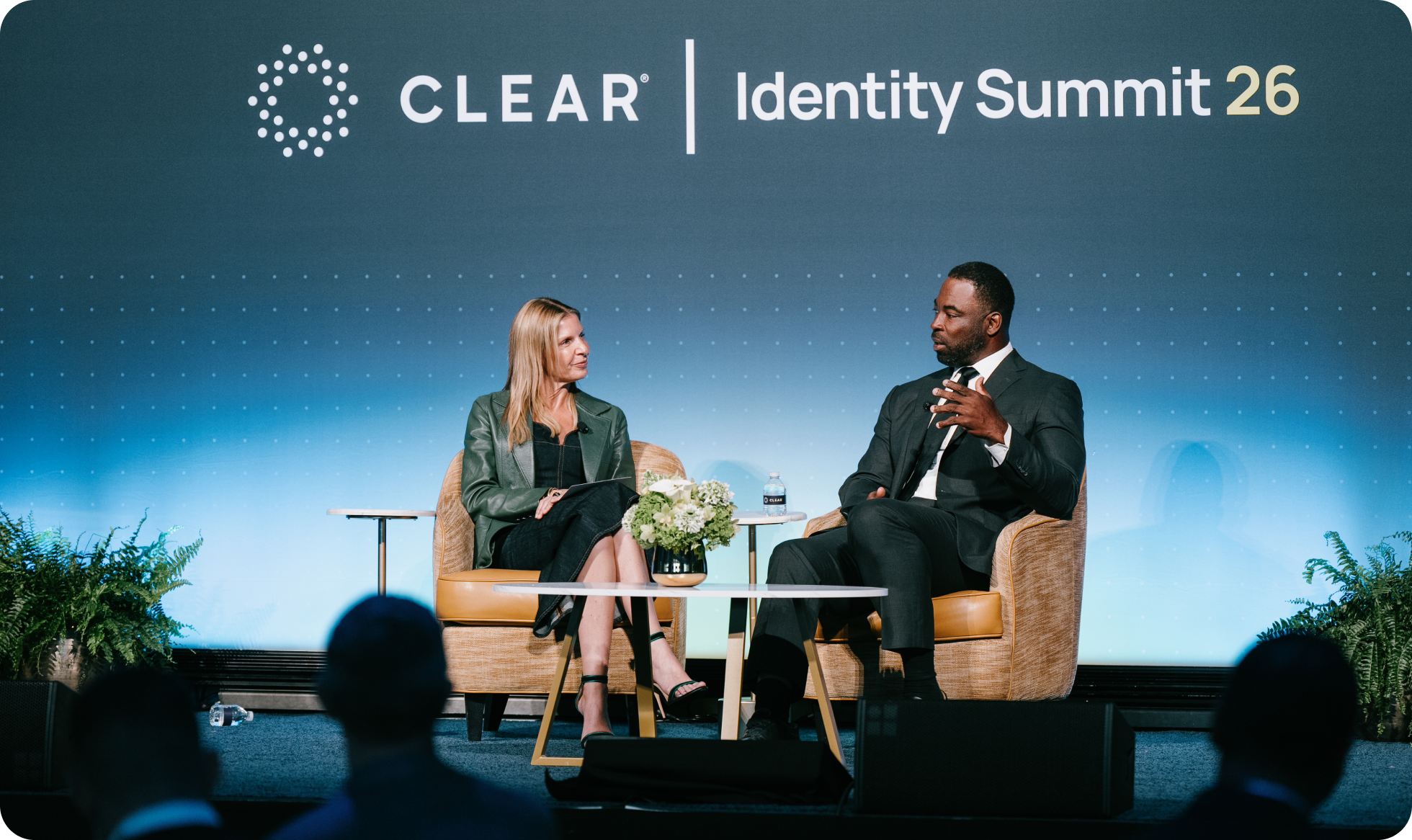
The summit opened on a human note. CLEAR Founder, Chair & CEO Caryn Seidman Becker and two-time Super Bowl champion turned Goldman Sachs Managing Director Justin Tuck explored how identity evolves over a lifetime—from the locker room to the boardroom—and why trust is something you carry into every chapter of your career.
Tuck spoke about “loving the fight,” embracing competition, and wanting “the pie to get bigger”—not just winning, but raising the standard for everyone around him. That mindset, he argued, is as critical in finance as it was on the field. For Tuck, identity isn’t a single title or moment; it’s shaped over time through consistency, performance, and integrity.
This conversation set the tone for the day: identity is not static. It’s layered and dynamic, and the infrastructure protecting our businesses needs to reflect that reality.
Identity Is the New Standard of Defense
From there, the conversation shifted into national security. Brigadier General (Ret.) Christopher M. Burns and national security fellow Mohamad Mirghahari described adversaries targeting identity as patient and persistent—getting in, sitting quietly, and waiting—often using AI as a force multiplier to move faster and personalize attacks at scale.
This talk underscored how traditional identity perimeters are no longer enough. The attack surface now includes civilian infrastructure, critical systems, and the identities behind them. In this environment, identity becomes the new standard of defense: the control that determines whether any action—physical or digital—should be trusted in the moment.
The conversation reinforced a common theme: threats will keep evolving, and the identity layer underneath our systems has to evolve just as quickly.
Modern Cyber Defense: Where Identity Meets Zero Trust
In the first executive panel, CISOs and security leaders from Zayo Group, GuidePoint Security, and AT&T—moderated by CLEAR Chief Security Officer Jon Schlegel—showed what it looks like to move from perimeter-based security to an identity-first defense inside large enterprises.
Key themes emerged:
- Protect actions, not just networks. Panelists described moving beyond static perimeter controls to protecting high-risk actions—privileged changes, access to crown-jewel systems, and account recovery—with stronger, continuous verification.
- Put friction where risk is highest. Rather than over-burden everyday workflows, organizations are concentrating identity assurance around privileged users, third parties, and sensitive systems, accepting more friction only where the stakes demand it.
- Design for resilience, not perfection. Assuming breach is inevitable, leaders emphasized cyber recovery objectives, realistic tabletop exercises, and identity-aware incident response so they can quickly return to a secure baseline.
Across the board, these companies are shifting their strategies around identity, bringing zero trust to life by continuously verifying the person beyond the device instead of relying on single, one-time checks.
Fraud Lives Where Identity Breaks Down
The next discussion shifted to public programs and the human cost of fraud, waste, and abuse. Kim Brandt, Chief Operating Officer and Deputy Administrator at the Centers for Medicare & Medicaid Services (CMS), joined Aneesh Chopra, Chair of the Arcadia Institute and former U.S. CTO, to examine how identity failures ripple across some of the country’s largest healthcare programs—both financially and for beneficiaries.
Brandt highlighted how fragmented provider data, infrequent re-validation, and siloed systems create blind spots that allow ghost providers, false billing, and improper payments to persist. CMS is responding with more continuous validation, better provider directories, and pilots that put beneficiaries in the loop.
In a follow-up panel, leaders from AWS, AARP, and Snowflake expanded the lens:
- Fraud exploits the gaps between systems. When data about people, providers, and payments is scattered, it’s easier for bad actors to hide and harder for agencies to see full patterns of abuse.
- AI is powerful, but must be paired with human judgment. Panelists framed AI as a “trust but verify” capability: essential for surfacing suspicious patterns across huge datasets, but not a substitute for human investigation and oversight.
- Consumers can be force multipliers if systems support them. Education alone isn’t enough; experiences must make it easy for individuals to confirm activity, report issues, and regain control when something goes wrong.
Fraud lives where identity breaks down. Connecting identity across interactions—securely and with consent—is key to moving from reactive cleanup to proactive prevention.
Raising the Bar on Identity
Later in the day, CLEAR SVP of Product for Identity & CLEAR1 Vladimir Stojkovski, alongside leaders from Farscope Advisory, CLEAR’s fraud team, and Paravision, examined where traditional identity standards are essential versus where they show their age.
Standards like NIST’s digital identity guidelines remain critical for shared language and baseline expectations, but because they take years to design and publish, they can lag behind attackers who are constantly innovating with deepfakes, synthetic identities, document forgeries, and injection attacks.
The panel made the case for going beyond “good enough” by treating identity as multi-layered, continuously testing systems against modern attack techniques, and viewing standards as the floor—not the ceiling—for what trusted identity should look like in an AI-driven world.
Within that context, CLEAR’s multi-layered identity framework emerged as a concrete example of technology that’s built for modern threats and designed to keep evolving.
Principles in Practice: Fidelity National Financial
To ground the conversation in real-world deployment, Fidelity National Financial (FNF) joined CLEAR to discuss how they’re applying this standard of identity assurance across both employee and customer experiences.
FNF’s leadership described a familiar challenge: many of the tools historically used to verify people are now easy for bad actors to spoof, especially with generative AI lowering the cost of impersonation. Fraud rarely shows up in dramatic spikes—it lives in the edges, in the 2% of interactions that quietly create outsized loss and risk over time.
FNF’s response has been to treat identity not as a one-off feature, but as an enterprise posture—using high-assurance identity for workforce access and sensitive operations, extending that same standard to customer workflows, and focusing on stopping that 2% early, before bad actors can move deeper into critical systems or high-value transactions.
As FNF’s team put it, if identity doesn’t keep pace with the threat landscape, it’s just a pose.
Beyond the Wallet: The Future of Digital Identity
Mobile driver’s licenses and digital wallets are making identity more portable, secure, and user-controlled, but credentials alone are not enough. Without consistent acceptance and interoperability, even the most advanced digital IDs risk remaining isolated to a handful of use cases.
In this panel, leaders from CLEAR, Samsung Wallet, and Ribbit Capital explored what it will take to unlock the next chapter of digital identity, pointing to three essentials: trusted issuing authorities and device-native security to anchor credentials, infrastructure that can accept them in the wild, and high-assurance, real-time signals to verify the person beyond the device in every interaction.
Panelists also recognized that many markets globally are already ahead of the U.S. in connecting identity and payments. That gap, they argued, is an opportunity for U.S. organizations to build a more connected, identity-first ecosystem where wallets are just the entry point to multi-layered identity—not the finish line.
Building a Trusted Agentic Enterprise
As AI agents begin to act on behalf of humans—initiating transactions, querying sensitive systems, and making decisions at machine speed—the question of trust becomes even more pressing. Snowflake’s Zaki Bajwa and CLEAR Chief Product & Technology Officer Jeff Valeo unpacked what it will take to build a truly trusted agentic enterprise.
Their perspective: agents don’t fail because of bad models—they fail because of bad foundations. Without clear identity, governance, and auditability, organizations risk shipping liabilities instead of durable capabilities. Trusted agents sit on top of clean, well-governed data, inherit permissions so every action ties back to a verified person and policy, and operate with full observability into what they did, when, and why. Identity is central here: verified humans authorizing agents and high-assurance identity signals governing what those agents are allowed to do.
Building the Future with AI
The day closed with Caryn Seidman Becker and Bret Taylor, CEO and Co-Founder of Sierra and Chairman of OpenAI, reflecting on the broader opportunity—and responsibility—of AI.
AI introduces new risks, but it also offers extraordinary upside, from democratizing access to tutoring, medical insights, and financial guidance to eliminating repetitive tasks and allowing people to spend more time on higher-value work. Taylor noted that the same technologies capable of finding new vulnerabilities can also help organizations discover and fix them faster—if there’s already a strong foundation of data, security, and identity in place.
Their shared conclusion echoed the theme of the entire summit: in an AI-powered world, identity done right is not a constraint—it’s an enabler. Mission-ready identity helps organizations move faster, serve people better, and stay ahead of a threat landscape that isn’t slowing down.
Looking Ahead
CLEAR’s Identity Summit reinforced the conviction that security starts with identity, and identity has to keep pace with the threats, expectations, and technologies of the AI era. Yet the event itself was just the beginning.
Across cybersecurity, healthcare, financial services, government, and emerging AI applications, the challenge is the same: creating trusted interactions without unnecessary friction. The conversations throughout the summit made clear that meeting this challenge will require collaboration across industries, new approaches to identity, and a willingness to continually raise the bar as threats evolve.
At CLEAR, we're committed to helping organizations meet that challenge. By delivering an identity layer designed for both security and usability, we're helping organizations establish confidence in who they're interacting with at critical moments.
Ready to strengthen identity assurance across your organization? Book a demo to see how CLEAR1 can protect your business with multi-layered identity assurance.
On June 9th in New York City, CLEAR hosted its inaugural Identity Summit, Mission-Ready Identity: The New Standard of Defense in the AI Era. Security leaders, government officials, and business executives came together around a shared question: in a world where attackers are no longer breaking in—they’re logging in—are today's identity controls strong enough to defend against modern threats?
As the day unfolded, speakers challenged conventional assumptions about identity and security. As AI makes impersonation easier, fraud more scalable, and traditional authentication methods increasingly vulnerable, the consensus was clear: organizations must move beyond passwords, devices, and one-time checks toward a multi-layered approach that continuously verifies the person behind critical actions.
From Football to Finance: Identity in Motion
The summit opened on a human note. CLEAR Founder, Chair & CEO Caryn Seidman Becker and two-time Super Bowl champion turned Goldman Sachs Managing Director Justin Tuck explored how identity evolves over a lifetime—from the locker room to the boardroom—and why trust is something you carry into every chapter of your career.
Tuck spoke about “loving the fight,” embracing competition, and wanting “the pie to get bigger”—not just winning, but raising the standard for everyone around him. That mindset, he argued, is as critical in finance as it was on the field. For Tuck, identity isn’t a single title or moment; it’s shaped over time through consistency, performance, and integrity.
This conversation set the tone for the day: identity is not static. It’s layered and dynamic, and the infrastructure protecting our businesses needs to reflect that reality.
Identity Is the New Standard of Defense
From there, the conversation shifted into national security. Brigadier General (Ret.) Christopher M. Burns and national security fellow Mohamad Mirghahari described adversaries targeting identity as patient and persistent—getting in, sitting quietly, and waiting—often using AI as a force multiplier to move faster and personalize attacks at scale.
This talk underscored how traditional identity perimeters are no longer enough. The attack surface now includes civilian infrastructure, critical systems, and the identities behind them. In this environment, identity becomes the new standard of defense: the control that determines whether any action—physical or digital—should be trusted in the moment.
The conversation reinforced a common theme: threats will keep evolving, and the identity layer underneath our systems has to evolve just as quickly.
Modern Cyber Defense: Where Identity Meets Zero Trust
In the first executive panel, CISOs and security leaders from Zayo Group, GuidePoint Security, and AT&T—moderated by CLEAR Chief Security Officer Jon Schlegel—showed what it looks like to move from perimeter-based security to an identity-first defense inside large enterprises.
Key themes emerged:
- Protect actions, not just networks. Panelists described moving beyond static perimeter controls to protecting high-risk actions—privileged changes, access to crown-jewel systems, and account recovery—with stronger, continuous verification.
- Put friction where risk is highest. Rather than over-burden everyday workflows, organizations are concentrating identity assurance around privileged users, third parties, and sensitive systems, accepting more friction only where the stakes demand it.
- Design for resilience, not perfection. Assuming breach is inevitable, leaders emphasized cyber recovery objectives, realistic tabletop exercises, and identity-aware incident response so they can quickly return to a secure baseline.
Across the board, these companies are shifting their strategies around identity, bringing zero trust to life by continuously verifying the person beyond the device instead of relying on single, one-time checks.
Fraud Lives Where Identity Breaks Down
The next discussion shifted to public programs and the human cost of fraud, waste, and abuse. Kim Brandt, Chief Operating Officer and Deputy Administrator at the Centers for Medicare & Medicaid Services (CMS), joined Aneesh Chopra, Chair of the Arcadia Institute and former U.S. CTO, to examine how identity failures ripple across some of the country’s largest healthcare programs—both financially and for beneficiaries.
Brandt highlighted how fragmented provider data, infrequent re-validation, and siloed systems create blind spots that allow ghost providers, false billing, and improper payments to persist. CMS is responding with more continuous validation, better provider directories, and pilots that put beneficiaries in the loop.
In a follow-up panel, leaders from AWS, AARP, and Snowflake expanded the lens:
- Fraud exploits the gaps between systems. When data about people, providers, and payments is scattered, it’s easier for bad actors to hide and harder for agencies to see full patterns of abuse.
- AI is powerful, but must be paired with human judgment. Panelists framed AI as a “trust but verify” capability: essential for surfacing suspicious patterns across huge datasets, but not a substitute for human investigation and oversight.
- Consumers can be force multipliers if systems support them. Education alone isn’t enough; experiences must make it easy for individuals to confirm activity, report issues, and regain control when something goes wrong.
Fraud lives where identity breaks down. Connecting identity across interactions—securely and with consent—is key to moving from reactive cleanup to proactive prevention.
Raising the Bar on Identity
Later in the day, CLEAR SVP of Product for Identity & CLEAR1 Vladimir Stojkovski, alongside leaders from Farscope Advisory, CLEAR’s fraud team, and Paravision, examined where traditional identity standards are essential versus where they show their age.
Standards like NIST’s digital identity guidelines remain critical for shared language and baseline expectations, but because they take years to design and publish, they can lag behind attackers who are constantly innovating with deepfakes, synthetic identities, document forgeries, and injection attacks.
The panel made the case for going beyond “good enough” by treating identity as multi-layered, continuously testing systems against modern attack techniques, and viewing standards as the floor—not the ceiling—for what trusted identity should look like in an AI-driven world.
Within that context, CLEAR’s multi-layered identity framework emerged as a concrete example of technology that’s built for modern threats and designed to keep evolving.
Principles in Practice: Fidelity National Financial
To ground the conversation in real-world deployment, Fidelity National Financial (FNF) joined CLEAR to discuss how they’re applying this standard of identity assurance across both employee and customer experiences.
FNF’s leadership described a familiar challenge: many of the tools historically used to verify people are now easy for bad actors to spoof, especially with generative AI lowering the cost of impersonation. Fraud rarely shows up in dramatic spikes—it lives in the edges, in the 2% of interactions that quietly create outsized loss and risk over time.
FNF’s response has been to treat identity not as a one-off feature, but as an enterprise posture—using high-assurance identity for workforce access and sensitive operations, extending that same standard to customer workflows, and focusing on stopping that 2% early, before bad actors can move deeper into critical systems or high-value transactions.
As FNF’s team put it, if identity doesn’t keep pace with the threat landscape, it’s just a pose.
Beyond the Wallet: The Future of Digital Identity
Mobile driver’s licenses and digital wallets are making identity more portable, secure, and user-controlled, but credentials alone are not enough. Without consistent acceptance and interoperability, even the most advanced digital IDs risk remaining isolated to a handful of use cases.
In this panel, leaders from CLEAR, Samsung Wallet, and Ribbit Capital explored what it will take to unlock the next chapter of digital identity, pointing to three essentials: trusted issuing authorities and device-native security to anchor credentials, infrastructure that can accept them in the wild, and high-assurance, real-time signals to verify the person beyond the device in every interaction.
Panelists also recognized that many markets globally are already ahead of the U.S. in connecting identity and payments. That gap, they argued, is an opportunity for U.S. organizations to build a more connected, identity-first ecosystem where wallets are just the entry point to multi-layered identity—not the finish line.
Building a Trusted Agentic Enterprise
As AI agents begin to act on behalf of humans—initiating transactions, querying sensitive systems, and making decisions at machine speed—the question of trust becomes even more pressing. Snowflake’s Zaki Bajwa and CLEAR Chief Product & Technology Officer Jeff Valeo unpacked what it will take to build a truly trusted agentic enterprise.
Their perspective: agents don’t fail because of bad models—they fail because of bad foundations. Without clear identity, governance, and auditability, organizations risk shipping liabilities instead of durable capabilities. Trusted agents sit on top of clean, well-governed data, inherit permissions so every action ties back to a verified person and policy, and operate with full observability into what they did, when, and why. Identity is central here: verified humans authorizing agents and high-assurance identity signals governing what those agents are allowed to do.
Building the Future with AI
The day closed with Caryn Seidman Becker and Bret Taylor, CEO and Co-Founder of Sierra and Chairman of OpenAI, reflecting on the broader opportunity—and responsibility—of AI.
AI introduces new risks, but it also offers extraordinary upside, from democratizing access to tutoring, medical insights, and financial guidance to eliminating repetitive tasks and allowing people to spend more time on higher-value work. Taylor noted that the same technologies capable of finding new vulnerabilities can also help organizations discover and fix them faster—if there’s already a strong foundation of data, security, and identity in place.
Their shared conclusion echoed the theme of the entire summit: in an AI-powered world, identity done right is not a constraint—it’s an enabler. Mission-ready identity helps organizations move faster, serve people better, and stay ahead of a threat landscape that isn’t slowing down.
Looking Ahead
CLEAR’s Identity Summit reinforced the conviction that security starts with identity, and identity has to keep pace with the threats, expectations, and technologies of the AI era. Yet the event itself was just the beginning.
Across cybersecurity, healthcare, financial services, government, and emerging AI applications, the challenge is the same: creating trusted interactions without unnecessary friction. The conversations throughout the summit made clear that meeting this challenge will require collaboration across industries, new approaches to identity, and a willingness to continually raise the bar as threats evolve.
At CLEAR, we're committed to helping organizations meet that challenge. By delivering an identity layer designed for both security and usability, we're helping organizations establish confidence in who they're interacting with at critical moments.
Ready to strengthen identity assurance across your organization? Book a demo to see how CLEAR1 can protect your business with multi-layered identity assurance.


