


blog

The Missing Layer in Workforce Identity Management

May 27, 2026

Organizations have strengthened their workforce identity management with layers like password policies, MFA, SSO, and device trust. But even with all of that in place, one fundamental question often remains unanswered: is the right person actually behind this session?

Traditional workforce identity solutions are designed to validate credentials and devices—not the individual–and as threats continue to evolve, that gap matters more than ever. The future of workforce identity is about verifying the real, live person at the moments that matter most. CLEAR1 is built on this model, using multi-layered identity and a reusable verification network of millions of people to help organizations strengthen security while delivering a faster, more seamless experience for their workforce.

Key Takeaways

Credentials aren’t identity

Traditional workforce identity management systems verify what someone knows or has—not who they are. Person-based verification adds the missing layer by confirming the individual.

Identity solutions break at key moments

Onboarding, account recovery, and authenticator changes are where credential-based workforce identity solutions typically break down—and where stronger identity signals matter most.

Verify with confidence

Multi-layered identity—combining selfie, document, device, and verified data sources—delivers measurable identity assurance, not just a binary check.

Reusable identity reduces friction

With CLEAR, returning users can reverify in seconds with just a selfie. There are tens of millions of people in the CLEAR network, and they can verify without re-uploading documents.

Add the missing layer

CLEAR1 enables organizations to strengthen workforce identity with person-based verification at the moments that matter most.

The Digital Identity Shift in Workforce Security Is Already Underway

Workforce identity management isn’t evolving slowly. It’s being reshaped in real time, and the verification tools organizations rely on today are no longer enough.

AI is changing both sides of the equation
Deepfakes are making employee impersonation easier, while AI agents introduce new identity challenges, making person-based verification essential.

Zero Trust is raising the bar
Zero Trust adoption is pushing identity closer to every access decision, but most implementations still stop at the device or session level, not the person.

Regulation is accelerating change

Regulatory pressure around workforce identity assurance is growing, especially in industries such as financial services, healthcare, and critical infrastructure.

Work is fully distributed
As remote and hybrid work replace in-person interactions, organizations have lost traditional verification moments, making digital workforce identity solutions essential for establishing trust from anywhere.

CLEAR1—which focuses on verifying the real person, not just the device or credential behind the login—is built for this shift.

Why More MFA Is Not the Answer for Workforce Identity Security

Workforce identity management has been solving the wrong problem. For years, organizations have added layers—stronger passwords, push-based MFA, hardware tokens—all designed to verify what someone knows or what they have. But none of these answer the question that matters most: who is actually behind the screen?

Credentials can be phished. Devices can be stolen. MFA can be bypassed through SIM swaps.

Social engineering attacks are only accelerating, with deepfakes and help desk impersonation exposing the limits of traditional workforce identity management tools.

The result isn’t just theoretical risk—it shows up in real ways: account takeovers, unauthorized system access, growing help desk burden, and increased compliance exposure.

This is the gap that led CLEAR1 to rethink workforce identity—and why simply adding more MFA isn’t enough.

Stronger Workforce Identity Starts With Verifying the Person

When workforce identity starts with the person, security shifts from verifying credentials and devices to verifying true identity. CLEAR1 does this by combining multi-layered identity signals, reusable verification, and a seamless employee experience into a single, higher-assurance approach.

Verify the real person
A quick selfie confirms a live individual, with protections against deepfakes and spoofing—something credentials can’t provide.

Confidence, not just access
Biometrics, government-issued ID, device signals, and trusted third-party data work together to build a complete picture of identity.

Reusable by design
Employees verify once and reverify in seconds with just a selfie, making their identity reusable across onboarding, recovery, and other high-risk moments.

Built to fit your stack

Adds a layer of protection to existing IAM platforms such as Okta, Ping, and Microsoft Entra through built-in integrations, strengthening what’s already in place without introducing more complexity.

Three Workforce Moments Where Person-Based Verification Changes Everything

Workforce identity breaks at three key moments: when access is created, recovered, or changed. These are the points where verifying the actual person—not just the credential—makes a critical difference.

Employee onboarding
New hires are given access to systems and sensitive data, often without ever being seen in person. Verifying the individual is who they claim to be helps ensure the right person is onboarded before access is ever granted.

Account recovery and password reset
When employees get locked out, speed matters—but so does certainty. Help desk workflows are a prime target for social engineering, which is why verifying the real person before restoring access closes one of the most exploited gaps in workforce identity.

Authenticator enrollment and changes
MFA resets and enrollment should be high-assurance moments, but they’re often treated as routine. If credentials are already compromised, this is where attackers take control. Confirming the person, rather than merely the credentials, ensures access stays with the right individual.

How Workforce Identity Works With CLEAR1

CLEAR1 brings person-based verification into workforce identity management in a way that’s fast, scalable, and built for real-world use.

What the experience looks like:

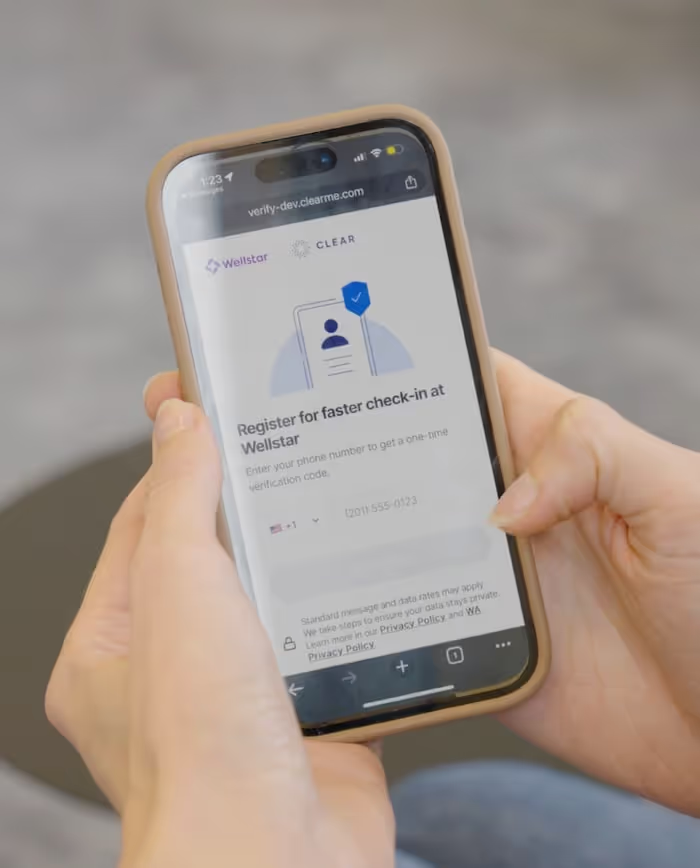
  1. Employee takes a selfie
  2. Employee scans a government-issued ID
  3. CLEAR1 validates document authenticity, matches the ID portrait to the selfie, and cross-checks other identity signals across authoritative sources
  4. The organization receives a verification decision, and the employee gains access if successfully verified

Why is CLEAR1 different from other workforce identity solutions?

Fast, seamless reverification
A quick selfie is all it takes to reverify with CLEAR, keeping workforce identity security high without slowing employees down.

Built to deploy quickly
Native integrations with IAM platforms like Okta, Ping, and Microsoft Entra and other enterprise solutions means businesses can implement CLEAR1 with minimal lift. 

Enterprise-ready compliance
CLEAR1 meets high standards for identity and security, including IAL2, AAL2, HIPAA, and PAD2.

Proven at scale
Organizations like LinkedIn and Uber trust CLEAR to verify identity across millions of users and high-risk moments.

Ready to explore CLEAR1’s Workforce Identity Solution?

Frequently Asked Questions

What is workforce identity management and why does it matter?
Workforce identity management is how organizations verify and manage employee access to systems, applications, and data. It matters because traditional methods focus on credentials, not people, leaving gaps that lead to account takeovers, fraud, and compliance risk. Verifying the individual strengthens both security and trust.

How is workforce identity management different from traditional IAM?
Traditional IAM verifies what users know (passwords) or have (devices, tokens). Modern workforce identity management adds a critical layer: verifying who the person actually is. This shift improves workforce identity security by reducing reliance on vulnerable credentials.

Can workforce identity management work alongside existing MFA solutions?
Yes. Workforce identity solutions like CLEAR1 are designed to complement existing MFA, not replace it. Person-level verification adds a higher-assurance signal on top of passwords and devices, strengthening your overall security stack.

What workforce moments should require person-level identity verification?
The highest-risk moments include employee onboarding, account recovery, and MFA enrollment or reset. These are the points where attackers are most likely to exploit credential-based systems. Verifying the person at these moments closes critical gaps.

How does CLEAR1 help organizations implement workforce identity security?
CLEAR1 adds person-level verification to workforce identity management through a simple flow—selfie, ID, and real-time source validation. It integrates with existing IAM systems and enables reusable verification at key workforce moments, improving security in a fast, seamless way.

What is reusable identity and how does it reduce friction for employees?
Reusable identity means an employee verifies once and can quickly reverify in the future with just a selfie. This reduces repeated steps while maintaining high assurance, allowing workforce identity security to stay strong without slowing down the user experience.

Organizations have strengthened their workforce identity management with layers like password policies, MFA, SSO, and device trust. But even with all of that in place, one fundamental question often remains unanswered: is the right person actually behind this session?

Traditional workforce identity solutions are designed to validate credentials and devices—not the individual–and as threats continue to evolve, that gap matters more than ever. The future of workforce identity is about verifying the real, live person at the moments that matter most. CLEAR1 is built on this model, using multi-layered identity and a reusable verification network of millions of people to help organizations strengthen security while delivering a faster, more seamless experience for their workforce.

Key Takeaways

Credentials aren’t identity

Traditional workforce identity management systems verify what someone knows or has—not who they are. Person-based verification adds the missing layer by confirming the individual.

Identity solutions break at key moments

Onboarding, account recovery, and authenticator changes are where credential-based workforce identity solutions typically break down—and where stronger identity signals matter most.

Verify with confidence

Multi-layered identity—combining selfie, document, device, and verified data sources—delivers measurable identity assurance, not just a binary check.

Reusable identity reduces friction

With CLEAR, returning users can reverify in seconds with just a selfie. There are tens of millions of people in the CLEAR network, and they can verify without re-uploading documents.

Add the missing layer

CLEAR1 enables organizations to strengthen workforce identity with person-based verification at the moments that matter most.

The Digital Identity Shift in Workforce Security Is Already Underway

Workforce identity management isn’t evolving slowly. It’s being reshaped in real time, and the verification tools organizations rely on today are no longer enough.

AI is changing both sides of the equation
Deepfakes are making employee impersonation easier, while AI agents introduce new identity challenges, making person-based verification essential.

Zero Trust is raising the bar
Zero Trust adoption is pushing identity closer to every access decision, but most implementations still stop at the device or session level, not the person.

Regulation is accelerating change

Regulatory pressure around workforce identity assurance is growing, especially in industries such as financial services, healthcare, and critical infrastructure.

Work is fully distributed
As remote and hybrid work replace in-person interactions, organizations have lost traditional verification moments, making digital workforce identity solutions essential for establishing trust from anywhere.

CLEAR1—which focuses on verifying the real person, not just the device or credential behind the login—is built for this shift.

Why More MFA Is Not the Answer for Workforce Identity Security

Workforce identity management has been solving the wrong problem. For years, organizations have added layers—stronger passwords, push-based MFA, hardware tokens—all designed to verify what someone knows or what they have. But none of these answer the question that matters most: who is actually behind the screen?

Credentials can be phished. Devices can be stolen. MFA can be bypassed through SIM swaps.

Social engineering attacks are only accelerating, with deepfakes and help desk impersonation exposing the limits of traditional workforce identity management tools.

The result isn’t just theoretical risk—it shows up in real ways: account takeovers, unauthorized system access, growing help desk burden, and increased compliance exposure.

This is the gap that led CLEAR1 to rethink workforce identity—and why simply adding more MFA isn’t enough.

Stronger Workforce Identity Starts With Verifying the Person

When workforce identity starts with the person, security shifts from verifying credentials and devices to verifying true identity. CLEAR1 does this by combining multi-layered identity signals, reusable verification, and a seamless employee experience into a single, higher-assurance approach.

Verify the real person
A quick selfie confirms a live individual, with protections against deepfakes and spoofing—something credentials can’t provide.

Confidence, not just access
Biometrics, government-issued ID, device signals, and trusted third-party data work together to build a complete picture of identity.

Reusable by design
Employees verify once and reverify in seconds with just a selfie, making their identity reusable across onboarding, recovery, and other high-risk moments.

Built to fit your stack

Adds a layer of protection to existing IAM platforms such as Okta, Ping, and Microsoft Entra through built-in integrations, strengthening what’s already in place without introducing more complexity.

Three Workforce Moments Where Person-Based Verification Changes Everything

Workforce identity breaks at three key moments: when access is created, recovered, or changed. These are the points where verifying the actual person—not just the credential—makes a critical difference.

Employee onboarding
New hires are given access to systems and sensitive data, often without ever being seen in person. Verifying the individual is who they claim to be helps ensure the right person is onboarded before access is ever granted.

Account recovery and password reset
When employees get locked out, speed matters—but so does certainty. Help desk workflows are a prime target for social engineering, which is why verifying the real person before restoring access closes one of the most exploited gaps in workforce identity.

Authenticator enrollment and changes
MFA resets and enrollment should be high-assurance moments, but they’re often treated as routine. If credentials are already compromised, this is where attackers take control. Confirming the person, rather than merely the credentials, ensures access stays with the right individual.

How Workforce Identity Works With CLEAR1

CLEAR1 brings person-based verification into workforce identity management in a way that’s fast, scalable, and built for real-world use.

What the experience looks like:

  1. Employee takes a selfie
  2. Employee scans a government-issued ID
  3. CLEAR1 validates document authenticity, matches the ID portrait to the selfie, and cross-checks other identity signals across authoritative sources
  4. The organization receives a verification decision, and the employee gains access if successfully verified

Why is CLEAR1 different from other workforce identity solutions?

Fast, seamless reverification
A quick selfie is all it takes to reverify with CLEAR, keeping workforce identity security high without slowing employees down.

Built to deploy quickly
Native integrations with IAM platforms like Okta, Ping, and Microsoft Entra and other enterprise solutions means businesses can implement CLEAR1 with minimal lift. 

Enterprise-ready compliance
CLEAR1 meets high standards for identity and security, including IAL2, AAL2, HIPAA, and PAD2.

Proven at scale
Organizations like LinkedIn and Uber trust CLEAR to verify identity across millions of users and high-risk moments.

Ready to explore CLEAR1’s Workforce Identity Solution?

Maximize security, minimize friction with CLEAR

Reach out to uncover what problems you can solve when you solve for identity.

By submitting my personal data, I consent to CLEAR collecting, processing, and storing my information in accordance with the CLEAR Privacy Notice.
blog

The Missing Layer in Workforce Identity Management

May 27, 2026

Organizations have strengthened their workforce identity management with layers like password policies, MFA, SSO, and device trust. But even with all of that in place, one fundamental question often remains unanswered: is the right person actually behind this session?

Traditional workforce identity solutions are designed to validate credentials and devices—not the individual–and as threats continue to evolve, that gap matters more than ever. The future of workforce identity is about verifying the real, live person at the moments that matter most. CLEAR1 is built on this model, using multi-layered identity and a reusable verification network of millions of people to help organizations strengthen security while delivering a faster, more seamless experience for their workforce.

Key Takeaways

Credentials aren’t identity

Traditional workforce identity management systems verify what someone knows or has—not who they are. Person-based verification adds the missing layer by confirming the individual.

Identity solutions break at key moments

Onboarding, account recovery, and authenticator changes are where credential-based workforce identity solutions typically break down—and where stronger identity signals matter most.

Verify with confidence

Multi-layered identity—combining selfie, document, device, and verified data sources—delivers measurable identity assurance, not just a binary check.

Reusable identity reduces friction

With CLEAR, returning users can reverify in seconds with just a selfie. There are tens of millions of people in the CLEAR network, and they can verify without re-uploading documents.

Add the missing layer

CLEAR1 enables organizations to strengthen workforce identity with person-based verification at the moments that matter most.

The Digital Identity Shift in Workforce Security Is Already Underway

Workforce identity management isn’t evolving slowly. It’s being reshaped in real time, and the verification tools organizations rely on today are no longer enough.

AI is changing both sides of the equation
Deepfakes are making employee impersonation easier, while AI agents introduce new identity challenges, making person-based verification essential.

Zero Trust is raising the bar
Zero Trust adoption is pushing identity closer to every access decision, but most implementations still stop at the device or session level, not the person.

Regulation is accelerating change

Regulatory pressure around workforce identity assurance is growing, especially in industries such as financial services, healthcare, and critical infrastructure.

Work is fully distributed
As remote and hybrid work replace in-person interactions, organizations have lost traditional verification moments, making digital workforce identity solutions essential for establishing trust from anywhere.

CLEAR1—which focuses on verifying the real person, not just the device or credential behind the login—is built for this shift.

Why More MFA Is Not the Answer for Workforce Identity Security

Workforce identity management has been solving the wrong problem. For years, organizations have added layers—stronger passwords, push-based MFA, hardware tokens—all designed to verify what someone knows or what they have. But none of these answer the question that matters most: who is actually behind the screen?

Credentials can be phished. Devices can be stolen. MFA can be bypassed through SIM swaps.

Social engineering attacks are only accelerating, with deepfakes and help desk impersonation exposing the limits of traditional workforce identity management tools.

The result isn’t just theoretical risk—it shows up in real ways: account takeovers, unauthorized system access, growing help desk burden, and increased compliance exposure.

This is the gap that led CLEAR1 to rethink workforce identity—and why simply adding more MFA isn’t enough.

Stronger Workforce Identity Starts With Verifying the Person

When workforce identity starts with the person, security shifts from verifying credentials and devices to verifying true identity. CLEAR1 does this by combining multi-layered identity signals, reusable verification, and a seamless employee experience into a single, higher-assurance approach.

Verify the real person
A quick selfie confirms a live individual, with protections against deepfakes and spoofing—something credentials can’t provide.

Confidence, not just access
Biometrics, government-issued ID, device signals, and trusted third-party data work together to build a complete picture of identity.

Reusable by design
Employees verify once and reverify in seconds with just a selfie, making their identity reusable across onboarding, recovery, and other high-risk moments.

Built to fit your stack

Adds a layer of protection to existing IAM platforms such as Okta, Ping, and Microsoft Entra through built-in integrations, strengthening what’s already in place without introducing more complexity.

Three Workforce Moments Where Person-Based Verification Changes Everything

Workforce identity breaks at three key moments: when access is created, recovered, or changed. These are the points where verifying the actual person—not just the credential—makes a critical difference.

Employee onboarding
New hires are given access to systems and sensitive data, often without ever being seen in person. Verifying the individual is who they claim to be helps ensure the right person is onboarded before access is ever granted.

Account recovery and password reset
When employees get locked out, speed matters—but so does certainty. Help desk workflows are a prime target for social engineering, which is why verifying the real person before restoring access closes one of the most exploited gaps in workforce identity.

Authenticator enrollment and changes
MFA resets and enrollment should be high-assurance moments, but they’re often treated as routine. If credentials are already compromised, this is where attackers take control. Confirming the person, rather than merely the credentials, ensures access stays with the right individual.

How Workforce Identity Works With CLEAR1

CLEAR1 brings person-based verification into workforce identity management in a way that’s fast, scalable, and built for real-world use.

What the experience looks like:

  1. Employee takes a selfie
  2. Employee scans a government-issued ID
  3. CLEAR1 validates document authenticity, matches the ID portrait to the selfie, and cross-checks other identity signals across authoritative sources
  4. The organization receives a verification decision, and the employee gains access if successfully verified

Why is CLEAR1 different from other workforce identity solutions?

Fast, seamless reverification
A quick selfie is all it takes to reverify with CLEAR, keeping workforce identity security high without slowing employees down.

Built to deploy quickly
Native integrations with IAM platforms like Okta, Ping, and Microsoft Entra and other enterprise solutions means businesses can implement CLEAR1 with minimal lift. 

Enterprise-ready compliance
CLEAR1 meets high standards for identity and security, including IAL2, AAL2, HIPAA, and PAD2.

Proven at scale
Organizations like LinkedIn and Uber trust CLEAR to verify identity across millions of users and high-risk moments.

Ready to explore CLEAR1’s Workforce Identity Solution?

Organizations have strengthened their workforce identity management with layers like password policies, MFA, SSO, and device trust. But even with all of that in place, one fundamental question often remains unanswered: is the right person actually behind this session?

Traditional workforce identity solutions are designed to validate credentials and devices—not the individual–and as threats continue to evolve, that gap matters more than ever. The future of workforce identity is about verifying the real, live person at the moments that matter most. CLEAR1 is built on this model, using multi-layered identity and a reusable verification network of millions of people to help organizations strengthen security while delivering a faster, more seamless experience for their workforce.

Key Takeaways

Credentials aren’t identity

Traditional workforce identity management systems verify what someone knows or has—not who they are. Person-based verification adds the missing layer by confirming the individual.

Identity solutions break at key moments

Onboarding, account recovery, and authenticator changes are where credential-based workforce identity solutions typically break down—and where stronger identity signals matter most.

Verify with confidence

Multi-layered identity—combining selfie, document, device, and verified data sources—delivers measurable identity assurance, not just a binary check.

Reusable identity reduces friction

With CLEAR, returning users can reverify in seconds with just a selfie. There are tens of millions of people in the CLEAR network, and they can verify without re-uploading documents.

Add the missing layer

CLEAR1 enables organizations to strengthen workforce identity with person-based verification at the moments that matter most.

The Digital Identity Shift in Workforce Security Is Already Underway

Workforce identity management isn’t evolving slowly. It’s being reshaped in real time, and the verification tools organizations rely on today are no longer enough.

AI is changing both sides of the equation
Deepfakes are making employee impersonation easier, while AI agents introduce new identity challenges, making person-based verification essential.

Zero Trust is raising the bar
Zero Trust adoption is pushing identity closer to every access decision, but most implementations still stop at the device or session level, not the person.

Regulation is accelerating change

Regulatory pressure around workforce identity assurance is growing, especially in industries such as financial services, healthcare, and critical infrastructure.

Work is fully distributed
As remote and hybrid work replace in-person interactions, organizations have lost traditional verification moments, making digital workforce identity solutions essential for establishing trust from anywhere.

CLEAR1—which focuses on verifying the real person, not just the device or credential behind the login—is built for this shift.

Why More MFA Is Not the Answer for Workforce Identity Security

Workforce identity management has been solving the wrong problem. For years, organizations have added layers—stronger passwords, push-based MFA, hardware tokens—all designed to verify what someone knows or what they have. But none of these answer the question that matters most: who is actually behind the screen?

Credentials can be phished. Devices can be stolen. MFA can be bypassed through SIM swaps.

Social engineering attacks are only accelerating, with deepfakes and help desk impersonation exposing the limits of traditional workforce identity management tools.

The result isn’t just theoretical risk—it shows up in real ways: account takeovers, unauthorized system access, growing help desk burden, and increased compliance exposure.

This is the gap that led CLEAR1 to rethink workforce identity—and why simply adding more MFA isn’t enough.

Stronger Workforce Identity Starts With Verifying the Person

When workforce identity starts with the person, security shifts from verifying credentials and devices to verifying true identity. CLEAR1 does this by combining multi-layered identity signals, reusable verification, and a seamless employee experience into a single, higher-assurance approach.

Verify the real person
A quick selfie confirms a live individual, with protections against deepfakes and spoofing—something credentials can’t provide.

Confidence, not just access
Biometrics, government-issued ID, device signals, and trusted third-party data work together to build a complete picture of identity.

Reusable by design
Employees verify once and reverify in seconds with just a selfie, making their identity reusable across onboarding, recovery, and other high-risk moments.

Built to fit your stack

Adds a layer of protection to existing IAM platforms such as Okta, Ping, and Microsoft Entra through built-in integrations, strengthening what’s already in place without introducing more complexity.

Three Workforce Moments Where Person-Based Verification Changes Everything

Workforce identity breaks at three key moments: when access is created, recovered, or changed. These are the points where verifying the actual person—not just the credential—makes a critical difference.

Employee onboarding
New hires are given access to systems and sensitive data, often without ever being seen in person. Verifying the individual is who they claim to be helps ensure the right person is onboarded before access is ever granted.

Account recovery and password reset
When employees get locked out, speed matters—but so does certainty. Help desk workflows are a prime target for social engineering, which is why verifying the real person before restoring access closes one of the most exploited gaps in workforce identity.

Authenticator enrollment and changes
MFA resets and enrollment should be high-assurance moments, but they’re often treated as routine. If credentials are already compromised, this is where attackers take control. Confirming the person, rather than merely the credentials, ensures access stays with the right individual.

How Workforce Identity Works With CLEAR1

CLEAR1 brings person-based verification into workforce identity management in a way that’s fast, scalable, and built for real-world use.

What the experience looks like:

  1. Employee takes a selfie
  2. Employee scans a government-issued ID
  3. CLEAR1 validates document authenticity, matches the ID portrait to the selfie, and cross-checks other identity signals across authoritative sources
  4. The organization receives a verification decision, and the employee gains access if successfully verified

Why is CLEAR1 different from other workforce identity solutions?

Fast, seamless reverification
A quick selfie is all it takes to reverify with CLEAR, keeping workforce identity security high without slowing employees down.

Built to deploy quickly
Native integrations with IAM platforms like Okta, Ping, and Microsoft Entra and other enterprise solutions means businesses can implement CLEAR1 with minimal lift. 

Enterprise-ready compliance
CLEAR1 meets high standards for identity and security, including IAL2, AAL2, HIPAA, and PAD2.

Proven at scale
Organizations like LinkedIn and Uber trust CLEAR to verify identity across millions of users and high-risk moments.

Ready to explore CLEAR1’s Workforce Identity Solution?

Maximize security, minimize friction with CLEAR

Reach out to uncover what problems you can solve when you solve for identity.

By submitting my personal data, I consent to CLEAR collecting, processing, and storing my information in accordance with the CLEAR Privacy Notice.
blog

The Missing Layer in Workforce Identity Management

May 27, 2026

Organizations have strengthened their workforce identity management with layers like password policies, MFA, SSO, and device trust. But even with all of that in place, one fundamental question often remains unanswered: is the right person actually behind this session?

Traditional workforce identity solutions are designed to validate credentials and devices—not the individual–and as threats continue to evolve, that gap matters more than ever. The future of workforce identity is about verifying the real, live person at the moments that matter most. CLEAR1 is built on this model, using multi-layered identity and a reusable verification network of millions of people to help organizations strengthen security while delivering a faster, more seamless experience for their workforce.

Key Takeaways

Credentials aren’t identity

Traditional workforce identity management systems verify what someone knows or has—not who they are. Person-based verification adds the missing layer by confirming the individual.

Identity solutions break at key moments

Onboarding, account recovery, and authenticator changes are where credential-based workforce identity solutions typically break down—and where stronger identity signals matter most.

Verify with confidence

Multi-layered identity—combining selfie, document, device, and verified data sources—delivers measurable identity assurance, not just a binary check.

Reusable identity reduces friction

With CLEAR, returning users can reverify in seconds with just a selfie. There are tens of millions of people in the CLEAR network, and they can verify without re-uploading documents.

Add the missing layer

CLEAR1 enables organizations to strengthen workforce identity with person-based verification at the moments that matter most.

The Digital Identity Shift in Workforce Security Is Already Underway

Workforce identity management isn’t evolving slowly. It’s being reshaped in real time, and the verification tools organizations rely on today are no longer enough.

AI is changing both sides of the equation
Deepfakes are making employee impersonation easier, while AI agents introduce new identity challenges, making person-based verification essential.

Zero Trust is raising the bar
Zero Trust adoption is pushing identity closer to every access decision, but most implementations still stop at the device or session level, not the person.

Regulation is accelerating change

Regulatory pressure around workforce identity assurance is growing, especially in industries such as financial services, healthcare, and critical infrastructure.

Work is fully distributed
As remote and hybrid work replace in-person interactions, organizations have lost traditional verification moments, making digital workforce identity solutions essential for establishing trust from anywhere.

CLEAR1—which focuses on verifying the real person, not just the device or credential behind the login—is built for this shift.

Why More MFA Is Not the Answer for Workforce Identity Security

Workforce identity management has been solving the wrong problem. For years, organizations have added layers—stronger passwords, push-based MFA, hardware tokens—all designed to verify what someone knows or what they have. But none of these answer the question that matters most: who is actually behind the screen?

Credentials can be phished. Devices can be stolen. MFA can be bypassed through SIM swaps.

Social engineering attacks are only accelerating, with deepfakes and help desk impersonation exposing the limits of traditional workforce identity management tools.

The result isn’t just theoretical risk—it shows up in real ways: account takeovers, unauthorized system access, growing help desk burden, and increased compliance exposure.

This is the gap that led CLEAR1 to rethink workforce identity—and why simply adding more MFA isn’t enough.

Stronger Workforce Identity Starts With Verifying the Person

When workforce identity starts with the person, security shifts from verifying credentials and devices to verifying true identity. CLEAR1 does this by combining multi-layered identity signals, reusable verification, and a seamless employee experience into a single, higher-assurance approach.

Verify the real person
A quick selfie confirms a live individual, with protections against deepfakes and spoofing—something credentials can’t provide.

Confidence, not just access
Biometrics, government-issued ID, device signals, and trusted third-party data work together to build a complete picture of identity.

Reusable by design
Employees verify once and reverify in seconds with just a selfie, making their identity reusable across onboarding, recovery, and other high-risk moments.

Built to fit your stack

Adds a layer of protection to existing IAM platforms such as Okta, Ping, and Microsoft Entra through built-in integrations, strengthening what’s already in place without introducing more complexity.

Three Workforce Moments Where Person-Based Verification Changes Everything

Workforce identity breaks at three key moments: when access is created, recovered, or changed. These are the points where verifying the actual person—not just the credential—makes a critical difference.

Employee onboarding
New hires are given access to systems and sensitive data, often without ever being seen in person. Verifying the individual is who they claim to be helps ensure the right person is onboarded before access is ever granted.

Account recovery and password reset
When employees get locked out, speed matters—but so does certainty. Help desk workflows are a prime target for social engineering, which is why verifying the real person before restoring access closes one of the most exploited gaps in workforce identity.

Authenticator enrollment and changes
MFA resets and enrollment should be high-assurance moments, but they’re often treated as routine. If credentials are already compromised, this is where attackers take control. Confirming the person, rather than merely the credentials, ensures access stays with the right individual.

How Workforce Identity Works With CLEAR1

CLEAR1 brings person-based verification into workforce identity management in a way that’s fast, scalable, and built for real-world use.

What the experience looks like:

  1. Employee takes a selfie
  2. Employee scans a government-issued ID
  3. CLEAR1 validates document authenticity, matches the ID portrait to the selfie, and cross-checks other identity signals across authoritative sources
  4. The organization receives a verification decision, and the employee gains access if successfully verified

Why is CLEAR1 different from other workforce identity solutions?

Fast, seamless reverification
A quick selfie is all it takes to reverify with CLEAR, keeping workforce identity security high without slowing employees down.

Built to deploy quickly
Native integrations with IAM platforms like Okta, Ping, and Microsoft Entra and other enterprise solutions means businesses can implement CLEAR1 with minimal lift. 

Enterprise-ready compliance
CLEAR1 meets high standards for identity and security, including IAL2, AAL2, HIPAA, and PAD2.

Proven at scale
Organizations like LinkedIn and Uber trust CLEAR to verify identity across millions of users and high-risk moments.

Ready to explore CLEAR1’s Workforce Identity Solution?

Organizations have strengthened their workforce identity management with layers like password policies, MFA, SSO, and device trust. But even with all of that in place, one fundamental question often remains unanswered: is the right person actually behind this session?

Traditional workforce identity solutions are designed to validate credentials and devices—not the individual–and as threats continue to evolve, that gap matters more than ever. The future of workforce identity is about verifying the real, live person at the moments that matter most. CLEAR1 is built on this model, using multi-layered identity and a reusable verification network of millions of people to help organizations strengthen security while delivering a faster, more seamless experience for their workforce.

Key Takeaways

Credentials aren’t identity

Traditional workforce identity management systems verify what someone knows or has—not who they are. Person-based verification adds the missing layer by confirming the individual.

Identity solutions break at key moments

Onboarding, account recovery, and authenticator changes are where credential-based workforce identity solutions typically break down—and where stronger identity signals matter most.

Verify with confidence

Multi-layered identity—combining selfie, document, device, and verified data sources—delivers measurable identity assurance, not just a binary check.

Reusable identity reduces friction

With CLEAR, returning users can reverify in seconds with just a selfie. There are tens of millions of people in the CLEAR network, and they can verify without re-uploading documents.

Add the missing layer

CLEAR1 enables organizations to strengthen workforce identity with person-based verification at the moments that matter most.

The Digital Identity Shift in Workforce Security Is Already Underway

Workforce identity management isn’t evolving slowly. It’s being reshaped in real time, and the verification tools organizations rely on today are no longer enough.

AI is changing both sides of the equation
Deepfakes are making employee impersonation easier, while AI agents introduce new identity challenges, making person-based verification essential.

Zero Trust is raising the bar
Zero Trust adoption is pushing identity closer to every access decision, but most implementations still stop at the device or session level, not the person.

Regulation is accelerating change

Regulatory pressure around workforce identity assurance is growing, especially in industries such as financial services, healthcare, and critical infrastructure.

Work is fully distributed
As remote and hybrid work replace in-person interactions, organizations have lost traditional verification moments, making digital workforce identity solutions essential for establishing trust from anywhere.

CLEAR1—which focuses on verifying the real person, not just the device or credential behind the login—is built for this shift.

Why More MFA Is Not the Answer for Workforce Identity Security

Workforce identity management has been solving the wrong problem. For years, organizations have added layers—stronger passwords, push-based MFA, hardware tokens—all designed to verify what someone knows or what they have. But none of these answer the question that matters most: who is actually behind the screen?

Credentials can be phished. Devices can be stolen. MFA can be bypassed through SIM swaps.

Social engineering attacks are only accelerating, with deepfakes and help desk impersonation exposing the limits of traditional workforce identity management tools.

The result isn’t just theoretical risk—it shows up in real ways: account takeovers, unauthorized system access, growing help desk burden, and increased compliance exposure.

This is the gap that led CLEAR1 to rethink workforce identity—and why simply adding more MFA isn’t enough.

Stronger Workforce Identity Starts With Verifying the Person

When workforce identity starts with the person, security shifts from verifying credentials and devices to verifying true identity. CLEAR1 does this by combining multi-layered identity signals, reusable verification, and a seamless employee experience into a single, higher-assurance approach.

Verify the real person
A quick selfie confirms a live individual, with protections against deepfakes and spoofing—something credentials can’t provide.

Confidence, not just access
Biometrics, government-issued ID, device signals, and trusted third-party data work together to build a complete picture of identity.

Reusable by design
Employees verify once and reverify in seconds with just a selfie, making their identity reusable across onboarding, recovery, and other high-risk moments.

Built to fit your stack

Adds a layer of protection to existing IAM platforms such as Okta, Ping, and Microsoft Entra through built-in integrations, strengthening what’s already in place without introducing more complexity.

Three Workforce Moments Where Person-Based Verification Changes Everything

Workforce identity breaks at three key moments: when access is created, recovered, or changed. These are the points where verifying the actual person—not just the credential—makes a critical difference.

Employee onboarding
New hires are given access to systems and sensitive data, often without ever being seen in person. Verifying the individual is who they claim to be helps ensure the right person is onboarded before access is ever granted.

Account recovery and password reset
When employees get locked out, speed matters—but so does certainty. Help desk workflows are a prime target for social engineering, which is why verifying the real person before restoring access closes one of the most exploited gaps in workforce identity.

Authenticator enrollment and changes
MFA resets and enrollment should be high-assurance moments, but they’re often treated as routine. If credentials are already compromised, this is where attackers take control. Confirming the person, rather than merely the credentials, ensures access stays with the right individual.

How Workforce Identity Works With CLEAR1

CLEAR1 brings person-based verification into workforce identity management in a way that’s fast, scalable, and built for real-world use.

What the experience looks like:

  1. Employee takes a selfie
  2. Employee scans a government-issued ID
  3. CLEAR1 validates document authenticity, matches the ID portrait to the selfie, and cross-checks other identity signals across authoritative sources
  4. The organization receives a verification decision, and the employee gains access if successfully verified

Why is CLEAR1 different from other workforce identity solutions?

Fast, seamless reverification
A quick selfie is all it takes to reverify with CLEAR, keeping workforce identity security high without slowing employees down.

Built to deploy quickly
Native integrations with IAM platforms like Okta, Ping, and Microsoft Entra and other enterprise solutions means businesses can implement CLEAR1 with minimal lift. 

Enterprise-ready compliance
CLEAR1 meets high standards for identity and security, including IAL2, AAL2, HIPAA, and PAD2.

Proven at scale
Organizations like LinkedIn and Uber trust CLEAR to verify identity across millions of users and high-risk moments.

Ready to explore CLEAR1’s Workforce Identity Solution?

Maximize security, minimize friction with CLEAR

Reach out to uncover what problems you can solve when you solve for identity.

By submitting my personal data, I consent to CLEAR collecting, processing, and storing my information in accordance with the CLEAR Privacy Notice.
blog

The Missing Layer in Workforce Identity Management

May 27, 2026

Organizations have strengthened their workforce identity management with layers like password policies, MFA, SSO, and device trust. But even with all of that in place, one fundamental question often remains unanswered: is the right person actually behind this session?

Traditional workforce identity solutions are designed to validate credentials and devices—not the individual–and as threats continue to evolve, that gap matters more than ever. The future of workforce identity is about verifying the real, live person at the moments that matter most. CLEAR1 is built on this model, using multi-layered identity and a reusable verification network of millions of people to help organizations strengthen security while delivering a faster, more seamless experience for their workforce.

Key Takeaways

Credentials aren’t identity

Traditional workforce identity management systems verify what someone knows or has—not who they are. Person-based verification adds the missing layer by confirming the individual.

Identity solutions break at key moments

Onboarding, account recovery, and authenticator changes are where credential-based workforce identity solutions typically break down—and where stronger identity signals matter most.

Verify with confidence

Multi-layered identity—combining selfie, document, device, and verified data sources—delivers measurable identity assurance, not just a binary check.

Reusable identity reduces friction

With CLEAR, returning users can reverify in seconds with just a selfie. There are tens of millions of people in the CLEAR network, and they can verify without re-uploading documents.

Add the missing layer

CLEAR1 enables organizations to strengthen workforce identity with person-based verification at the moments that matter most.

The Digital Identity Shift in Workforce Security Is Already Underway

Workforce identity management isn’t evolving slowly. It’s being reshaped in real time, and the verification tools organizations rely on today are no longer enough.

AI is changing both sides of the equation
Deepfakes are making employee impersonation easier, while AI agents introduce new identity challenges, making person-based verification essential.

Zero Trust is raising the bar
Zero Trust adoption is pushing identity closer to every access decision, but most implementations still stop at the device or session level, not the person.

Regulation is accelerating change

Regulatory pressure around workforce identity assurance is growing, especially in industries such as financial services, healthcare, and critical infrastructure.

Work is fully distributed
As remote and hybrid work replace in-person interactions, organizations have lost traditional verification moments, making digital workforce identity solutions essential for establishing trust from anywhere.

CLEAR1—which focuses on verifying the real person, not just the device or credential behind the login—is built for this shift.

Why More MFA Is Not the Answer for Workforce Identity Security

Workforce identity management has been solving the wrong problem. For years, organizations have added layers—stronger passwords, push-based MFA, hardware tokens—all designed to verify what someone knows or what they have. But none of these answer the question that matters most: who is actually behind the screen?

Credentials can be phished. Devices can be stolen. MFA can be bypassed through SIM swaps.

Social engineering attacks are only accelerating, with deepfakes and help desk impersonation exposing the limits of traditional workforce identity management tools.

The result isn’t just theoretical risk—it shows up in real ways: account takeovers, unauthorized system access, growing help desk burden, and increased compliance exposure.

This is the gap that led CLEAR1 to rethink workforce identity—and why simply adding more MFA isn’t enough.

Stronger Workforce Identity Starts With Verifying the Person

When workforce identity starts with the person, security shifts from verifying credentials and devices to verifying true identity. CLEAR1 does this by combining multi-layered identity signals, reusable verification, and a seamless employee experience into a single, higher-assurance approach.

Verify the real person
A quick selfie confirms a live individual, with protections against deepfakes and spoofing—something credentials can’t provide.

Confidence, not just access
Biometrics, government-issued ID, device signals, and trusted third-party data work together to build a complete picture of identity.

Reusable by design
Employees verify once and reverify in seconds with just a selfie, making their identity reusable across onboarding, recovery, and other high-risk moments.

Built to fit your stack

Adds a layer of protection to existing IAM platforms such as Okta, Ping, and Microsoft Entra through built-in integrations, strengthening what’s already in place without introducing more complexity.

Three Workforce Moments Where Person-Based Verification Changes Everything

Workforce identity breaks at three key moments: when access is created, recovered, or changed. These are the points where verifying the actual person—not just the credential—makes a critical difference.

Employee onboarding
New hires are given access to systems and sensitive data, often without ever being seen in person. Verifying the individual is who they claim to be helps ensure the right person is onboarded before access is ever granted.

Account recovery and password reset
When employees get locked out, speed matters—but so does certainty. Help desk workflows are a prime target for social engineering, which is why verifying the real person before restoring access closes one of the most exploited gaps in workforce identity.

Authenticator enrollment and changes
MFA resets and enrollment should be high-assurance moments, but they’re often treated as routine. If credentials are already compromised, this is where attackers take control. Confirming the person, rather than merely the credentials, ensures access stays with the right individual.

How Workforce Identity Works With CLEAR1

CLEAR1 brings person-based verification into workforce identity management in a way that’s fast, scalable, and built for real-world use.

What the experience looks like:

  1. Employee takes a selfie
  2. Employee scans a government-issued ID
  3. CLEAR1 validates document authenticity, matches the ID portrait to the selfie, and cross-checks other identity signals across authoritative sources
  4. The organization receives a verification decision, and the employee gains access if successfully verified

Why is CLEAR1 different from other workforce identity solutions?

Fast, seamless reverification
A quick selfie is all it takes to reverify with CLEAR, keeping workforce identity security high without slowing employees down.

Built to deploy quickly
Native integrations with IAM platforms like Okta, Ping, and Microsoft Entra and other enterprise solutions means businesses can implement CLEAR1 with minimal lift. 

Enterprise-ready compliance
CLEAR1 meets high standards for identity and security, including IAL2, AAL2, HIPAA, and PAD2.

Proven at scale
Organizations like LinkedIn and Uber trust CLEAR to verify identity across millions of users and high-risk moments.

Ready to explore CLEAR1’s Workforce Identity Solution?

Organizations have strengthened their workforce identity management with layers like password policies, MFA, SSO, and device trust. But even with all of that in place, one fundamental question often remains unanswered: is the right person actually behind this session?

Traditional workforce identity solutions are designed to validate credentials and devices—not the individual–and as threats continue to evolve, that gap matters more than ever. The future of workforce identity is about verifying the real, live person at the moments that matter most. CLEAR1 is built on this model, using multi-layered identity and a reusable verification network of millions of people to help organizations strengthen security while delivering a faster, more seamless experience for their workforce.

Key Takeaways

Credentials aren’t identity

Traditional workforce identity management systems verify what someone knows or has—not who they are. Person-based verification adds the missing layer by confirming the individual.

Identity solutions break at key moments

Onboarding, account recovery, and authenticator changes are where credential-based workforce identity solutions typically break down—and where stronger identity signals matter most.

Verify with confidence

Multi-layered identity—combining selfie, document, device, and verified data sources—delivers measurable identity assurance, not just a binary check.

Reusable identity reduces friction

With CLEAR, returning users can reverify in seconds with just a selfie. There are tens of millions of people in the CLEAR network, and they can verify without re-uploading documents.

Add the missing layer

CLEAR1 enables organizations to strengthen workforce identity with person-based verification at the moments that matter most.

The Digital Identity Shift in Workforce Security Is Already Underway

Workforce identity management isn’t evolving slowly. It’s being reshaped in real time, and the verification tools organizations rely on today are no longer enough.

AI is changing both sides of the equation
Deepfakes are making employee impersonation easier, while AI agents introduce new identity challenges, making person-based verification essential.

Zero Trust is raising the bar
Zero Trust adoption is pushing identity closer to every access decision, but most implementations still stop at the device or session level, not the person.

Regulation is accelerating change

Regulatory pressure around workforce identity assurance is growing, especially in industries such as financial services, healthcare, and critical infrastructure.

Work is fully distributed
As remote and hybrid work replace in-person interactions, organizations have lost traditional verification moments, making digital workforce identity solutions essential for establishing trust from anywhere.

CLEAR1—which focuses on verifying the real person, not just the device or credential behind the login—is built for this shift.

Why More MFA Is Not the Answer for Workforce Identity Security

Workforce identity management has been solving the wrong problem. For years, organizations have added layers—stronger passwords, push-based MFA, hardware tokens—all designed to verify what someone knows or what they have. But none of these answer the question that matters most: who is actually behind the screen?

Credentials can be phished. Devices can be stolen. MFA can be bypassed through SIM swaps.

Social engineering attacks are only accelerating, with deepfakes and help desk impersonation exposing the limits of traditional workforce identity management tools.

The result isn’t just theoretical risk—it shows up in real ways: account takeovers, unauthorized system access, growing help desk burden, and increased compliance exposure.

This is the gap that led CLEAR1 to rethink workforce identity—and why simply adding more MFA isn’t enough.

Stronger Workforce Identity Starts With Verifying the Person

When workforce identity starts with the person, security shifts from verifying credentials and devices to verifying true identity. CLEAR1 does this by combining multi-layered identity signals, reusable verification, and a seamless employee experience into a single, higher-assurance approach.

Verify the real person
A quick selfie confirms a live individual, with protections against deepfakes and spoofing—something credentials can’t provide.

Confidence, not just access
Biometrics, government-issued ID, device signals, and trusted third-party data work together to build a complete picture of identity.

Reusable by design
Employees verify once and reverify in seconds with just a selfie, making their identity reusable across onboarding, recovery, and other high-risk moments.

Built to fit your stack

Adds a layer of protection to existing IAM platforms such as Okta, Ping, and Microsoft Entra through built-in integrations, strengthening what’s already in place without introducing more complexity.

Three Workforce Moments Where Person-Based Verification Changes Everything

Workforce identity breaks at three key moments: when access is created, recovered, or changed. These are the points where verifying the actual person—not just the credential—makes a critical difference.

Employee onboarding
New hires are given access to systems and sensitive data, often without ever being seen in person. Verifying the individual is who they claim to be helps ensure the right person is onboarded before access is ever granted.

Account recovery and password reset
When employees get locked out, speed matters—but so does certainty. Help desk workflows are a prime target for social engineering, which is why verifying the real person before restoring access closes one of the most exploited gaps in workforce identity.

Authenticator enrollment and changes
MFA resets and enrollment should be high-assurance moments, but they’re often treated as routine. If credentials are already compromised, this is where attackers take control. Confirming the person, rather than merely the credentials, ensures access stays with the right individual.

How Workforce Identity Works With CLEAR1

CLEAR1 brings person-based verification into workforce identity management in a way that’s fast, scalable, and built for real-world use.

What the experience looks like:

  1. Employee takes a selfie
  2. Employee scans a government-issued ID
  3. CLEAR1 validates document authenticity, matches the ID portrait to the selfie, and cross-checks other identity signals across authoritative sources
  4. The organization receives a verification decision, and the employee gains access if successfully verified

Why is CLEAR1 different from other workforce identity solutions?

Fast, seamless reverification
A quick selfie is all it takes to reverify with CLEAR, keeping workforce identity security high without slowing employees down.

Built to deploy quickly
Native integrations with IAM platforms like Okta, Ping, and Microsoft Entra and other enterprise solutions means businesses can implement CLEAR1 with minimal lift. 

Enterprise-ready compliance
CLEAR1 meets high standards for identity and security, including IAL2, AAL2, HIPAA, and PAD2.

Proven at scale
Organizations like LinkedIn and Uber trust CLEAR to verify identity across millions of users and high-risk moments.

Ready to explore CLEAR1’s Workforce Identity Solution?

More product updates

VIEW ALL RELEASE NOTES
No items found.
blog

The Missing Layer in Workforce Identity Management

May 27, 2026

Organizations have strengthened their workforce identity management with layers like password policies, MFA, SSO, and device trust. But even with all of that in place, one fundamental question often remains unanswered: is the right person actually behind this session?

Traditional workforce identity solutions are designed to validate credentials and devices—not the individual–and as threats continue to evolve, that gap matters more than ever. The future of workforce identity is about verifying the real, live person at the moments that matter most. CLEAR1 is built on this model, using multi-layered identity and a reusable verification network of millions of people to help organizations strengthen security while delivering a faster, more seamless experience for their workforce.

Key Takeaways

Credentials aren’t identity

Traditional workforce identity management systems verify what someone knows or has—not who they are. Person-based verification adds the missing layer by confirming the individual.

Identity solutions break at key moments

Onboarding, account recovery, and authenticator changes are where credential-based workforce identity solutions typically break down—and where stronger identity signals matter most.

Verify with confidence

Multi-layered identity—combining selfie, document, device, and verified data sources—delivers measurable identity assurance, not just a binary check.

Reusable identity reduces friction

With CLEAR, returning users can reverify in seconds with just a selfie. There are tens of millions of people in the CLEAR network, and they can verify without re-uploading documents.

Add the missing layer

CLEAR1 enables organizations to strengthen workforce identity with person-based verification at the moments that matter most.

The Digital Identity Shift in Workforce Security Is Already Underway

Workforce identity management isn’t evolving slowly. It’s being reshaped in real time, and the verification tools organizations rely on today are no longer enough.

AI is changing both sides of the equation
Deepfakes are making employee impersonation easier, while AI agents introduce new identity challenges, making person-based verification essential.

Zero Trust is raising the bar
Zero Trust adoption is pushing identity closer to every access decision, but most implementations still stop at the device or session level, not the person.

Regulation is accelerating change

Regulatory pressure around workforce identity assurance is growing, especially in industries such as financial services, healthcare, and critical infrastructure.

Work is fully distributed
As remote and hybrid work replace in-person interactions, organizations have lost traditional verification moments, making digital workforce identity solutions essential for establishing trust from anywhere.

CLEAR1—which focuses on verifying the real person, not just the device or credential behind the login—is built for this shift.

Why More MFA Is Not the Answer for Workforce Identity Security

Workforce identity management has been solving the wrong problem. For years, organizations have added layers—stronger passwords, push-based MFA, hardware tokens—all designed to verify what someone knows or what they have. But none of these answer the question that matters most: who is actually behind the screen?

Credentials can be phished. Devices can be stolen. MFA can be bypassed through SIM swaps.

Social engineering attacks are only accelerating, with deepfakes and help desk impersonation exposing the limits of traditional workforce identity management tools.

The result isn’t just theoretical risk—it shows up in real ways: account takeovers, unauthorized system access, growing help desk burden, and increased compliance exposure.

This is the gap that led CLEAR1 to rethink workforce identity—and why simply adding more MFA isn’t enough.

Stronger Workforce Identity Starts With Verifying the Person

When workforce identity starts with the person, security shifts from verifying credentials and devices to verifying true identity. CLEAR1 does this by combining multi-layered identity signals, reusable verification, and a seamless employee experience into a single, higher-assurance approach.

Verify the real person
A quick selfie confirms a live individual, with protections against deepfakes and spoofing—something credentials can’t provide.

Confidence, not just access
Biometrics, government-issued ID, device signals, and trusted third-party data work together to build a complete picture of identity.

Reusable by design
Employees verify once and reverify in seconds with just a selfie, making their identity reusable across onboarding, recovery, and other high-risk moments.

Built to fit your stack

Adds a layer of protection to existing IAM platforms such as Okta, Ping, and Microsoft Entra through built-in integrations, strengthening what’s already in place without introducing more complexity.

Three Workforce Moments Where Person-Based Verification Changes Everything

Workforce identity breaks at three key moments: when access is created, recovered, or changed. These are the points where verifying the actual person—not just the credential—makes a critical difference.

Employee onboarding
New hires are given access to systems and sensitive data, often without ever being seen in person. Verifying the individual is who they claim to be helps ensure the right person is onboarded before access is ever granted.

Account recovery and password reset
When employees get locked out, speed matters—but so does certainty. Help desk workflows are a prime target for social engineering, which is why verifying the real person before restoring access closes one of the most exploited gaps in workforce identity.

Authenticator enrollment and changes
MFA resets and enrollment should be high-assurance moments, but they’re often treated as routine. If credentials are already compromised, this is where attackers take control. Confirming the person, rather than merely the credentials, ensures access stays with the right individual.

How Workforce Identity Works With CLEAR1

CLEAR1 brings person-based verification into workforce identity management in a way that’s fast, scalable, and built for real-world use.

What the experience looks like:

  1. Employee takes a selfie
  2. Employee scans a government-issued ID
  3. CLEAR1 validates document authenticity, matches the ID portrait to the selfie, and cross-checks other identity signals across authoritative sources
  4. The organization receives a verification decision, and the employee gains access if successfully verified

Why is CLEAR1 different from other workforce identity solutions?

Fast, seamless reverification
A quick selfie is all it takes to reverify with CLEAR, keeping workforce identity security high without slowing employees down.

Built to deploy quickly
Native integrations with IAM platforms like Okta, Ping, and Microsoft Entra and other enterprise solutions means businesses can implement CLEAR1 with minimal lift. 

Enterprise-ready compliance
CLEAR1 meets high standards for identity and security, including IAL2, AAL2, HIPAA, and PAD2.

Proven at scale
Organizations like LinkedIn and Uber trust CLEAR to verify identity across millions of users and high-risk moments.

Ready to explore CLEAR1’s Workforce Identity Solution?

Organizations have strengthened their workforce identity management with layers like password policies, MFA, SSO, and device trust. But even with all of that in place, one fundamental question often remains unanswered: is the right person actually behind this session?

Traditional workforce identity solutions are designed to validate credentials and devices—not the individual–and as threats continue to evolve, that gap matters more than ever. The future of workforce identity is about verifying the real, live person at the moments that matter most. CLEAR1 is built on this model, using multi-layered identity and a reusable verification network of millions of people to help organizations strengthen security while delivering a faster, more seamless experience for their workforce.

Key Takeaways

Credentials aren’t identity

Traditional workforce identity management systems verify what someone knows or has—not who they are. Person-based verification adds the missing layer by confirming the individual.

Identity solutions break at key moments

Onboarding, account recovery, and authenticator changes are where credential-based workforce identity solutions typically break down—and where stronger identity signals matter most.

Verify with confidence

Multi-layered identity—combining selfie, document, device, and verified data sources—delivers measurable identity assurance, not just a binary check.

Reusable identity reduces friction

With CLEAR, returning users can reverify in seconds with just a selfie. There are tens of millions of people in the CLEAR network, and they can verify without re-uploading documents.

Add the missing layer

CLEAR1 enables organizations to strengthen workforce identity with person-based verification at the moments that matter most.

The Digital Identity Shift in Workforce Security Is Already Underway

Workforce identity management isn’t evolving slowly. It’s being reshaped in real time, and the verification tools organizations rely on today are no longer enough.

AI is changing both sides of the equation
Deepfakes are making employee impersonation easier, while AI agents introduce new identity challenges, making person-based verification essential.

Zero Trust is raising the bar
Zero Trust adoption is pushing identity closer to every access decision, but most implementations still stop at the device or session level, not the person.

Regulation is accelerating change

Regulatory pressure around workforce identity assurance is growing, especially in industries such as financial services, healthcare, and critical infrastructure.

Work is fully distributed
As remote and hybrid work replace in-person interactions, organizations have lost traditional verification moments, making digital workforce identity solutions essential for establishing trust from anywhere.

CLEAR1—which focuses on verifying the real person, not just the device or credential behind the login—is built for this shift.

Why More MFA Is Not the Answer for Workforce Identity Security

Workforce identity management has been solving the wrong problem. For years, organizations have added layers—stronger passwords, push-based MFA, hardware tokens—all designed to verify what someone knows or what they have. But none of these answer the question that matters most: who is actually behind the screen?

Credentials can be phished. Devices can be stolen. MFA can be bypassed through SIM swaps.

Social engineering attacks are only accelerating, with deepfakes and help desk impersonation exposing the limits of traditional workforce identity management tools.

The result isn’t just theoretical risk—it shows up in real ways: account takeovers, unauthorized system access, growing help desk burden, and increased compliance exposure.

This is the gap that led CLEAR1 to rethink workforce identity—and why simply adding more MFA isn’t enough.

Stronger Workforce Identity Starts With Verifying the Person

When workforce identity starts with the person, security shifts from verifying credentials and devices to verifying true identity. CLEAR1 does this by combining multi-layered identity signals, reusable verification, and a seamless employee experience into a single, higher-assurance approach.

Verify the real person
A quick selfie confirms a live individual, with protections against deepfakes and spoofing—something credentials can’t provide.

Confidence, not just access
Biometrics, government-issued ID, device signals, and trusted third-party data work together to build a complete picture of identity.

Reusable by design
Employees verify once and reverify in seconds with just a selfie, making their identity reusable across onboarding, recovery, and other high-risk moments.

Built to fit your stack

Adds a layer of protection to existing IAM platforms such as Okta, Ping, and Microsoft Entra through built-in integrations, strengthening what’s already in place without introducing more complexity.

Three Workforce Moments Where Person-Based Verification Changes Everything

Workforce identity breaks at three key moments: when access is created, recovered, or changed. These are the points where verifying the actual person—not just the credential—makes a critical difference.

Employee onboarding
New hires are given access to systems and sensitive data, often without ever being seen in person. Verifying the individual is who they claim to be helps ensure the right person is onboarded before access is ever granted.

Account recovery and password reset
When employees get locked out, speed matters—but so does certainty. Help desk workflows are a prime target for social engineering, which is why verifying the real person before restoring access closes one of the most exploited gaps in workforce identity.

Authenticator enrollment and changes
MFA resets and enrollment should be high-assurance moments, but they’re often treated as routine. If credentials are already compromised, this is where attackers take control. Confirming the person, rather than merely the credentials, ensures access stays with the right individual.

How Workforce Identity Works With CLEAR1

CLEAR1 brings person-based verification into workforce identity management in a way that’s fast, scalable, and built for real-world use.

What the experience looks like:

  1. Employee takes a selfie
  2. Employee scans a government-issued ID
  3. CLEAR1 validates document authenticity, matches the ID portrait to the selfie, and cross-checks other identity signals across authoritative sources
  4. The organization receives a verification decision, and the employee gains access if successfully verified

Why is CLEAR1 different from other workforce identity solutions?

Fast, seamless reverification
A quick selfie is all it takes to reverify with CLEAR, keeping workforce identity security high without slowing employees down.

Built to deploy quickly
Native integrations with IAM platforms like Okta, Ping, and Microsoft Entra and other enterprise solutions means businesses can implement CLEAR1 with minimal lift. 

Enterprise-ready compliance
CLEAR1 meets high standards for identity and security, including IAL2, AAL2, HIPAA, and PAD2.

Proven at scale
Organizations like LinkedIn and Uber trust CLEAR to verify identity across millions of users and high-risk moments.

Ready to explore CLEAR1’s Workforce Identity Solution?

blog

The Missing Layer in Workforce Identity Management

May 27, 2026

Organizations have strengthened their workforce identity management with layers like password policies, MFA, SSO, and device trust. But even with all of that in place, one fundamental question often remains unanswered: is the right person actually behind this session?

Traditional workforce identity solutions are designed to validate credentials and devices—not the individual–and as threats continue to evolve, that gap matters more than ever. The future of workforce identity is about verifying the real, live person at the moments that matter most. CLEAR1 is built on this model, using multi-layered identity and a reusable verification network of millions of people to help organizations strengthen security while delivering a faster, more seamless experience for their workforce.

Key Takeaways

Credentials aren’t identity

Traditional workforce identity management systems verify what someone knows or has—not who they are. Person-based verification adds the missing layer by confirming the individual.

Identity solutions break at key moments

Onboarding, account recovery, and authenticator changes are where credential-based workforce identity solutions typically break down—and where stronger identity signals matter most.

Verify with confidence

Multi-layered identity—combining selfie, document, device, and verified data sources—delivers measurable identity assurance, not just a binary check.

Reusable identity reduces friction

With CLEAR, returning users can reverify in seconds with just a selfie. There are tens of millions of people in the CLEAR network, and they can verify without re-uploading documents.

Add the missing layer

CLEAR1 enables organizations to strengthen workforce identity with person-based verification at the moments that matter most.

The Digital Identity Shift in Workforce Security Is Already Underway

Workforce identity management isn’t evolving slowly. It’s being reshaped in real time, and the verification tools organizations rely on today are no longer enough.

AI is changing both sides of the equation
Deepfakes are making employee impersonation easier, while AI agents introduce new identity challenges, making person-based verification essential.

Zero Trust is raising the bar
Zero Trust adoption is pushing identity closer to every access decision, but most implementations still stop at the device or session level, not the person.

Regulation is accelerating change

Regulatory pressure around workforce identity assurance is growing, especially in industries such as financial services, healthcare, and critical infrastructure.

Work is fully distributed
As remote and hybrid work replace in-person interactions, organizations have lost traditional verification moments, making digital workforce identity solutions essential for establishing trust from anywhere.

CLEAR1—which focuses on verifying the real person, not just the device or credential behind the login—is built for this shift.

Why More MFA Is Not the Answer for Workforce Identity Security

Workforce identity management has been solving the wrong problem. For years, organizations have added layers—stronger passwords, push-based MFA, hardware tokens—all designed to verify what someone knows or what they have. But none of these answer the question that matters most: who is actually behind the screen?

Credentials can be phished. Devices can be stolen. MFA can be bypassed through SIM swaps.

Social engineering attacks are only accelerating, with deepfakes and help desk impersonation exposing the limits of traditional workforce identity management tools.

The result isn’t just theoretical risk—it shows up in real ways: account takeovers, unauthorized system access, growing help desk burden, and increased compliance exposure.

This is the gap that led CLEAR1 to rethink workforce identity—and why simply adding more MFA isn’t enough.

Stronger Workforce Identity Starts With Verifying the Person

When workforce identity starts with the person, security shifts from verifying credentials and devices to verifying true identity. CLEAR1 does this by combining multi-layered identity signals, reusable verification, and a seamless employee experience into a single, higher-assurance approach.

Verify the real person
A quick selfie confirms a live individual, with protections against deepfakes and spoofing—something credentials can’t provide.

Confidence, not just access
Biometrics, government-issued ID, device signals, and trusted third-party data work together to build a complete picture of identity.

Reusable by design
Employees verify once and reverify in seconds with just a selfie, making their identity reusable across onboarding, recovery, and other high-risk moments.

Built to fit your stack

Adds a layer of protection to existing IAM platforms such as Okta, Ping, and Microsoft Entra through built-in integrations, strengthening what’s already in place without introducing more complexity.

Three Workforce Moments Where Person-Based Verification Changes Everything

Workforce identity breaks at three key moments: when access is created, recovered, or changed. These are the points where verifying the actual person—not just the credential—makes a critical difference.

Employee onboarding
New hires are given access to systems and sensitive data, often without ever being seen in person. Verifying the individual is who they claim to be helps ensure the right person is onboarded before access is ever granted.

Account recovery and password reset
When employees get locked out, speed matters—but so does certainty. Help desk workflows are a prime target for social engineering, which is why verifying the real person before restoring access closes one of the most exploited gaps in workforce identity.

Authenticator enrollment and changes
MFA resets and enrollment should be high-assurance moments, but they’re often treated as routine. If credentials are already compromised, this is where attackers take control. Confirming the person, rather than merely the credentials, ensures access stays with the right individual.

How Workforce Identity Works With CLEAR1

CLEAR1 brings person-based verification into workforce identity management in a way that’s fast, scalable, and built for real-world use.

What the experience looks like:

  1. Employee takes a selfie
  2. Employee scans a government-issued ID
  3. CLEAR1 validates document authenticity, matches the ID portrait to the selfie, and cross-checks other identity signals across authoritative sources
  4. The organization receives a verification decision, and the employee gains access if successfully verified

Why is CLEAR1 different from other workforce identity solutions?

Fast, seamless reverification
A quick selfie is all it takes to reverify with CLEAR, keeping workforce identity security high without slowing employees down.

Built to deploy quickly
Native integrations with IAM platforms like Okta, Ping, and Microsoft Entra and other enterprise solutions means businesses can implement CLEAR1 with minimal lift. 

Enterprise-ready compliance
CLEAR1 meets high standards for identity and security, including IAL2, AAL2, HIPAA, and PAD2.

Proven at scale
Organizations like LinkedIn and Uber trust CLEAR to verify identity across millions of users and high-risk moments.

Ready to explore CLEAR1’s Workforce Identity Solution?

Organizations have strengthened their workforce identity management with layers like password policies, MFA, SSO, and device trust. But even with all of that in place, one fundamental question often remains unanswered: is the right person actually behind this session?

Traditional workforce identity solutions are designed to validate credentials and devices—not the individual–and as threats continue to evolve, that gap matters more than ever. The future of workforce identity is about verifying the real, live person at the moments that matter most. CLEAR1 is built on this model, using multi-layered identity and a reusable verification network of millions of people to help organizations strengthen security while delivering a faster, more seamless experience for their workforce.

Key Takeaways

Credentials aren’t identity

Traditional workforce identity management systems verify what someone knows or has—not who they are. Person-based verification adds the missing layer by confirming the individual.

Identity solutions break at key moments

Onboarding, account recovery, and authenticator changes are where credential-based workforce identity solutions typically break down—and where stronger identity signals matter most.

Verify with confidence

Multi-layered identity—combining selfie, document, device, and verified data sources—delivers measurable identity assurance, not just a binary check.

Reusable identity reduces friction

With CLEAR, returning users can reverify in seconds with just a selfie. There are tens of millions of people in the CLEAR network, and they can verify without re-uploading documents.

Add the missing layer

CLEAR1 enables organizations to strengthen workforce identity with person-based verification at the moments that matter most.

The Digital Identity Shift in Workforce Security Is Already Underway

Workforce identity management isn’t evolving slowly. It’s being reshaped in real time, and the verification tools organizations rely on today are no longer enough.

AI is changing both sides of the equation
Deepfakes are making employee impersonation easier, while AI agents introduce new identity challenges, making person-based verification essential.

Zero Trust is raising the bar
Zero Trust adoption is pushing identity closer to every access decision, but most implementations still stop at the device or session level, not the person.

Regulation is accelerating change

Regulatory pressure around workforce identity assurance is growing, especially in industries such as financial services, healthcare, and critical infrastructure.

Work is fully distributed
As remote and hybrid work replace in-person interactions, organizations have lost traditional verification moments, making digital workforce identity solutions essential for establishing trust from anywhere.

CLEAR1—which focuses on verifying the real person, not just the device or credential behind the login—is built for this shift.

Why More MFA Is Not the Answer for Workforce Identity Security

Workforce identity management has been solving the wrong problem. For years, organizations have added layers—stronger passwords, push-based MFA, hardware tokens—all designed to verify what someone knows or what they have. But none of these answer the question that matters most: who is actually behind the screen?

Credentials can be phished. Devices can be stolen. MFA can be bypassed through SIM swaps.

Social engineering attacks are only accelerating, with deepfakes and help desk impersonation exposing the limits of traditional workforce identity management tools.

The result isn’t just theoretical risk—it shows up in real ways: account takeovers, unauthorized system access, growing help desk burden, and increased compliance exposure.

This is the gap that led CLEAR1 to rethink workforce identity—and why simply adding more MFA isn’t enough.

Stronger Workforce Identity Starts With Verifying the Person

When workforce identity starts with the person, security shifts from verifying credentials and devices to verifying true identity. CLEAR1 does this by combining multi-layered identity signals, reusable verification, and a seamless employee experience into a single, higher-assurance approach.

Verify the real person
A quick selfie confirms a live individual, with protections against deepfakes and spoofing—something credentials can’t provide.

Confidence, not just access
Biometrics, government-issued ID, device signals, and trusted third-party data work together to build a complete picture of identity.

Reusable by design
Employees verify once and reverify in seconds with just a selfie, making their identity reusable across onboarding, recovery, and other high-risk moments.

Built to fit your stack

Adds a layer of protection to existing IAM platforms such as Okta, Ping, and Microsoft Entra through built-in integrations, strengthening what’s already in place without introducing more complexity.

Three Workforce Moments Where Person-Based Verification Changes Everything

Workforce identity breaks at three key moments: when access is created, recovered, or changed. These are the points where verifying the actual person—not just the credential—makes a critical difference.

Employee onboarding
New hires are given access to systems and sensitive data, often without ever being seen in person. Verifying the individual is who they claim to be helps ensure the right person is onboarded before access is ever granted.

Account recovery and password reset
When employees get locked out, speed matters—but so does certainty. Help desk workflows are a prime target for social engineering, which is why verifying the real person before restoring access closes one of the most exploited gaps in workforce identity.

Authenticator enrollment and changes
MFA resets and enrollment should be high-assurance moments, but they’re often treated as routine. If credentials are already compromised, this is where attackers take control. Confirming the person, rather than merely the credentials, ensures access stays with the right individual.

How Workforce Identity Works With CLEAR1

CLEAR1 brings person-based verification into workforce identity management in a way that’s fast, scalable, and built for real-world use.

What the experience looks like:

  1. Employee takes a selfie
  2. Employee scans a government-issued ID
  3. CLEAR1 validates document authenticity, matches the ID portrait to the selfie, and cross-checks other identity signals across authoritative sources
  4. The organization receives a verification decision, and the employee gains access if successfully verified

Why is CLEAR1 different from other workforce identity solutions?

Fast, seamless reverification
A quick selfie is all it takes to reverify with CLEAR, keeping workforce identity security high without slowing employees down.

Built to deploy quickly
Native integrations with IAM platforms like Okta, Ping, and Microsoft Entra and other enterprise solutions means businesses can implement CLEAR1 with minimal lift. 

Enterprise-ready compliance
CLEAR1 meets high standards for identity and security, including IAL2, AAL2, HIPAA, and PAD2.

Proven at scale
Organizations like LinkedIn and Uber trust CLEAR to verify identity across millions of users and high-risk moments.

Ready to explore CLEAR1’s Workforce Identity Solution?

PARTNER SPOTLIGHT
INDUSTRY
Workforce
COMPANY SIZE
INDUSTRY
Workforce
COMPANY SIZE

Maximize security, minimize friction with CLEAR

Reach out to uncover what problems you can solve when you solve for identity.

By submitting my personal data, I consent to CLEAR collecting, processing, and storing my information in accordance with the CLEAR Privacy Notice.
blog
Person looking at CLEAR Multi-Layered Identity Screen
By submitting my personal data, I consent to CLEAR collecting, processing, and storing my information in accordance with the CLEAR Privacy Notice.
blog
By submitting my personal data, I consent to CLEAR collecting, processing, and storing my information in accordance with the CLEAR Privacy Notice.
Thank you! You are being redirected

Thank you! View the webinar below.

Oops! Something went wrong while submitting the form.
blog

The Missing Layer in Workforce Identity Management

May 27, 2026

More webinars

VIEW ALL WEBINARS
No items found.