

blog

How Biometric Patient Check-In Cuts Wait Times and Fraud

October 9, 2026

Key Takeaways

  • Digital intake streamlines paperwork, but a name and date of birth can’t confirm that the person checking in is the person associated with the record.
  • Biometric patient check-in helps confirm that the person arriving for a visit is who they claim to be.
  • CLEAR1's multi-layered approach combines biometric and document signals to reduce repeated manual checks, help prevent record mismatches and duplicate records, and protect patient information.

A reusable identity can support future visits and digital experiences, including MyChart account creation and recovery, scheduling, and record access.

‍

Most health systems have digitized intake, but details like a name and date of birth can only locate a record—they don't confirm that the person checking in is the patient associated with that record. Biometric patient check-in closes that gap.

‍

With CLEAR1, biometric and document signals work together to help confirm that the person checking in is who they claim to be, without asking staff to repeat the same manual checks. This results in less friction at arrival, stronger protection for patient records, and a reusable identity layer across future visits and digital experiences.

‍

What the Patient Check-In Process Actually Costs You

‍

Health systems have invested in digital forms, eligibility checks, payment capture, kiosks, and online intake. These tools streamline administrative work, but they don't answer a basic identity question: Does the person checking in match the patient associated with the record?

‍

The Time Cost at the Desk

Front-desk staff are a limited resource. Every minute spent searching for records, correcting errors, and resolving mismatches is a minute they can't spend with patients. A verified identity helps staff quickly connect the right patient to the right record.

‍

The Error Cost That Follows the Patient

Registration errors can disrupt care and administrative work well beyond the visit. A wrong match can create a duplicate record, complicate a claim, or leave clinicians working from an incomplete history. By the time the error surfaces, multiple teams and systems may have relied on it, impacting patient experience, billing, payment, and health information management. Preventing a bad match is more efficient than correcting its effects later.

‍

The Identity Step Nobody Owns

Once staff locate a record, every downstream step—from the chart and claim to the appointment and follow-up communications—depends on connecting the record to the right person. Biometric verification helps confirm that the person checking in is who they claim to be.

‍

What Biometric Patient Check-In Looks Like in Practice

‍

Biometric patient check-in adds a direct identity verification layer to the intake workflow. Before the first visit, patients complete a one-time setup with a government-issued ID and selfie. At future visits, a selfie helps confirm that the person arriving matches the identity established during setup. At return visits, patients can complete check-in in seconds.

‍

The One-Time Setup, Before the Visit

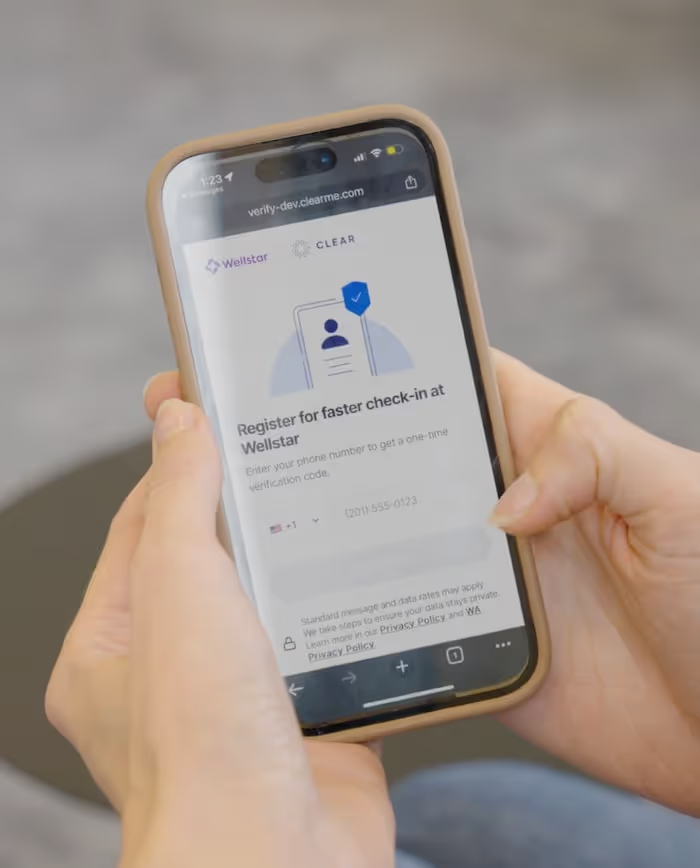
Before an appointment, patients receive a text invitation to register. First-time users take a selfie and upload a government-issued ID from their phone. The process takes about a minute. This one-time setup creates a reusable identity for future visits. Patients don't need to upload their ID again, and front-desk teams don't need to repeat the same manual identity checks at each appointment.

‍

The Return Visit, in Seconds

At arrival, patients select “Check in with CLEAR” on a kiosk or tablet, enter their phone number, and take a selfie. Liveness detection helps verify that a live person is present, while biometric verification compares the selfie with the identity established during setup to help confirm that the person arriving for care is the person associated with the record.

‍

Where It Runs: Kiosks, Tablets, and Mobile

CLEAR1 fits into existing technology environments. Patients can check in on-site using a kiosk or tablet or complete pre-visit setup on mobile. Supporting all three paths keeps identity verification consistent across channels.

‍

The Case for Efficiency

‍

The Wellstar case study shows the value of adding identity verification to patient check-in.

‍

In six months, digital check-in adoption grew fivefold, from 2% to 10%. More than 1,500 staff hours were redirected to care, 73% of participating patients said they would use it again, and Wellstar reached a 95% patient match rate.

‍

Adoption was still early at 10%, but the operational impact was already measurable. Engagement was strongest among patients 45 and older, including patients up to age 95, suggesting that a guided biometric experience can work across a broad patient population.

‍

Together, these results point to clear operational benefits: earlier identity verification, less friction at arrival, fewer incorrect record matches, and more time for staff to spend with patients.

‍

The Fraud and Data Integrity Case

‍

The same identity check that helps patients move through check-in faster can also help reduce the risk of fraud and record errors. Health systems can use one step to improve front-desk efficiency and strengthen the accuracy of patient records.

‍

Medical Identity Theft Starts at the Front Desk

A name, date of birth, address, or insurance detail can locate a record, but it doesn't verify the person standing at the desk. When a workflow relies on those details alone, someone with the right information may be able to present as another patient. The consequences can include care delivered under the wrong record, a corrupted clinical history, billing cleanup, and damage to the patient relationship.

‍

Duplicate Records and the Cost of a Bad Match

When registration links a patient to the wrong record—or creates a new one—the error can lead to duplicate records, claim complications, administrative rework, and an incomplete clinical history. Linking each appointment to a verified identity can help surface mismatches before the visit.

‍

That impact has a measurable cost. In the Wellstar analysis, projected cost avoidance was based on $655 per duplicate record. At that rate, verifying 25,000 patients could represent roughly $2 million in projected savings.

‍

Beyond Check-In: One Reusable Identity Across the Patient Journey

‍

Identity verified at check-in can carry into other workflows, including MyChart account creation and recovery, online scheduling, record access, and workforce account recovery. Instead of asking patients to repeat the same checks at each access point, health systems can reuse that verified identity across the care journey.

‍

As the Wellstar rollout expands across more than 150 locations, the health system is extending identity verification beyond check-in. Other health systems show how that approach can work in specific workflows: the Community Health Network case study reports that MyChart verification success increased from 62% to 93%, while account-related support calls fell by more than 54%. The Tampa General Hospital case study shows that 80% of account recovery requests were automated.

‍

These case studies illustrate how patient identity management can extend beyond check-in to support MyChart, account recovery, and other healthcare workflows. For broader context, the State of Identity in Healthcare explores the identity challenges health systems face across the patient journey.

‍

How to Measure Biometric Patient Check-In Success

‍

Before rollout, start by measuring how check-in works today: how long it takes, how much staff time it uses, and how often records need to be corrected. Use those numbers as your starting point. Then, measure the effect on patients, staff, and record accuracy using metrics such as:

‍

  • Average check-in time: compare kiosk, tablet, and front-desk timestamps before and after rollout.
  • Front-desk time spent on lookups and corrections: use time studies, staffing reports, or ticket categories.
  • Digital check-in adoption: compare completed digital check-ins with eligible appointments. Track adoption by location, age group, appointment type, and how patients register. Adoption is the first number to watch because the other benefits depend on patients completing setup.
  • Patient match rate: track how often the patient is matched to the correct record and how often staff must review an exception.
  • Duplicate record creation: track new duplicates in the master patient index (MPI) and review health information management reports.
  • Claim rework from registration errors: review billing denial and correction categories.
  • Patient satisfaction at arrival: use a check-in-specific question to isolate the arrival experience from overall visit satisfaction.

‍

How to Deploy Patient Check-In Without a Rearchitecture

‍

Adding identity verification doesn't require replacing a health system's check-in or intake platform. For example, Wellstar used CLEAR1's healthcare identity solutions through an Epic Welcome integration to add a verified identity step to its existing check-in workflow. The deployment used existing infrastructure without a heavy IT lift.

‍

Since CLEAR1 supports low-code and out-of-the-box integrations, health systems can add identity verification within their existing technology environment, patient experience, and EHR. Patients can continue to check in through the kiosks, tablets, or mobile workflows they already use.

‍

The experience is opt-in, and patients retain control of their information. CLEAR manages the biometric component, so the health system doesn’t need to handle or store biometric data directly. The health system receives the verification decision and only the information the patient has explicitly consented to share. This approach builds on CLEAR’s 16-plus years of experience in highly regulated settings, including airports.

‍

Deployment still requires a pre-visit outreach path, staff who can explain the option, and a decision about which locations or appointment types to prioritize. Teams can start with a focused rollout, measure adoption and match quality, and then expand to additional sites or appointment types.

‍

See How CLEAR1 Turns Patient Check-In into a Verified First Step

‍

CLEAR1 helps health systems establish a trusted identity at check-in and extend that identity across the patient journey—from scheduling and record access to MyChart and account recovery. This gives health systems a consistent way to verify who is requesting care or information at each step.

‍

Learn More

Frequently Asked Questions

What is the patient check-in process?
The patient check-in process is the set of steps a patient completes to confirm an appointment, locate the right record, provide or validate information, and begin care. It may happen at a front desk, kiosk, tablet, or on a phone before arrival. A stronger process also verifies that the person presenting the information matches the patient record.

‍

What is biometric patient check-in?
Biometric patient check-in is one layer of a multi-layered identity approach. It uses a live selfie and liveness detection to help match the person arriving for care to a previously verified identity. With CLEAR1, a first-time user captures a government-issued ID and selfie, then can re-verify at later visits with a quick selfie instead of repeating the document upload.

‍

How does biometric check-in reduce patient wait times?
Biometric check-in can reduce wait times by moving identity setup before the visit and replacing repeated manual lookups with a quick selfie match at arrival. Patients can register on their own time, while front-desk staff spend less time locating records, re-entering information, and resolving identity exceptions.

‍

How do hospitals verify patient identity at check-in?
Many hospitals use a name, date of birth, address, insurance information, and sometimes a government-issued ID to locate a record. Those details help with record lookup, but they do not by themselves verify the person standing at the desk. Identity verification adds a direct check that the person presenting the information matches the identity tied to the record.

‍

Is biometric patient check-in secure and private?
A responsible biometric check-in experience is opt-in, gives patients control over their information, and limits what the health system receives. The biometric provider manages the sensitive component, while the health system receives the verification decision and only the information the patient has consented to share.

‍

What causes duplicate patient records, and how can they be prevented?
Duplicate patient records often start when registration information leads staff or a system to select the wrong record or create a new one instead of matching the patient correctly. Health systems can reduce duplicates by linking the appointment to a verified identity before care begins, giving teams a chance to resolve mismatches before they create downstream rework.

A reusable identity can support future visits and digital experiences, including MyChart account creation and recovery, scheduling, and record access.

‍

Most health systems have digitized intake, but details like a name and date of birth can only locate a record—they don't confirm that the person checking in is the patient associated with that record. Biometric patient check-in closes that gap.

‍

With CLEAR1, biometric and document signals work together to help confirm that the person checking in is who they claim to be, without asking staff to repeat the same manual checks. This results in less friction at arrival, stronger protection for patient records, and a reusable identity layer across future visits and digital experiences.

‍

What the Patient Check-In Process Actually Costs You

‍

Health systems have invested in digital forms, eligibility checks, payment capture, kiosks, and online intake. These tools streamline administrative work, but they don't answer a basic identity question: Does the person checking in match the patient associated with the record?

‍

The Time Cost at the Desk

Front-desk staff are a limited resource. Every minute spent searching for records, correcting errors, and resolving mismatches is a minute they can't spend with patients. A verified identity helps staff quickly connect the right patient to the right record.

‍

The Error Cost That Follows the Patient

Registration errors can disrupt care and administrative work well beyond the visit. A wrong match can create a duplicate record, complicate a claim, or leave clinicians working from an incomplete history. By the time the error surfaces, multiple teams and systems may have relied on it, impacting patient experience, billing, payment, and health information management. Preventing a bad match is more efficient than correcting its effects later.

‍

The Identity Step Nobody Owns

Once staff locate a record, every downstream step—from the chart and claim to the appointment and follow-up communications—depends on connecting the record to the right person. Biometric verification helps confirm that the person checking in is who they claim to be.

‍

What Biometric Patient Check-In Looks Like in Practice

‍

Biometric patient check-in adds a direct identity verification layer to the intake workflow. Before the first visit, patients complete a one-time setup with a government-issued ID and selfie. At future visits, a selfie helps confirm that the person arriving matches the identity established during setup. At return visits, patients can complete check-in in seconds.

‍

The One-Time Setup, Before the Visit

Before an appointment, patients receive a text invitation to register. First-time users take a selfie and upload a government-issued ID from their phone. The process takes about a minute. This one-time setup creates a reusable identity for future visits. Patients don't need to upload their ID again, and front-desk teams don't need to repeat the same manual identity checks at each appointment.

‍

The Return Visit, in Seconds

At arrival, patients select “Check in with CLEAR” on a kiosk or tablet, enter their phone number, and take a selfie. Liveness detection helps verify that a live person is present, while biometric verification compares the selfie with the identity established during setup to help confirm that the person arriving for care is the person associated with the record.

‍

Where It Runs: Kiosks, Tablets, and Mobile

CLEAR1 fits into existing technology environments. Patients can check in on-site using a kiosk or tablet or complete pre-visit setup on mobile. Supporting all three paths keeps identity verification consistent across channels.

‍

The Case for Efficiency

‍

The Wellstar case study shows the value of adding identity verification to patient check-in.

‍

In six months, digital check-in adoption grew fivefold, from 2% to 10%. More than 1,500 staff hours were redirected to care, 73% of participating patients said they would use it again, and Wellstar reached a 95% patient match rate.

‍

Adoption was still early at 10%, but the operational impact was already measurable. Engagement was strongest among patients 45 and older, including patients up to age 95, suggesting that a guided biometric experience can work across a broad patient population.

‍

Together, these results point to clear operational benefits: earlier identity verification, less friction at arrival, fewer incorrect record matches, and more time for staff to spend with patients.

‍

The Fraud and Data Integrity Case

‍

The same identity check that helps patients move through check-in faster can also help reduce the risk of fraud and record errors. Health systems can use one step to improve front-desk efficiency and strengthen the accuracy of patient records.

‍

Medical Identity Theft Starts at the Front Desk

A name, date of birth, address, or insurance detail can locate a record, but it doesn't verify the person standing at the desk. When a workflow relies on those details alone, someone with the right information may be able to present as another patient. The consequences can include care delivered under the wrong record, a corrupted clinical history, billing cleanup, and damage to the patient relationship.

‍

Duplicate Records and the Cost of a Bad Match

When registration links a patient to the wrong record—or creates a new one—the error can lead to duplicate records, claim complications, administrative rework, and an incomplete clinical history. Linking each appointment to a verified identity can help surface mismatches before the visit.

‍

That impact has a measurable cost. In the Wellstar analysis, projected cost avoidance was based on $655 per duplicate record. At that rate, verifying 25,000 patients could represent roughly $2 million in projected savings.

‍

Beyond Check-In: One Reusable Identity Across the Patient Journey

‍

Identity verified at check-in can carry into other workflows, including MyChart account creation and recovery, online scheduling, record access, and workforce account recovery. Instead of asking patients to repeat the same checks at each access point, health systems can reuse that verified identity across the care journey.

‍

As the Wellstar rollout expands across more than 150 locations, the health system is extending identity verification beyond check-in. Other health systems show how that approach can work in specific workflows: the Community Health Network case study reports that MyChart verification success increased from 62% to 93%, while account-related support calls fell by more than 54%. The Tampa General Hospital case study shows that 80% of account recovery requests were automated.

‍

These case studies illustrate how patient identity management can extend beyond check-in to support MyChart, account recovery, and other healthcare workflows. For broader context, the State of Identity in Healthcare explores the identity challenges health systems face across the patient journey.

‍

How to Measure Biometric Patient Check-In Success

‍

Before rollout, start by measuring how check-in works today: how long it takes, how much staff time it uses, and how often records need to be corrected. Use those numbers as your starting point. Then, measure the effect on patients, staff, and record accuracy using metrics such as:

‍

  • Average check-in time: compare kiosk, tablet, and front-desk timestamps before and after rollout.
  • Front-desk time spent on lookups and corrections: use time studies, staffing reports, or ticket categories.
  • Digital check-in adoption: compare completed digital check-ins with eligible appointments. Track adoption by location, age group, appointment type, and how patients register. Adoption is the first number to watch because the other benefits depend on patients completing setup.
  • Patient match rate: track how often the patient is matched to the correct record and how often staff must review an exception.
  • Duplicate record creation: track new duplicates in the master patient index (MPI) and review health information management reports.
  • Claim rework from registration errors: review billing denial and correction categories.
  • Patient satisfaction at arrival: use a check-in-specific question to isolate the arrival experience from overall visit satisfaction.

‍

How to Deploy Patient Check-In Without a Rearchitecture

‍

Adding identity verification doesn't require replacing a health system's check-in or intake platform. For example, Wellstar used CLEAR1's healthcare identity solutions through an Epic Welcome integration to add a verified identity step to its existing check-in workflow. The deployment used existing infrastructure without a heavy IT lift.

‍

Since CLEAR1 supports low-code and out-of-the-box integrations, health systems can add identity verification within their existing technology environment, patient experience, and EHR. Patients can continue to check in through the kiosks, tablets, or mobile workflows they already use.

‍

The experience is opt-in, and patients retain control of their information. CLEAR manages the biometric component, so the health system doesn’t need to handle or store biometric data directly. The health system receives the verification decision and only the information the patient has explicitly consented to share. This approach builds on CLEAR’s 16-plus years of experience in highly regulated settings, including airports.

‍

Deployment still requires a pre-visit outreach path, staff who can explain the option, and a decision about which locations or appointment types to prioritize. Teams can start with a focused rollout, measure adoption and match quality, and then expand to additional sites or appointment types.

‍

See How CLEAR1 Turns Patient Check-In into a Verified First Step

‍

CLEAR1 helps health systems establish a trusted identity at check-in and extend that identity across the patient journey—from scheduling and record access to MyChart and account recovery. This gives health systems a consistent way to verify who is requesting care or information at each step.

‍

Learn More

Maximize security, minimize friction with CLEAR

Reach out to uncover what problems you can solve when you solve for identity.

By submitting my personal data, I consent to CLEAR collecting, processing, and storing my information in accordance with the CLEAR Privacy Notice.
blog

How Biometric Patient Check-In Cuts Wait Times and Fraud

October 9, 2026

A reusable identity can support future visits and digital experiences, including MyChart account creation and recovery, scheduling, and record access.

‍

Most health systems have digitized intake, but details like a name and date of birth can only locate a record—they don't confirm that the person checking in is the patient associated with that record. Biometric patient check-in closes that gap.

‍

With CLEAR1, biometric and document signals work together to help confirm that the person checking in is who they claim to be, without asking staff to repeat the same manual checks. This results in less friction at arrival, stronger protection for patient records, and a reusable identity layer across future visits and digital experiences.

‍

What the Patient Check-In Process Actually Costs You

‍

Health systems have invested in digital forms, eligibility checks, payment capture, kiosks, and online intake. These tools streamline administrative work, but they don't answer a basic identity question: Does the person checking in match the patient associated with the record?

‍

The Time Cost at the Desk

Front-desk staff are a limited resource. Every minute spent searching for records, correcting errors, and resolving mismatches is a minute they can't spend with patients. A verified identity helps staff quickly connect the right patient to the right record.

‍

The Error Cost That Follows the Patient

Registration errors can disrupt care and administrative work well beyond the visit. A wrong match can create a duplicate record, complicate a claim, or leave clinicians working from an incomplete history. By the time the error surfaces, multiple teams and systems may have relied on it, impacting patient experience, billing, payment, and health information management. Preventing a bad match is more efficient than correcting its effects later.

‍

The Identity Step Nobody Owns

Once staff locate a record, every downstream step—from the chart and claim to the appointment and follow-up communications—depends on connecting the record to the right person. Biometric verification helps confirm that the person checking in is who they claim to be.

‍

What Biometric Patient Check-In Looks Like in Practice

‍

Biometric patient check-in adds a direct identity verification layer to the intake workflow. Before the first visit, patients complete a one-time setup with a government-issued ID and selfie. At future visits, a selfie helps confirm that the person arriving matches the identity established during setup. At return visits, patients can complete check-in in seconds.

‍

The One-Time Setup, Before the Visit

Before an appointment, patients receive a text invitation to register. First-time users take a selfie and upload a government-issued ID from their phone. The process takes about a minute. This one-time setup creates a reusable identity for future visits. Patients don't need to upload their ID again, and front-desk teams don't need to repeat the same manual identity checks at each appointment.

‍

The Return Visit, in Seconds

At arrival, patients select “Check in with CLEAR” on a kiosk or tablet, enter their phone number, and take a selfie. Liveness detection helps verify that a live person is present, while biometric verification compares the selfie with the identity established during setup to help confirm that the person arriving for care is the person associated with the record.

‍

Where It Runs: Kiosks, Tablets, and Mobile

CLEAR1 fits into existing technology environments. Patients can check in on-site using a kiosk or tablet or complete pre-visit setup on mobile. Supporting all three paths keeps identity verification consistent across channels.

‍

The Case for Efficiency

‍

The Wellstar case study shows the value of adding identity verification to patient check-in.

‍

In six months, digital check-in adoption grew fivefold, from 2% to 10%. More than 1,500 staff hours were redirected to care, 73% of participating patients said they would use it again, and Wellstar reached a 95% patient match rate.

‍

Adoption was still early at 10%, but the operational impact was already measurable. Engagement was strongest among patients 45 and older, including patients up to age 95, suggesting that a guided biometric experience can work across a broad patient population.

‍

Together, these results point to clear operational benefits: earlier identity verification, less friction at arrival, fewer incorrect record matches, and more time for staff to spend with patients.

‍

The Fraud and Data Integrity Case

‍

The same identity check that helps patients move through check-in faster can also help reduce the risk of fraud and record errors. Health systems can use one step to improve front-desk efficiency and strengthen the accuracy of patient records.

‍

Medical Identity Theft Starts at the Front Desk

A name, date of birth, address, or insurance detail can locate a record, but it doesn't verify the person standing at the desk. When a workflow relies on those details alone, someone with the right information may be able to present as another patient. The consequences can include care delivered under the wrong record, a corrupted clinical history, billing cleanup, and damage to the patient relationship.

‍

Duplicate Records and the Cost of a Bad Match

When registration links a patient to the wrong record—or creates a new one—the error can lead to duplicate records, claim complications, administrative rework, and an incomplete clinical history. Linking each appointment to a verified identity can help surface mismatches before the visit.

‍

That impact has a measurable cost. In the Wellstar analysis, projected cost avoidance was based on $655 per duplicate record. At that rate, verifying 25,000 patients could represent roughly $2 million in projected savings.

‍

Beyond Check-In: One Reusable Identity Across the Patient Journey

‍

Identity verified at check-in can carry into other workflows, including MyChart account creation and recovery, online scheduling, record access, and workforce account recovery. Instead of asking patients to repeat the same checks at each access point, health systems can reuse that verified identity across the care journey.

‍

As the Wellstar rollout expands across more than 150 locations, the health system is extending identity verification beyond check-in. Other health systems show how that approach can work in specific workflows: the Community Health Network case study reports that MyChart verification success increased from 62% to 93%, while account-related support calls fell by more than 54%. The Tampa General Hospital case study shows that 80% of account recovery requests were automated.

‍

These case studies illustrate how patient identity management can extend beyond check-in to support MyChart, account recovery, and other healthcare workflows. For broader context, the State of Identity in Healthcare explores the identity challenges health systems face across the patient journey.

‍

How to Measure Biometric Patient Check-In Success

‍

Before rollout, start by measuring how check-in works today: how long it takes, how much staff time it uses, and how often records need to be corrected. Use those numbers as your starting point. Then, measure the effect on patients, staff, and record accuracy using metrics such as:

‍

  • Average check-in time: compare kiosk, tablet, and front-desk timestamps before and after rollout.
  • Front-desk time spent on lookups and corrections: use time studies, staffing reports, or ticket categories.
  • Digital check-in adoption: compare completed digital check-ins with eligible appointments. Track adoption by location, age group, appointment type, and how patients register. Adoption is the first number to watch because the other benefits depend on patients completing setup.
  • Patient match rate: track how often the patient is matched to the correct record and how often staff must review an exception.
  • Duplicate record creation: track new duplicates in the master patient index (MPI) and review health information management reports.
  • Claim rework from registration errors: review billing denial and correction categories.
  • Patient satisfaction at arrival: use a check-in-specific question to isolate the arrival experience from overall visit satisfaction.

‍

How to Deploy Patient Check-In Without a Rearchitecture

‍

Adding identity verification doesn't require replacing a health system's check-in or intake platform. For example, Wellstar used CLEAR1's healthcare identity solutions through an Epic Welcome integration to add a verified identity step to its existing check-in workflow. The deployment used existing infrastructure without a heavy IT lift.

‍

Since CLEAR1 supports low-code and out-of-the-box integrations, health systems can add identity verification within their existing technology environment, patient experience, and EHR. Patients can continue to check in through the kiosks, tablets, or mobile workflows they already use.

‍

The experience is opt-in, and patients retain control of their information. CLEAR manages the biometric component, so the health system doesn’t need to handle or store biometric data directly. The health system receives the verification decision and only the information the patient has explicitly consented to share. This approach builds on CLEAR’s 16-plus years of experience in highly regulated settings, including airports.

‍

Deployment still requires a pre-visit outreach path, staff who can explain the option, and a decision about which locations or appointment types to prioritize. Teams can start with a focused rollout, measure adoption and match quality, and then expand to additional sites or appointment types.

‍

See How CLEAR1 Turns Patient Check-In into a Verified First Step

‍

CLEAR1 helps health systems establish a trusted identity at check-in and extend that identity across the patient journey—from scheduling and record access to MyChart and account recovery. This gives health systems a consistent way to verify who is requesting care or information at each step.

‍

Learn More

A reusable identity can support future visits and digital experiences, including MyChart account creation and recovery, scheduling, and record access.

‍

Most health systems have digitized intake, but details like a name and date of birth can only locate a record—they don't confirm that the person checking in is the patient associated with that record. Biometric patient check-in closes that gap.

‍

With CLEAR1, biometric and document signals work together to help confirm that the person checking in is who they claim to be, without asking staff to repeat the same manual checks. This results in less friction at arrival, stronger protection for patient records, and a reusable identity layer across future visits and digital experiences.

‍

What the Patient Check-In Process Actually Costs You

‍

Health systems have invested in digital forms, eligibility checks, payment capture, kiosks, and online intake. These tools streamline administrative work, but they don't answer a basic identity question: Does the person checking in match the patient associated with the record?

‍

The Time Cost at the Desk

Front-desk staff are a limited resource. Every minute spent searching for records, correcting errors, and resolving mismatches is a minute they can't spend with patients. A verified identity helps staff quickly connect the right patient to the right record.

‍

The Error Cost That Follows the Patient

Registration errors can disrupt care and administrative work well beyond the visit. A wrong match can create a duplicate record, complicate a claim, or leave clinicians working from an incomplete history. By the time the error surfaces, multiple teams and systems may have relied on it, impacting patient experience, billing, payment, and health information management. Preventing a bad match is more efficient than correcting its effects later.

‍

The Identity Step Nobody Owns

Once staff locate a record, every downstream step—from the chart and claim to the appointment and follow-up communications—depends on connecting the record to the right person. Biometric verification helps confirm that the person checking in is who they claim to be.

‍

What Biometric Patient Check-In Looks Like in Practice

‍

Biometric patient check-in adds a direct identity verification layer to the intake workflow. Before the first visit, patients complete a one-time setup with a government-issued ID and selfie. At future visits, a selfie helps confirm that the person arriving matches the identity established during setup. At return visits, patients can complete check-in in seconds.

‍

The One-Time Setup, Before the Visit

Before an appointment, patients receive a text invitation to register. First-time users take a selfie and upload a government-issued ID from their phone. The process takes about a minute. This one-time setup creates a reusable identity for future visits. Patients don't need to upload their ID again, and front-desk teams don't need to repeat the same manual identity checks at each appointment.

‍

The Return Visit, in Seconds

At arrival, patients select “Check in with CLEAR” on a kiosk or tablet, enter their phone number, and take a selfie. Liveness detection helps verify that a live person is present, while biometric verification compares the selfie with the identity established during setup to help confirm that the person arriving for care is the person associated with the record.

‍

Where It Runs: Kiosks, Tablets, and Mobile

CLEAR1 fits into existing technology environments. Patients can check in on-site using a kiosk or tablet or complete pre-visit setup on mobile. Supporting all three paths keeps identity verification consistent across channels.

‍

The Case for Efficiency

‍

The Wellstar case study shows the value of adding identity verification to patient check-in.

‍

In six months, digital check-in adoption grew fivefold, from 2% to 10%. More than 1,500 staff hours were redirected to care, 73% of participating patients said they would use it again, and Wellstar reached a 95% patient match rate.

‍

Adoption was still early at 10%, but the operational impact was already measurable. Engagement was strongest among patients 45 and older, including patients up to age 95, suggesting that a guided biometric experience can work across a broad patient population.

‍

Together, these results point to clear operational benefits: earlier identity verification, less friction at arrival, fewer incorrect record matches, and more time for staff to spend with patients.

‍

The Fraud and Data Integrity Case

‍

The same identity check that helps patients move through check-in faster can also help reduce the risk of fraud and record errors. Health systems can use one step to improve front-desk efficiency and strengthen the accuracy of patient records.

‍

Medical Identity Theft Starts at the Front Desk

A name, date of birth, address, or insurance detail can locate a record, but it doesn't verify the person standing at the desk. When a workflow relies on those details alone, someone with the right information may be able to present as another patient. The consequences can include care delivered under the wrong record, a corrupted clinical history, billing cleanup, and damage to the patient relationship.

‍

Duplicate Records and the Cost of a Bad Match

When registration links a patient to the wrong record—or creates a new one—the error can lead to duplicate records, claim complications, administrative rework, and an incomplete clinical history. Linking each appointment to a verified identity can help surface mismatches before the visit.

‍

That impact has a measurable cost. In the Wellstar analysis, projected cost avoidance was based on $655 per duplicate record. At that rate, verifying 25,000 patients could represent roughly $2 million in projected savings.

‍

Beyond Check-In: One Reusable Identity Across the Patient Journey

‍

Identity verified at check-in can carry into other workflows, including MyChart account creation and recovery, online scheduling, record access, and workforce account recovery. Instead of asking patients to repeat the same checks at each access point, health systems can reuse that verified identity across the care journey.

‍

As the Wellstar rollout expands across more than 150 locations, the health system is extending identity verification beyond check-in. Other health systems show how that approach can work in specific workflows: the Community Health Network case study reports that MyChart verification success increased from 62% to 93%, while account-related support calls fell by more than 54%. The Tampa General Hospital case study shows that 80% of account recovery requests were automated.

‍

These case studies illustrate how patient identity management can extend beyond check-in to support MyChart, account recovery, and other healthcare workflows. For broader context, the State of Identity in Healthcare explores the identity challenges health systems face across the patient journey.

‍

How to Measure Biometric Patient Check-In Success

‍

Before rollout, start by measuring how check-in works today: how long it takes, how much staff time it uses, and how often records need to be corrected. Use those numbers as your starting point. Then, measure the effect on patients, staff, and record accuracy using metrics such as:

‍

  • Average check-in time: compare kiosk, tablet, and front-desk timestamps before and after rollout.
  • Front-desk time spent on lookups and corrections: use time studies, staffing reports, or ticket categories.
  • Digital check-in adoption: compare completed digital check-ins with eligible appointments. Track adoption by location, age group, appointment type, and how patients register. Adoption is the first number to watch because the other benefits depend on patients completing setup.
  • Patient match rate: track how often the patient is matched to the correct record and how often staff must review an exception.
  • Duplicate record creation: track new duplicates in the master patient index (MPI) and review health information management reports.
  • Claim rework from registration errors: review billing denial and correction categories.
  • Patient satisfaction at arrival: use a check-in-specific question to isolate the arrival experience from overall visit satisfaction.

‍

How to Deploy Patient Check-In Without a Rearchitecture

‍

Adding identity verification doesn't require replacing a health system's check-in or intake platform. For example, Wellstar used CLEAR1's healthcare identity solutions through an Epic Welcome integration to add a verified identity step to its existing check-in workflow. The deployment used existing infrastructure without a heavy IT lift.

‍

Since CLEAR1 supports low-code and out-of-the-box integrations, health systems can add identity verification within their existing technology environment, patient experience, and EHR. Patients can continue to check in through the kiosks, tablets, or mobile workflows they already use.

‍

The experience is opt-in, and patients retain control of their information. CLEAR manages the biometric component, so the health system doesn’t need to handle or store biometric data directly. The health system receives the verification decision and only the information the patient has explicitly consented to share. This approach builds on CLEAR’s 16-plus years of experience in highly regulated settings, including airports.

‍

Deployment still requires a pre-visit outreach path, staff who can explain the option, and a decision about which locations or appointment types to prioritize. Teams can start with a focused rollout, measure adoption and match quality, and then expand to additional sites or appointment types.

‍

See How CLEAR1 Turns Patient Check-In into a Verified First Step

‍

CLEAR1 helps health systems establish a trusted identity at check-in and extend that identity across the patient journey—from scheduling and record access to MyChart and account recovery. This gives health systems a consistent way to verify who is requesting care or information at each step.

‍

Learn More

Maximize security, minimize friction with CLEAR

Reach out to uncover what problems you can solve when you solve for identity.

By submitting my personal data, I consent to CLEAR collecting, processing, and storing my information in accordance with the CLEAR Privacy Notice.
blog

How Biometric Patient Check-In Cuts Wait Times and Fraud

October 9, 2026

A reusable identity can support future visits and digital experiences, including MyChart account creation and recovery, scheduling, and record access.

‍

Most health systems have digitized intake, but details like a name and date of birth can only locate a record—they don't confirm that the person checking in is the patient associated with that record. Biometric patient check-in closes that gap.

‍

With CLEAR1, biometric and document signals work together to help confirm that the person checking in is who they claim to be, without asking staff to repeat the same manual checks. This results in less friction at arrival, stronger protection for patient records, and a reusable identity layer across future visits and digital experiences.

‍

What the Patient Check-In Process Actually Costs You

‍

Health systems have invested in digital forms, eligibility checks, payment capture, kiosks, and online intake. These tools streamline administrative work, but they don't answer a basic identity question: Does the person checking in match the patient associated with the record?

‍

The Time Cost at the Desk

Front-desk staff are a limited resource. Every minute spent searching for records, correcting errors, and resolving mismatches is a minute they can't spend with patients. A verified identity helps staff quickly connect the right patient to the right record.

‍

The Error Cost That Follows the Patient

Registration errors can disrupt care and administrative work well beyond the visit. A wrong match can create a duplicate record, complicate a claim, or leave clinicians working from an incomplete history. By the time the error surfaces, multiple teams and systems may have relied on it, impacting patient experience, billing, payment, and health information management. Preventing a bad match is more efficient than correcting its effects later.

‍

The Identity Step Nobody Owns

Once staff locate a record, every downstream step—from the chart and claim to the appointment and follow-up communications—depends on connecting the record to the right person. Biometric verification helps confirm that the person checking in is who they claim to be.

‍

What Biometric Patient Check-In Looks Like in Practice

‍

Biometric patient check-in adds a direct identity verification layer to the intake workflow. Before the first visit, patients complete a one-time setup with a government-issued ID and selfie. At future visits, a selfie helps confirm that the person arriving matches the identity established during setup. At return visits, patients can complete check-in in seconds.

‍

The One-Time Setup, Before the Visit

Before an appointment, patients receive a text invitation to register. First-time users take a selfie and upload a government-issued ID from their phone. The process takes about a minute. This one-time setup creates a reusable identity for future visits. Patients don't need to upload their ID again, and front-desk teams don't need to repeat the same manual identity checks at each appointment.

‍

The Return Visit, in Seconds

At arrival, patients select “Check in with CLEAR” on a kiosk or tablet, enter their phone number, and take a selfie. Liveness detection helps verify that a live person is present, while biometric verification compares the selfie with the identity established during setup to help confirm that the person arriving for care is the person associated with the record.

‍

Where It Runs: Kiosks, Tablets, and Mobile

CLEAR1 fits into existing technology environments. Patients can check in on-site using a kiosk or tablet or complete pre-visit setup on mobile. Supporting all three paths keeps identity verification consistent across channels.

‍

The Case for Efficiency

‍

The Wellstar case study shows the value of adding identity verification to patient check-in.

‍

In six months, digital check-in adoption grew fivefold, from 2% to 10%. More than 1,500 staff hours were redirected to care, 73% of participating patients said they would use it again, and Wellstar reached a 95% patient match rate.

‍

Adoption was still early at 10%, but the operational impact was already measurable. Engagement was strongest among patients 45 and older, including patients up to age 95, suggesting that a guided biometric experience can work across a broad patient population.

‍

Together, these results point to clear operational benefits: earlier identity verification, less friction at arrival, fewer incorrect record matches, and more time for staff to spend with patients.

‍

The Fraud and Data Integrity Case

‍

The same identity check that helps patients move through check-in faster can also help reduce the risk of fraud and record errors. Health systems can use one step to improve front-desk efficiency and strengthen the accuracy of patient records.

‍

Medical Identity Theft Starts at the Front Desk

A name, date of birth, address, or insurance detail can locate a record, but it doesn't verify the person standing at the desk. When a workflow relies on those details alone, someone with the right information may be able to present as another patient. The consequences can include care delivered under the wrong record, a corrupted clinical history, billing cleanup, and damage to the patient relationship.

‍

Duplicate Records and the Cost of a Bad Match

When registration links a patient to the wrong record—or creates a new one—the error can lead to duplicate records, claim complications, administrative rework, and an incomplete clinical history. Linking each appointment to a verified identity can help surface mismatches before the visit.

‍

That impact has a measurable cost. In the Wellstar analysis, projected cost avoidance was based on $655 per duplicate record. At that rate, verifying 25,000 patients could represent roughly $2 million in projected savings.

‍

Beyond Check-In: One Reusable Identity Across the Patient Journey

‍

Identity verified at check-in can carry into other workflows, including MyChart account creation and recovery, online scheduling, record access, and workforce account recovery. Instead of asking patients to repeat the same checks at each access point, health systems can reuse that verified identity across the care journey.

‍

As the Wellstar rollout expands across more than 150 locations, the health system is extending identity verification beyond check-in. Other health systems show how that approach can work in specific workflows: the Community Health Network case study reports that MyChart verification success increased from 62% to 93%, while account-related support calls fell by more than 54%. The Tampa General Hospital case study shows that 80% of account recovery requests were automated.

‍

These case studies illustrate how patient identity management can extend beyond check-in to support MyChart, account recovery, and other healthcare workflows. For broader context, the State of Identity in Healthcare explores the identity challenges health systems face across the patient journey.

‍

How to Measure Biometric Patient Check-In Success

‍

Before rollout, start by measuring how check-in works today: how long it takes, how much staff time it uses, and how often records need to be corrected. Use those numbers as your starting point. Then, measure the effect on patients, staff, and record accuracy using metrics such as:

‍

  • Average check-in time: compare kiosk, tablet, and front-desk timestamps before and after rollout.
  • Front-desk time spent on lookups and corrections: use time studies, staffing reports, or ticket categories.
  • Digital check-in adoption: compare completed digital check-ins with eligible appointments. Track adoption by location, age group, appointment type, and how patients register. Adoption is the first number to watch because the other benefits depend on patients completing setup.
  • Patient match rate: track how often the patient is matched to the correct record and how often staff must review an exception.
  • Duplicate record creation: track new duplicates in the master patient index (MPI) and review health information management reports.
  • Claim rework from registration errors: review billing denial and correction categories.
  • Patient satisfaction at arrival: use a check-in-specific question to isolate the arrival experience from overall visit satisfaction.

‍

How to Deploy Patient Check-In Without a Rearchitecture

‍

Adding identity verification doesn't require replacing a health system's check-in or intake platform. For example, Wellstar used CLEAR1's healthcare identity solutions through an Epic Welcome integration to add a verified identity step to its existing check-in workflow. The deployment used existing infrastructure without a heavy IT lift.

‍

Since CLEAR1 supports low-code and out-of-the-box integrations, health systems can add identity verification within their existing technology environment, patient experience, and EHR. Patients can continue to check in through the kiosks, tablets, or mobile workflows they already use.

‍

The experience is opt-in, and patients retain control of their information. CLEAR manages the biometric component, so the health system doesn’t need to handle or store biometric data directly. The health system receives the verification decision and only the information the patient has explicitly consented to share. This approach builds on CLEAR’s 16-plus years of experience in highly regulated settings, including airports.

‍

Deployment still requires a pre-visit outreach path, staff who can explain the option, and a decision about which locations or appointment types to prioritize. Teams can start with a focused rollout, measure adoption and match quality, and then expand to additional sites or appointment types.

‍

See How CLEAR1 Turns Patient Check-In into a Verified First Step

‍

CLEAR1 helps health systems establish a trusted identity at check-in and extend that identity across the patient journey—from scheduling and record access to MyChart and account recovery. This gives health systems a consistent way to verify who is requesting care or information at each step.

‍

Learn More

A reusable identity can support future visits and digital experiences, including MyChart account creation and recovery, scheduling, and record access.

‍

Most health systems have digitized intake, but details like a name and date of birth can only locate a record—they don't confirm that the person checking in is the patient associated with that record. Biometric patient check-in closes that gap.

‍

With CLEAR1, biometric and document signals work together to help confirm that the person checking in is who they claim to be, without asking staff to repeat the same manual checks. This results in less friction at arrival, stronger protection for patient records, and a reusable identity layer across future visits and digital experiences.

‍

What the Patient Check-In Process Actually Costs You

‍

Health systems have invested in digital forms, eligibility checks, payment capture, kiosks, and online intake. These tools streamline administrative work, but they don't answer a basic identity question: Does the person checking in match the patient associated with the record?

‍

The Time Cost at the Desk

Front-desk staff are a limited resource. Every minute spent searching for records, correcting errors, and resolving mismatches is a minute they can't spend with patients. A verified identity helps staff quickly connect the right patient to the right record.

‍

The Error Cost That Follows the Patient

Registration errors can disrupt care and administrative work well beyond the visit. A wrong match can create a duplicate record, complicate a claim, or leave clinicians working from an incomplete history. By the time the error surfaces, multiple teams and systems may have relied on it, impacting patient experience, billing, payment, and health information management. Preventing a bad match is more efficient than correcting its effects later.

‍

The Identity Step Nobody Owns

Once staff locate a record, every downstream step—from the chart and claim to the appointment and follow-up communications—depends on connecting the record to the right person. Biometric verification helps confirm that the person checking in is who they claim to be.

‍

What Biometric Patient Check-In Looks Like in Practice

‍

Biometric patient check-in adds a direct identity verification layer to the intake workflow. Before the first visit, patients complete a one-time setup with a government-issued ID and selfie. At future visits, a selfie helps confirm that the person arriving matches the identity established during setup. At return visits, patients can complete check-in in seconds.

‍

The One-Time Setup, Before the Visit

Before an appointment, patients receive a text invitation to register. First-time users take a selfie and upload a government-issued ID from their phone. The process takes about a minute. This one-time setup creates a reusable identity for future visits. Patients don't need to upload their ID again, and front-desk teams don't need to repeat the same manual identity checks at each appointment.

‍

The Return Visit, in Seconds

At arrival, patients select “Check in with CLEAR” on a kiosk or tablet, enter their phone number, and take a selfie. Liveness detection helps verify that a live person is present, while biometric verification compares the selfie with the identity established during setup to help confirm that the person arriving for care is the person associated with the record.

‍

Where It Runs: Kiosks, Tablets, and Mobile

CLEAR1 fits into existing technology environments. Patients can check in on-site using a kiosk or tablet or complete pre-visit setup on mobile. Supporting all three paths keeps identity verification consistent across channels.

‍

The Case for Efficiency

‍

The Wellstar case study shows the value of adding identity verification to patient check-in.

‍

In six months, digital check-in adoption grew fivefold, from 2% to 10%. More than 1,500 staff hours were redirected to care, 73% of participating patients said they would use it again, and Wellstar reached a 95% patient match rate.

‍

Adoption was still early at 10%, but the operational impact was already measurable. Engagement was strongest among patients 45 and older, including patients up to age 95, suggesting that a guided biometric experience can work across a broad patient population.

‍

Together, these results point to clear operational benefits: earlier identity verification, less friction at arrival, fewer incorrect record matches, and more time for staff to spend with patients.

‍

The Fraud and Data Integrity Case

‍

The same identity check that helps patients move through check-in faster can also help reduce the risk of fraud and record errors. Health systems can use one step to improve front-desk efficiency and strengthen the accuracy of patient records.

‍

Medical Identity Theft Starts at the Front Desk

A name, date of birth, address, or insurance detail can locate a record, but it doesn't verify the person standing at the desk. When a workflow relies on those details alone, someone with the right information may be able to present as another patient. The consequences can include care delivered under the wrong record, a corrupted clinical history, billing cleanup, and damage to the patient relationship.

‍

Duplicate Records and the Cost of a Bad Match

When registration links a patient to the wrong record—or creates a new one—the error can lead to duplicate records, claim complications, administrative rework, and an incomplete clinical history. Linking each appointment to a verified identity can help surface mismatches before the visit.

‍

That impact has a measurable cost. In the Wellstar analysis, projected cost avoidance was based on $655 per duplicate record. At that rate, verifying 25,000 patients could represent roughly $2 million in projected savings.

‍

Beyond Check-In: One Reusable Identity Across the Patient Journey

‍

Identity verified at check-in can carry into other workflows, including MyChart account creation and recovery, online scheduling, record access, and workforce account recovery. Instead of asking patients to repeat the same checks at each access point, health systems can reuse that verified identity across the care journey.

‍

As the Wellstar rollout expands across more than 150 locations, the health system is extending identity verification beyond check-in. Other health systems show how that approach can work in specific workflows: the Community Health Network case study reports that MyChart verification success increased from 62% to 93%, while account-related support calls fell by more than 54%. The Tampa General Hospital case study shows that 80% of account recovery requests were automated.

‍

These case studies illustrate how patient identity management can extend beyond check-in to support MyChart, account recovery, and other healthcare workflows. For broader context, the State of Identity in Healthcare explores the identity challenges health systems face across the patient journey.

‍

How to Measure Biometric Patient Check-In Success

‍

Before rollout, start by measuring how check-in works today: how long it takes, how much staff time it uses, and how often records need to be corrected. Use those numbers as your starting point. Then, measure the effect on patients, staff, and record accuracy using metrics such as:

‍

  • Average check-in time: compare kiosk, tablet, and front-desk timestamps before and after rollout.
  • Front-desk time spent on lookups and corrections: use time studies, staffing reports, or ticket categories.
  • Digital check-in adoption: compare completed digital check-ins with eligible appointments. Track adoption by location, age group, appointment type, and how patients register. Adoption is the first number to watch because the other benefits depend on patients completing setup.
  • Patient match rate: track how often the patient is matched to the correct record and how often staff must review an exception.
  • Duplicate record creation: track new duplicates in the master patient index (MPI) and review health information management reports.
  • Claim rework from registration errors: review billing denial and correction categories.
  • Patient satisfaction at arrival: use a check-in-specific question to isolate the arrival experience from overall visit satisfaction.

‍

How to Deploy Patient Check-In Without a Rearchitecture

‍

Adding identity verification doesn't require replacing a health system's check-in or intake platform. For example, Wellstar used CLEAR1's healthcare identity solutions through an Epic Welcome integration to add a verified identity step to its existing check-in workflow. The deployment used existing infrastructure without a heavy IT lift.

‍

Since CLEAR1 supports low-code and out-of-the-box integrations, health systems can add identity verification within their existing technology environment, patient experience, and EHR. Patients can continue to check in through the kiosks, tablets, or mobile workflows they already use.

‍

The experience is opt-in, and patients retain control of their information. CLEAR manages the biometric component, so the health system doesn’t need to handle or store biometric data directly. The health system receives the verification decision and only the information the patient has explicitly consented to share. This approach builds on CLEAR’s 16-plus years of experience in highly regulated settings, including airports.

‍

Deployment still requires a pre-visit outreach path, staff who can explain the option, and a decision about which locations or appointment types to prioritize. Teams can start with a focused rollout, measure adoption and match quality, and then expand to additional sites or appointment types.

‍

See How CLEAR1 Turns Patient Check-In into a Verified First Step

‍

CLEAR1 helps health systems establish a trusted identity at check-in and extend that identity across the patient journey—from scheduling and record access to MyChart and account recovery. This gives health systems a consistent way to verify who is requesting care or information at each step.

‍

Learn More

Maximize security, minimize friction with CLEAR

Reach out to uncover what problems you can solve when you solve for identity.

By submitting my personal data, I consent to CLEAR collecting, processing, and storing my information in accordance with the CLEAR Privacy Notice.
blog

How Biometric Patient Check-In Cuts Wait Times and Fraud

October 9, 2026

A reusable identity can support future visits and digital experiences, including MyChart account creation and recovery, scheduling, and record access.

‍

Most health systems have digitized intake, but details like a name and date of birth can only locate a record—they don't confirm that the person checking in is the patient associated with that record. Biometric patient check-in closes that gap.

‍

With CLEAR1, biometric and document signals work together to help confirm that the person checking in is who they claim to be, without asking staff to repeat the same manual checks. This results in less friction at arrival, stronger protection for patient records, and a reusable identity layer across future visits and digital experiences.

‍

What the Patient Check-In Process Actually Costs You

‍

Health systems have invested in digital forms, eligibility checks, payment capture, kiosks, and online intake. These tools streamline administrative work, but they don't answer a basic identity question: Does the person checking in match the patient associated with the record?

‍

The Time Cost at the Desk

Front-desk staff are a limited resource. Every minute spent searching for records, correcting errors, and resolving mismatches is a minute they can't spend with patients. A verified identity helps staff quickly connect the right patient to the right record.

‍

The Error Cost That Follows the Patient

Registration errors can disrupt care and administrative work well beyond the visit. A wrong match can create a duplicate record, complicate a claim, or leave clinicians working from an incomplete history. By the time the error surfaces, multiple teams and systems may have relied on it, impacting patient experience, billing, payment, and health information management. Preventing a bad match is more efficient than correcting its effects later.

‍

The Identity Step Nobody Owns

Once staff locate a record, every downstream step—from the chart and claim to the appointment and follow-up communications—depends on connecting the record to the right person. Biometric verification helps confirm that the person checking in is who they claim to be.

‍

What Biometric Patient Check-In Looks Like in Practice

‍

Biometric patient check-in adds a direct identity verification layer to the intake workflow. Before the first visit, patients complete a one-time setup with a government-issued ID and selfie. At future visits, a selfie helps confirm that the person arriving matches the identity established during setup. At return visits, patients can complete check-in in seconds.

‍

The One-Time Setup, Before the Visit

Before an appointment, patients receive a text invitation to register. First-time users take a selfie and upload a government-issued ID from their phone. The process takes about a minute. This one-time setup creates a reusable identity for future visits. Patients don't need to upload their ID again, and front-desk teams don't need to repeat the same manual identity checks at each appointment.

‍

The Return Visit, in Seconds

At arrival, patients select “Check in with CLEAR” on a kiosk or tablet, enter their phone number, and take a selfie. Liveness detection helps verify that a live person is present, while biometric verification compares the selfie with the identity established during setup to help confirm that the person arriving for care is the person associated with the record.

‍

Where It Runs: Kiosks, Tablets, and Mobile

CLEAR1 fits into existing technology environments. Patients can check in on-site using a kiosk or tablet or complete pre-visit setup on mobile. Supporting all three paths keeps identity verification consistent across channels.

‍

The Case for Efficiency

‍

The Wellstar case study shows the value of adding identity verification to patient check-in.

‍

In six months, digital check-in adoption grew fivefold, from 2% to 10%. More than 1,500 staff hours were redirected to care, 73% of participating patients said they would use it again, and Wellstar reached a 95% patient match rate.

‍

Adoption was still early at 10%, but the operational impact was already measurable. Engagement was strongest among patients 45 and older, including patients up to age 95, suggesting that a guided biometric experience can work across a broad patient population.

‍

Together, these results point to clear operational benefits: earlier identity verification, less friction at arrival, fewer incorrect record matches, and more time for staff to spend with patients.

‍

The Fraud and Data Integrity Case

‍

The same identity check that helps patients move through check-in faster can also help reduce the risk of fraud and record errors. Health systems can use one step to improve front-desk efficiency and strengthen the accuracy of patient records.

‍

Medical Identity Theft Starts at the Front Desk

A name, date of birth, address, or insurance detail can locate a record, but it doesn't verify the person standing at the desk. When a workflow relies on those details alone, someone with the right information may be able to present as another patient. The consequences can include care delivered under the wrong record, a corrupted clinical history, billing cleanup, and damage to the patient relationship.

‍

Duplicate Records and the Cost of a Bad Match

When registration links a patient to the wrong record—or creates a new one—the error can lead to duplicate records, claim complications, administrative rework, and an incomplete clinical history. Linking each appointment to a verified identity can help surface mismatches before the visit.

‍

That impact has a measurable cost. In the Wellstar analysis, projected cost avoidance was based on $655 per duplicate record. At that rate, verifying 25,000 patients could represent roughly $2 million in projected savings.

‍

Beyond Check-In: One Reusable Identity Across the Patient Journey

‍

Identity verified at check-in can carry into other workflows, including MyChart account creation and recovery, online scheduling, record access, and workforce account recovery. Instead of asking patients to repeat the same checks at each access point, health systems can reuse that verified identity across the care journey.

‍

As the Wellstar rollout expands across more than 150 locations, the health system is extending identity verification beyond check-in. Other health systems show how that approach can work in specific workflows: the Community Health Network case study reports that MyChart verification success increased from 62% to 93%, while account-related support calls fell by more than 54%. The Tampa General Hospital case study shows that 80% of account recovery requests were automated.

‍

These case studies illustrate how patient identity management can extend beyond check-in to support MyChart, account recovery, and other healthcare workflows. For broader context, the State of Identity in Healthcare explores the identity challenges health systems face across the patient journey.

‍

How to Measure Biometric Patient Check-In Success

‍

Before rollout, start by measuring how check-in works today: how long it takes, how much staff time it uses, and how often records need to be corrected. Use those numbers as your starting point. Then, measure the effect on patients, staff, and record accuracy using metrics such as:

‍

  • Average check-in time: compare kiosk, tablet, and front-desk timestamps before and after rollout.
  • Front-desk time spent on lookups and corrections: use time studies, staffing reports, or ticket categories.
  • Digital check-in adoption: compare completed digital check-ins with eligible appointments. Track adoption by location, age group, appointment type, and how patients register. Adoption is the first number to watch because the other benefits depend on patients completing setup.
  • Patient match rate: track how often the patient is matched to the correct record and how often staff must review an exception.
  • Duplicate record creation: track new duplicates in the master patient index (MPI) and review health information management reports.
  • Claim rework from registration errors: review billing denial and correction categories.
  • Patient satisfaction at arrival: use a check-in-specific question to isolate the arrival experience from overall visit satisfaction.

‍

How to Deploy Patient Check-In Without a Rearchitecture

‍

Adding identity verification doesn't require replacing a health system's check-in or intake platform. For example, Wellstar used CLEAR1's healthcare identity solutions through an Epic Welcome integration to add a verified identity step to its existing check-in workflow. The deployment used existing infrastructure without a heavy IT lift.

‍

Since CLEAR1 supports low-code and out-of-the-box integrations, health systems can add identity verification within their existing technology environment, patient experience, and EHR. Patients can continue to check in through the kiosks, tablets, or mobile workflows they already use.

‍

The experience is opt-in, and patients retain control of their information. CLEAR manages the biometric component, so the health system doesn’t need to handle or store biometric data directly. The health system receives the verification decision and only the information the patient has explicitly consented to share. This approach builds on CLEAR’s 16-plus years of experience in highly regulated settings, including airports.

‍

Deployment still requires a pre-visit outreach path, staff who can explain the option, and a decision about which locations or appointment types to prioritize. Teams can start with a focused rollout, measure adoption and match quality, and then expand to additional sites or appointment types.

‍

See How CLEAR1 Turns Patient Check-In into a Verified First Step

‍

CLEAR1 helps health systems establish a trusted identity at check-in and extend that identity across the patient journey—from scheduling and record access to MyChart and account recovery. This gives health systems a consistent way to verify who is requesting care or information at each step.

‍

Learn More

A reusable identity can support future visits and digital experiences, including MyChart account creation and recovery, scheduling, and record access.

‍

Most health systems have digitized intake, but details like a name and date of birth can only locate a record—they don't confirm that the person checking in is the patient associated with that record. Biometric patient check-in closes that gap.

‍

With CLEAR1, biometric and document signals work together to help confirm that the person checking in is who they claim to be, without asking staff to repeat the same manual checks. This results in less friction at arrival, stronger protection for patient records, and a reusable identity layer across future visits and digital experiences.

‍

What the Patient Check-In Process Actually Costs You

‍

Health systems have invested in digital forms, eligibility checks, payment capture, kiosks, and online intake. These tools streamline administrative work, but they don't answer a basic identity question: Does the person checking in match the patient associated with the record?

‍

The Time Cost at the Desk

Front-desk staff are a limited resource. Every minute spent searching for records, correcting errors, and resolving mismatches is a minute they can't spend with patients. A verified identity helps staff quickly connect the right patient to the right record.

‍

The Error Cost That Follows the Patient

Registration errors can disrupt care and administrative work well beyond the visit. A wrong match can create a duplicate record, complicate a claim, or leave clinicians working from an incomplete history. By the time the error surfaces, multiple teams and systems may have relied on it, impacting patient experience, billing, payment, and health information management. Preventing a bad match is more efficient than correcting its effects later.

‍

The Identity Step Nobody Owns

Once staff locate a record, every downstream step—from the chart and claim to the appointment and follow-up communications—depends on connecting the record to the right person. Biometric verification helps confirm that the person checking in is who they claim to be.

‍

What Biometric Patient Check-In Looks Like in Practice

‍

Biometric patient check-in adds a direct identity verification layer to the intake workflow. Before the first visit, patients complete a one-time setup with a government-issued ID and selfie. At future visits, a selfie helps confirm that the person arriving matches the identity established during setup. At return visits, patients can complete check-in in seconds.

‍

The One-Time Setup, Before the Visit

Before an appointment, patients receive a text invitation to register. First-time users take a selfie and upload a government-issued ID from their phone. The process takes about a minute. This one-time setup creates a reusable identity for future visits. Patients don't need to upload their ID again, and front-desk teams don't need to repeat the same manual identity checks at each appointment.

‍

The Return Visit, in Seconds

At arrival, patients select “Check in with CLEAR” on a kiosk or tablet, enter their phone number, and take a selfie. Liveness detection helps verify that a live person is present, while biometric verification compares the selfie with the identity established during setup to help confirm that the person arriving for care is the person associated with the record.

‍

Where It Runs: Kiosks, Tablets, and Mobile

CLEAR1 fits into existing technology environments. Patients can check in on-site using a kiosk or tablet or complete pre-visit setup on mobile. Supporting all three paths keeps identity verification consistent across channels.

‍

The Case for Efficiency

‍

The Wellstar case study shows the value of adding identity verification to patient check-in.

‍

In six months, digital check-in adoption grew fivefold, from 2% to 10%. More than 1,500 staff hours were redirected to care, 73% of participating patients said they would use it again, and Wellstar reached a 95% patient match rate.

‍

Adoption was still early at 10%, but the operational impact was already measurable. Engagement was strongest among patients 45 and older, including patients up to age 95, suggesting that a guided biometric experience can work across a broad patient population.

‍

Together, these results point to clear operational benefits: earlier identity verification, less friction at arrival, fewer incorrect record matches, and more time for staff to spend with patients.

‍

The Fraud and Data Integrity Case

‍

The same identity check that helps patients move through check-in faster can also help reduce the risk of fraud and record errors. Health systems can use one step to improve front-desk efficiency and strengthen the accuracy of patient records.

‍

Medical Identity Theft Starts at the Front Desk

A name, date of birth, address, or insurance detail can locate a record, but it doesn't verify the person standing at the desk. When a workflow relies on those details alone, someone with the right information may be able to present as another patient. The consequences can include care delivered under the wrong record, a corrupted clinical history, billing cleanup, and damage to the patient relationship.

‍

Duplicate Records and the Cost of a Bad Match

When registration links a patient to the wrong record—or creates a new one—the error can lead to duplicate records, claim complications, administrative rework, and an incomplete clinical history. Linking each appointment to a verified identity can help surface mismatches before the visit.

‍

That impact has a measurable cost. In the Wellstar analysis, projected cost avoidance was based on $655 per duplicate record. At that rate, verifying 25,000 patients could represent roughly $2 million in projected savings.

‍

Beyond Check-In: One Reusable Identity Across the Patient Journey

‍

Identity verified at check-in can carry into other workflows, including MyChart account creation and recovery, online scheduling, record access, and workforce account recovery. Instead of asking patients to repeat the same checks at each access point, health systems can reuse that verified identity across the care journey.

‍

As the Wellstar rollout expands across more than 150 locations, the health system is extending identity verification beyond check-in. Other health systems show how that approach can work in specific workflows: the Community Health Network case study reports that MyChart verification success increased from 62% to 93%, while account-related support calls fell by more than 54%. The Tampa General Hospital case study shows that 80% of account recovery requests were automated.

‍

These case studies illustrate how patient identity management can extend beyond check-in to support MyChart, account recovery, and other healthcare workflows. For broader context, the State of Identity in Healthcare explores the identity challenges health systems face across the patient journey.

‍

How to Measure Biometric Patient Check-In Success

‍

Before rollout, start by measuring how check-in works today: how long it takes, how much staff time it uses, and how often records need to be corrected. Use those numbers as your starting point. Then, measure the effect on patients, staff, and record accuracy using metrics such as:

‍

  • Average check-in time: compare kiosk, tablet, and front-desk timestamps before and after rollout.
  • Front-desk time spent on lookups and corrections: use time studies, staffing reports, or ticket categories.
  • Digital check-in adoption: compare completed digital check-ins with eligible appointments. Track adoption by location, age group, appointment type, and how patients register. Adoption is the first number to watch because the other benefits depend on patients completing setup.
  • Patient match rate: track how often the patient is matched to the correct record and how often staff must review an exception.
  • Duplicate record creation: track new duplicates in the master patient index (MPI) and review health information management reports.
  • Claim rework from registration errors: review billing denial and correction categories.
  • Patient satisfaction at arrival: use a check-in-specific question to isolate the arrival experience from overall visit satisfaction.

‍

How to Deploy Patient Check-In Without a Rearchitecture

‍

Adding identity verification doesn't require replacing a health system's check-in or intake platform. For example, Wellstar used CLEAR1's healthcare identity solutions through an Epic Welcome integration to add a verified identity step to its existing check-in workflow. The deployment used existing infrastructure without a heavy IT lift.

‍

Since CLEAR1 supports low-code and out-of-the-box integrations, health systems can add identity verification within their existing technology environment, patient experience, and EHR. Patients can continue to check in through the kiosks, tablets, or mobile workflows they already use.

‍

The experience is opt-in, and patients retain control of their information. CLEAR manages the biometric component, so the health system doesn’t need to handle or store biometric data directly. The health system receives the verification decision and only the information the patient has explicitly consented to share. This approach builds on CLEAR’s 16-plus years of experience in highly regulated settings, including airports.

‍

Deployment still requires a pre-visit outreach path, staff who can explain the option, and a decision about which locations or appointment types to prioritize. Teams can start with a focused rollout, measure adoption and match quality, and then expand to additional sites or appointment types.

‍

See How CLEAR1 Turns Patient Check-In into a Verified First Step

‍

CLEAR1 helps health systems establish a trusted identity at check-in and extend that identity across the patient journey—from scheduling and record access to MyChart and account recovery. This gives health systems a consistent way to verify who is requesting care or information at each step.

‍

Learn More

More product updates

VIEW ALL RELEASE NOTES
No items found.
blog

How Biometric Patient Check-In Cuts Wait Times and Fraud

October 9, 2026

A reusable identity can support future visits and digital experiences, including MyChart account creation and recovery, scheduling, and record access.

‍

Most health systems have digitized intake, but details like a name and date of birth can only locate a record—they don't confirm that the person checking in is the patient associated with that record. Biometric patient check-in closes that gap.

‍

With CLEAR1, biometric and document signals work together to help confirm that the person checking in is who they claim to be, without asking staff to repeat the same manual checks. This results in less friction at arrival, stronger protection for patient records, and a reusable identity layer across future visits and digital experiences.

‍

What the Patient Check-In Process Actually Costs You

‍

Health systems have invested in digital forms, eligibility checks, payment capture, kiosks, and online intake. These tools streamline administrative work, but they don't answer a basic identity question: Does the person checking in match the patient associated with the record?

‍

The Time Cost at the Desk

Front-desk staff are a limited resource. Every minute spent searching for records, correcting errors, and resolving mismatches is a minute they can't spend with patients. A verified identity helps staff quickly connect the right patient to the right record.

‍

The Error Cost That Follows the Patient

Registration errors can disrupt care and administrative work well beyond the visit. A wrong match can create a duplicate record, complicate a claim, or leave clinicians working from an incomplete history. By the time the error surfaces, multiple teams and systems may have relied on it, impacting patient experience, billing, payment, and health information management. Preventing a bad match is more efficient than correcting its effects later.

‍

The Identity Step Nobody Owns

Once staff locate a record, every downstream step—from the chart and claim to the appointment and follow-up communications—depends on connecting the record to the right person. Biometric verification helps confirm that the person checking in is who they claim to be.

‍

What Biometric Patient Check-In Looks Like in Practice

‍

Biometric patient check-in adds a direct identity verification layer to the intake workflow. Before the first visit, patients complete a one-time setup with a government-issued ID and selfie. At future visits, a selfie helps confirm that the person arriving matches the identity established during setup. At return visits, patients can complete check-in in seconds.

‍

The One-Time Setup, Before the Visit

Before an appointment, patients receive a text invitation to register. First-time users take a selfie and upload a government-issued ID from their phone. The process takes about a minute. This one-time setup creates a reusable identity for future visits. Patients don't need to upload their ID again, and front-desk teams don't need to repeat the same manual identity checks at each appointment.

‍

The Return Visit, in Seconds

At arrival, patients select “Check in with CLEAR” on a kiosk or tablet, enter their phone number, and take a selfie. Liveness detection helps verify that a live person is present, while biometric verification compares the selfie with the identity established during setup to help confirm that the person arriving for care is the person associated with the record.

‍

Where It Runs: Kiosks, Tablets, and Mobile

CLEAR1 fits into existing technology environments. Patients can check in on-site using a kiosk or tablet or complete pre-visit setup on mobile. Supporting all three paths keeps identity verification consistent across channels.

‍

The Case for Efficiency

‍

The Wellstar case study shows the value of adding identity verification to patient check-in.

‍

In six months, digital check-in adoption grew fivefold, from 2% to 10%. More than 1,500 staff hours were redirected to care, 73% of participating patients said they would use it again, and Wellstar reached a 95% patient match rate.

‍

Adoption was still early at 10%, but the operational impact was already measurable. Engagement was strongest among patients 45 and older, including patients up to age 95, suggesting that a guided biometric experience can work across a broad patient population.

‍

Together, these results point to clear operational benefits: earlier identity verification, less friction at arrival, fewer incorrect record matches, and more time for staff to spend with patients.

‍

The Fraud and Data Integrity Case

‍

The same identity check that helps patients move through check-in faster can also help reduce the risk of fraud and record errors. Health systems can use one step to improve front-desk efficiency and strengthen the accuracy of patient records.

‍

Medical Identity Theft Starts at the Front Desk

A name, date of birth, address, or insurance detail can locate a record, but it doesn't verify the person standing at the desk. When a workflow relies on those details alone, someone with the right information may be able to present as another patient. The consequences can include care delivered under the wrong record, a corrupted clinical history, billing cleanup, and damage to the patient relationship.

‍

Duplicate Records and the Cost of a Bad Match

When registration links a patient to the wrong record—or creates a new one—the error can lead to duplicate records, claim complications, administrative rework, and an incomplete clinical history. Linking each appointment to a verified identity can help surface mismatches before the visit.

‍

That impact has a measurable cost. In the Wellstar analysis, projected cost avoidance was based on $655 per duplicate record. At that rate, verifying 25,000 patients could represent roughly $2 million in projected savings.

‍

Beyond Check-In: One Reusable Identity Across the Patient Journey

‍

Identity verified at check-in can carry into other workflows, including MyChart account creation and recovery, online scheduling, record access, and workforce account recovery. Instead of asking patients to repeat the same checks at each access point, health systems can reuse that verified identity across the care journey.

‍

As the Wellstar rollout expands across more than 150 locations, the health system is extending identity verification beyond check-in. Other health systems show how that approach can work in specific workflows: the Community Health Network case study reports that MyChart verification success increased from 62% to 93%, while account-related support calls fell by more than 54%. The Tampa General Hospital case study shows that 80% of account recovery requests were automated.

‍

These case studies illustrate how patient identity management can extend beyond check-in to support MyChart, account recovery, and other healthcare workflows. For broader context, the State of Identity in Healthcare explores the identity challenges health systems face across the patient journey.

‍

How to Measure Biometric Patient Check-In Success

‍

Before rollout, start by measuring how check-in works today: how long it takes, how much staff time it uses, and how often records need to be corrected. Use those numbers as your starting point. Then, measure the effect on patients, staff, and record accuracy using metrics such as:

‍

  • Average check-in time: compare kiosk, tablet, and front-desk timestamps before and after rollout.
  • Front-desk time spent on lookups and corrections: use time studies, staffing reports, or ticket categories.
  • Digital check-in adoption: compare completed digital check-ins with eligible appointments. Track adoption by location, age group, appointment type, and how patients register. Adoption is the first number to watch because the other benefits depend on patients completing setup.
  • Patient match rate: track how often the patient is matched to the correct record and how often staff must review an exception.
  • Duplicate record creation: track new duplicates in the master patient index (MPI) and review health information management reports.
  • Claim rework from registration errors: review billing denial and correction categories.
  • Patient satisfaction at arrival: use a check-in-specific question to isolate the arrival experience from overall visit satisfaction.

‍

How to Deploy Patient Check-In Without a Rearchitecture

‍

Adding identity verification doesn't require replacing a health system's check-in or intake platform. For example, Wellstar used CLEAR1's healthcare identity solutions through an Epic Welcome integration to add a verified identity step to its existing check-in workflow. The deployment used existing infrastructure without a heavy IT lift.

‍

Since CLEAR1 supports low-code and out-of-the-box integrations, health systems can add identity verification within their existing technology environment, patient experience, and EHR. Patients can continue to check in through the kiosks, tablets, or mobile workflows they already use.

‍

The experience is opt-in, and patients retain control of their information. CLEAR manages the biometric component, so the health system doesn’t need to handle or store biometric data directly. The health system receives the verification decision and only the information the patient has explicitly consented to share. This approach builds on CLEAR’s 16-plus years of experience in highly regulated settings, including airports.

‍

Deployment still requires a pre-visit outreach path, staff who can explain the option, and a decision about which locations or appointment types to prioritize. Teams can start with a focused rollout, measure adoption and match quality, and then expand to additional sites or appointment types.

‍

See How CLEAR1 Turns Patient Check-In into a Verified First Step

‍

CLEAR1 helps health systems establish a trusted identity at check-in and extend that identity across the patient journey—from scheduling and record access to MyChart and account recovery. This gives health systems a consistent way to verify who is requesting care or information at each step.

‍

Learn More

A reusable identity can support future visits and digital experiences, including MyChart account creation and recovery, scheduling, and record access.

‍

Most health systems have digitized intake, but details like a name and date of birth can only locate a record—they don't confirm that the person checking in is the patient associated with that record. Biometric patient check-in closes that gap.

‍

With CLEAR1, biometric and document signals work together to help confirm that the person checking in is who they claim to be, without asking staff to repeat the same manual checks. This results in less friction at arrival, stronger protection for patient records, and a reusable identity layer across future visits and digital experiences.

‍

What the Patient Check-In Process Actually Costs You

‍

Health systems have invested in digital forms, eligibility checks, payment capture, kiosks, and online intake. These tools streamline administrative work, but they don't answer a basic identity question: Does the person checking in match the patient associated with the record?

‍

The Time Cost at the Desk

Front-desk staff are a limited resource. Every minute spent searching for records, correcting errors, and resolving mismatches is a minute they can't spend with patients. A verified identity helps staff quickly connect the right patient to the right record.

‍

The Error Cost That Follows the Patient

Registration errors can disrupt care and administrative work well beyond the visit. A wrong match can create a duplicate record, complicate a claim, or leave clinicians working from an incomplete history. By the time the error surfaces, multiple teams and systems may have relied on it, impacting patient experience, billing, payment, and health information management. Preventing a bad match is more efficient than correcting its effects later.

‍

The Identity Step Nobody Owns

Once staff locate a record, every downstream step—from the chart and claim to the appointment and follow-up communications—depends on connecting the record to the right person. Biometric verification helps confirm that the person checking in is who they claim to be.

‍

What Biometric Patient Check-In Looks Like in Practice

‍

Biometric patient check-in adds a direct identity verification layer to the intake workflow. Before the first visit, patients complete a one-time setup with a government-issued ID and selfie. At future visits, a selfie helps confirm that the person arriving matches the identity established during setup. At return visits, patients can complete check-in in seconds.

‍

The One-Time Setup, Before the Visit

Before an appointment, patients receive a text invitation to register. First-time users take a selfie and upload a government-issued ID from their phone. The process takes about a minute. This one-time setup creates a reusable identity for future visits. Patients don't need to upload their ID again, and front-desk teams don't need to repeat the same manual identity checks at each appointment.

‍

The Return Visit, in Seconds

At arrival, patients select “Check in with CLEAR” on a kiosk or tablet, enter their phone number, and take a selfie. Liveness detection helps verify that a live person is present, while biometric verification compares the selfie with the identity established during setup to help confirm that the person arriving for care is the person associated with the record.

‍

Where It Runs: Kiosks, Tablets, and Mobile

CLEAR1 fits into existing technology environments. Patients can check in on-site using a kiosk or tablet or complete pre-visit setup on mobile. Supporting all three paths keeps identity verification consistent across channels.

‍

The Case for Efficiency

‍

The Wellstar case study shows the value of adding identity verification to patient check-in.

‍

In six months, digital check-in adoption grew fivefold, from 2% to 10%. More than 1,500 staff hours were redirected to care, 73% of participating patients said they would use it again, and Wellstar reached a 95% patient match rate.

‍

Adoption was still early at 10%, but the operational impact was already measurable. Engagement was strongest among patients 45 and older, including patients up to age 95, suggesting that a guided biometric experience can work across a broad patient population.

‍

Together, these results point to clear operational benefits: earlier identity verification, less friction at arrival, fewer incorrect record matches, and more time for staff to spend with patients.

‍

The Fraud and Data Integrity Case

‍

The same identity check that helps patients move through check-in faster can also help reduce the risk of fraud and record errors. Health systems can use one step to improve front-desk efficiency and strengthen the accuracy of patient records.

‍

Medical Identity Theft Starts at the Front Desk

A name, date of birth, address, or insurance detail can locate a record, but it doesn't verify the person standing at the desk. When a workflow relies on those details alone, someone with the right information may be able to present as another patient. The consequences can include care delivered under the wrong record, a corrupted clinical history, billing cleanup, and damage to the patient relationship.

‍

Duplicate Records and the Cost of a Bad Match

When registration links a patient to the wrong record—or creates a new one—the error can lead to duplicate records, claim complications, administrative rework, and an incomplete clinical history. Linking each appointment to a verified identity can help surface mismatches before the visit.

‍

That impact has a measurable cost. In the Wellstar analysis, projected cost avoidance was based on $655 per duplicate record. At that rate, verifying 25,000 patients could represent roughly $2 million in projected savings.

‍

Beyond Check-In: One Reusable Identity Across the Patient Journey

‍

Identity verified at check-in can carry into other workflows, including MyChart account creation and recovery, online scheduling, record access, and workforce account recovery. Instead of asking patients to repeat the same checks at each access point, health systems can reuse that verified identity across the care journey.

‍

As the Wellstar rollout expands across more than 150 locations, the health system is extending identity verification beyond check-in. Other health systems show how that approach can work in specific workflows: the Community Health Network case study reports that MyChart verification success increased from 62% to 93%, while account-related support calls fell by more than 54%. The Tampa General Hospital case study shows that 80% of account recovery requests were automated.

‍

These case studies illustrate how patient identity management can extend beyond check-in to support MyChart, account recovery, and other healthcare workflows. For broader context, the State of Identity in Healthcare explores the identity challenges health systems face across the patient journey.

‍

How to Measure Biometric Patient Check-In Success

‍

Before rollout, start by measuring how check-in works today: how long it takes, how much staff time it uses, and how often records need to be corrected. Use those numbers as your starting point. Then, measure the effect on patients, staff, and record accuracy using metrics such as:

‍

  • Average check-in time: compare kiosk, tablet, and front-desk timestamps before and after rollout.
  • Front-desk time spent on lookups and corrections: use time studies, staffing reports, or ticket categories.
  • Digital check-in adoption: compare completed digital check-ins with eligible appointments. Track adoption by location, age group, appointment type, and how patients register. Adoption is the first number to watch because the other benefits depend on patients completing setup.
  • Patient match rate: track how often the patient is matched to the correct record and how often staff must review an exception.
  • Duplicate record creation: track new duplicates in the master patient index (MPI) and review health information management reports.
  • Claim rework from registration errors: review billing denial and correction categories.
  • Patient satisfaction at arrival: use a check-in-specific question to isolate the arrival experience from overall visit satisfaction.

‍

How to Deploy Patient Check-In Without a Rearchitecture

‍

Adding identity verification doesn't require replacing a health system's check-in or intake platform. For example, Wellstar used CLEAR1's healthcare identity solutions through an Epic Welcome integration to add a verified identity step to its existing check-in workflow. The deployment used existing infrastructure without a heavy IT lift.

‍

Since CLEAR1 supports low-code and out-of-the-box integrations, health systems can add identity verification within their existing technology environment, patient experience, and EHR. Patients can continue to check in through the kiosks, tablets, or mobile workflows they already use.

‍

The experience is opt-in, and patients retain control of their information. CLEAR manages the biometric component, so the health system doesn’t need to handle or store biometric data directly. The health system receives the verification decision and only the information the patient has explicitly consented to share. This approach builds on CLEAR’s 16-plus years of experience in highly regulated settings, including airports.

‍

Deployment still requires a pre-visit outreach path, staff who can explain the option, and a decision about which locations or appointment types to prioritize. Teams can start with a focused rollout, measure adoption and match quality, and then expand to additional sites or appointment types.

‍

See How CLEAR1 Turns Patient Check-In into a Verified First Step

‍

CLEAR1 helps health systems establish a trusted identity at check-in and extend that identity across the patient journey—from scheduling and record access to MyChart and account recovery. This gives health systems a consistent way to verify who is requesting care or information at each step.

‍

Learn More

blog

How Biometric Patient Check-In Cuts Wait Times and Fraud

October 9, 2026

A reusable identity can support future visits and digital experiences, including MyChart account creation and recovery, scheduling, and record access.

‍

Most health systems have digitized intake, but details like a name and date of birth can only locate a record—they don't confirm that the person checking in is the patient associated with that record. Biometric patient check-in closes that gap.

‍

With CLEAR1, biometric and document signals work together to help confirm that the person checking in is who they claim to be, without asking staff to repeat the same manual checks. This results in less friction at arrival, stronger protection for patient records, and a reusable identity layer across future visits and digital experiences.

‍

What the Patient Check-In Process Actually Costs You

‍

Health systems have invested in digital forms, eligibility checks, payment capture, kiosks, and online intake. These tools streamline administrative work, but they don't answer a basic identity question: Does the person checking in match the patient associated with the record?

‍

The Time Cost at the Desk

Front-desk staff are a limited resource. Every minute spent searching for records, correcting errors, and resolving mismatches is a minute they can't spend with patients. A verified identity helps staff quickly connect the right patient to the right record.

‍

The Error Cost That Follows the Patient

Registration errors can disrupt care and administrative work well beyond the visit. A wrong match can create a duplicate record, complicate a claim, or leave clinicians working from an incomplete history. By the time the error surfaces, multiple teams and systems may have relied on it, impacting patient experience, billing, payment, and health information management. Preventing a bad match is more efficient than correcting its effects later.

‍

The Identity Step Nobody Owns

Once staff locate a record, every downstream step—from the chart and claim to the appointment and follow-up communications—depends on connecting the record to the right person. Biometric verification helps confirm that the person checking in is who they claim to be.

‍

What Biometric Patient Check-In Looks Like in Practice

‍

Biometric patient check-in adds a direct identity verification layer to the intake workflow. Before the first visit, patients complete a one-time setup with a government-issued ID and selfie. At future visits, a selfie helps confirm that the person arriving matches the identity established during setup. At return visits, patients can complete check-in in seconds.

‍

The One-Time Setup, Before the Visit

Before an appointment, patients receive a text invitation to register. First-time users take a selfie and upload a government-issued ID from their phone. The process takes about a minute. This one-time setup creates a reusable identity for future visits. Patients don't need to upload their ID again, and front-desk teams don't need to repeat the same manual identity checks at each appointment.

‍

The Return Visit, in Seconds

At arrival, patients select “Check in with CLEAR” on a kiosk or tablet, enter their phone number, and take a selfie. Liveness detection helps verify that a live person is present, while biometric verification compares the selfie with the identity established during setup to help confirm that the person arriving for care is the person associated with the record.

‍

Where It Runs: Kiosks, Tablets, and Mobile

CLEAR1 fits into existing technology environments. Patients can check in on-site using a kiosk or tablet or complete pre-visit setup on mobile. Supporting all three paths keeps identity verification consistent across channels.

‍

The Case for Efficiency

‍

The Wellstar case study shows the value of adding identity verification to patient check-in.

‍

In six months, digital check-in adoption grew fivefold, from 2% to 10%. More than 1,500 staff hours were redirected to care, 73% of participating patients said they would use it again, and Wellstar reached a 95% patient match rate.

‍

Adoption was still early at 10%, but the operational impact was already measurable. Engagement was strongest among patients 45 and older, including patients up to age 95, suggesting that a guided biometric experience can work across a broad patient population.

‍

Together, these results point to clear operational benefits: earlier identity verification, less friction at arrival, fewer incorrect record matches, and more time for staff to spend with patients.

‍

The Fraud and Data Integrity Case

‍

The same identity check that helps patients move through check-in faster can also help reduce the risk of fraud and record errors. Health systems can use one step to improve front-desk efficiency and strengthen the accuracy of patient records.

‍

Medical Identity Theft Starts at the Front Desk

A name, date of birth, address, or insurance detail can locate a record, but it doesn't verify the person standing at the desk. When a workflow relies on those details alone, someone with the right information may be able to present as another patient. The consequences can include care delivered under the wrong record, a corrupted clinical history, billing cleanup, and damage to the patient relationship.

‍

Duplicate Records and the Cost of a Bad Match

When registration links a patient to the wrong record—or creates a new one—the error can lead to duplicate records, claim complications, administrative rework, and an incomplete clinical history. Linking each appointment to a verified identity can help surface mismatches before the visit.

‍

That impact has a measurable cost. In the Wellstar analysis, projected cost avoidance was based on $655 per duplicate record. At that rate, verifying 25,000 patients could represent roughly $2 million in projected savings.

‍

Beyond Check-In: One Reusable Identity Across the Patient Journey

‍

Identity verified at check-in can carry into other workflows, including MyChart account creation and recovery, online scheduling, record access, and workforce account recovery. Instead of asking patients to repeat the same checks at each access point, health systems can reuse that verified identity across the care journey.

‍

As the Wellstar rollout expands across more than 150 locations, the health system is extending identity verification beyond check-in. Other health systems show how that approach can work in specific workflows: the Community Health Network case study reports that MyChart verification success increased from 62% to 93%, while account-related support calls fell by more than 54%. The Tampa General Hospital case study shows that 80% of account recovery requests were automated.

‍

These case studies illustrate how patient identity management can extend beyond check-in to support MyChart, account recovery, and other healthcare workflows. For broader context, the State of Identity in Healthcare explores the identity challenges health systems face across the patient journey.

‍

How to Measure Biometric Patient Check-In Success

‍

Before rollout, start by measuring how check-in works today: how long it takes, how much staff time it uses, and how often records need to be corrected. Use those numbers as your starting point. Then, measure the effect on patients, staff, and record accuracy using metrics such as:

‍

  • Average check-in time: compare kiosk, tablet, and front-desk timestamps before and after rollout.
  • Front-desk time spent on lookups and corrections: use time studies, staffing reports, or ticket categories.
  • Digital check-in adoption: compare completed digital check-ins with eligible appointments. Track adoption by location, age group, appointment type, and how patients register. Adoption is the first number to watch because the other benefits depend on patients completing setup.
  • Patient match rate: track how often the patient is matched to the correct record and how often staff must review an exception.
  • Duplicate record creation: track new duplicates in the master patient index (MPI) and review health information management reports.
  • Claim rework from registration errors: review billing denial and correction categories.
  • Patient satisfaction at arrival: use a check-in-specific question to isolate the arrival experience from overall visit satisfaction.

‍

How to Deploy Patient Check-In Without a Rearchitecture

‍

Adding identity verification doesn't require replacing a health system's check-in or intake platform. For example, Wellstar used CLEAR1's healthcare identity solutions through an Epic Welcome integration to add a verified identity step to its existing check-in workflow. The deployment used existing infrastructure without a heavy IT lift.

‍

Since CLEAR1 supports low-code and out-of-the-box integrations, health systems can add identity verification within their existing technology environment, patient experience, and EHR. Patients can continue to check in through the kiosks, tablets, or mobile workflows they already use.

‍

The experience is opt-in, and patients retain control of their information. CLEAR manages the biometric component, so the health system doesn’t need to handle or store biometric data directly. The health system receives the verification decision and only the information the patient has explicitly consented to share. This approach builds on CLEAR’s 16-plus years of experience in highly regulated settings, including airports.

‍

Deployment still requires a pre-visit outreach path, staff who can explain the option, and a decision about which locations or appointment types to prioritize. Teams can start with a focused rollout, measure adoption and match quality, and then expand to additional sites or appointment types.

‍

See How CLEAR1 Turns Patient Check-In into a Verified First Step

‍

CLEAR1 helps health systems establish a trusted identity at check-in and extend that identity across the patient journey—from scheduling and record access to MyChart and account recovery. This gives health systems a consistent way to verify who is requesting care or information at each step.

‍

Learn More

A reusable identity can support future visits and digital experiences, including MyChart account creation and recovery, scheduling, and record access.

‍

Most health systems have digitized intake, but details like a name and date of birth can only locate a record—they don't confirm that the person checking in is the patient associated with that record. Biometric patient check-in closes that gap.

‍

With CLEAR1, biometric and document signals work together to help confirm that the person checking in is who they claim to be, without asking staff to repeat the same manual checks. This results in less friction at arrival, stronger protection for patient records, and a reusable identity layer across future visits and digital experiences.

‍

What the Patient Check-In Process Actually Costs You

‍

Health systems have invested in digital forms, eligibility checks, payment capture, kiosks, and online intake. These tools streamline administrative work, but they don't answer a basic identity question: Does the person checking in match the patient associated with the record?

‍

The Time Cost at the Desk

Front-desk staff are a limited resource. Every minute spent searching for records, correcting errors, and resolving mismatches is a minute they can't spend with patients. A verified identity helps staff quickly connect the right patient to the right record.

‍

The Error Cost That Follows the Patient

Registration errors can disrupt care and administrative work well beyond the visit. A wrong match can create a duplicate record, complicate a claim, or leave clinicians working from an incomplete history. By the time the error surfaces, multiple teams and systems may have relied on it, impacting patient experience, billing, payment, and health information management. Preventing a bad match is more efficient than correcting its effects later.

‍

The Identity Step Nobody Owns

Once staff locate a record, every downstream step—from the chart and claim to the appointment and follow-up communications—depends on connecting the record to the right person. Biometric verification helps confirm that the person checking in is who they claim to be.

‍

What Biometric Patient Check-In Looks Like in Practice

‍

Biometric patient check-in adds a direct identity verification layer to the intake workflow. Before the first visit, patients complete a one-time setup with a government-issued ID and selfie. At future visits, a selfie helps confirm that the person arriving matches the identity established during setup. At return visits, patients can complete check-in in seconds.

‍

The One-Time Setup, Before the Visit

Before an appointment, patients receive a text invitation to register. First-time users take a selfie and upload a government-issued ID from their phone. The process takes about a minute. This one-time setup creates a reusable identity for future visits. Patients don't need to upload their ID again, and front-desk teams don't need to repeat the same manual identity checks at each appointment.

‍

The Return Visit, in Seconds

At arrival, patients select “Check in with CLEAR” on a kiosk or tablet, enter their phone number, and take a selfie. Liveness detection helps verify that a live person is present, while biometric verification compares the selfie with the identity established during setup to help confirm that the person arriving for care is the person associated with the record.

‍

Where It Runs: Kiosks, Tablets, and Mobile

CLEAR1 fits into existing technology environments. Patients can check in on-site using a kiosk or tablet or complete pre-visit setup on mobile. Supporting all three paths keeps identity verification consistent across channels.

‍

The Case for Efficiency

‍

The Wellstar case study shows the value of adding identity verification to patient check-in.

‍

In six months, digital check-in adoption grew fivefold, from 2% to 10%. More than 1,500 staff hours were redirected to care, 73% of participating patients said they would use it again, and Wellstar reached a 95% patient match rate.

‍

Adoption was still early at 10%, but the operational impact was already measurable. Engagement was strongest among patients 45 and older, including patients up to age 95, suggesting that a guided biometric experience can work across a broad patient population.

‍

Together, these results point to clear operational benefits: earlier identity verification, less friction at arrival, fewer incorrect record matches, and more time for staff to spend with patients.

‍

The Fraud and Data Integrity Case

‍

The same identity check that helps patients move through check-in faster can also help reduce the risk of fraud and record errors. Health systems can use one step to improve front-desk efficiency and strengthen the accuracy of patient records.

‍

Medical Identity Theft Starts at the Front Desk

A name, date of birth, address, or insurance detail can locate a record, but it doesn't verify the person standing at the desk. When a workflow relies on those details alone, someone with the right information may be able to present as another patient. The consequences can include care delivered under the wrong record, a corrupted clinical history, billing cleanup, and damage to the patient relationship.

‍

Duplicate Records and the Cost of a Bad Match

When registration links a patient to the wrong record—or creates a new one—the error can lead to duplicate records, claim complications, administrative rework, and an incomplete clinical history. Linking each appointment to a verified identity can help surface mismatches before the visit.

‍

That impact has a measurable cost. In the Wellstar analysis, projected cost avoidance was based on $655 per duplicate record. At that rate, verifying 25,000 patients could represent roughly $2 million in projected savings.

‍

Beyond Check-In: One Reusable Identity Across the Patient Journey

‍

Identity verified at check-in can carry into other workflows, including MyChart account creation and recovery, online scheduling, record access, and workforce account recovery. Instead of asking patients to repeat the same checks at each access point, health systems can reuse that verified identity across the care journey.

‍

As the Wellstar rollout expands across more than 150 locations, the health system is extending identity verification beyond check-in. Other health systems show how that approach can work in specific workflows: the Community Health Network case study reports that MyChart verification success increased from 62% to 93%, while account-related support calls fell by more than 54%. The Tampa General Hospital case study shows that 80% of account recovery requests were automated.

‍

These case studies illustrate how patient identity management can extend beyond check-in to support MyChart, account recovery, and other healthcare workflows. For broader context, the State of Identity in Healthcare explores the identity challenges health systems face across the patient journey.

‍

How to Measure Biometric Patient Check-In Success

‍

Before rollout, start by measuring how check-in works today: how long it takes, how much staff time it uses, and how often records need to be corrected. Use those numbers as your starting point. Then, measure the effect on patients, staff, and record accuracy using metrics such as:

‍

  • Average check-in time: compare kiosk, tablet, and front-desk timestamps before and after rollout.
  • Front-desk time spent on lookups and corrections: use time studies, staffing reports, or ticket categories.
  • Digital check-in adoption: compare completed digital check-ins with eligible appointments. Track adoption by location, age group, appointment type, and how patients register. Adoption is the first number to watch because the other benefits depend on patients completing setup.
  • Patient match rate: track how often the patient is matched to the correct record and how often staff must review an exception.
  • Duplicate record creation: track new duplicates in the master patient index (MPI) and review health information management reports.
  • Claim rework from registration errors: review billing denial and correction categories.
  • Patient satisfaction at arrival: use a check-in-specific question to isolate the arrival experience from overall visit satisfaction.

‍

How to Deploy Patient Check-In Without a Rearchitecture

‍

Adding identity verification doesn't require replacing a health system's check-in or intake platform. For example, Wellstar used CLEAR1's healthcare identity solutions through an Epic Welcome integration to add a verified identity step to its existing check-in workflow. The deployment used existing infrastructure without a heavy IT lift.

‍

Since CLEAR1 supports low-code and out-of-the-box integrations, health systems can add identity verification within their existing technology environment, patient experience, and EHR. Patients can continue to check in through the kiosks, tablets, or mobile workflows they already use.

‍

The experience is opt-in, and patients retain control of their information. CLEAR manages the biometric component, so the health system doesn’t need to handle or store biometric data directly. The health system receives the verification decision and only the information the patient has explicitly consented to share. This approach builds on CLEAR’s 16-plus years of experience in highly regulated settings, including airports.

‍

Deployment still requires a pre-visit outreach path, staff who can explain the option, and a decision about which locations or appointment types to prioritize. Teams can start with a focused rollout, measure adoption and match quality, and then expand to additional sites or appointment types.

‍

See How CLEAR1 Turns Patient Check-In into a Verified First Step

‍

CLEAR1 helps health systems establish a trusted identity at check-in and extend that identity across the patient journey—from scheduling and record access to MyChart and account recovery. This gives health systems a consistent way to verify who is requesting care or information at each step.

‍

Learn More

PARTNER SPOTLIGHT
INDUSTRY
No items found.
COMPANY SIZE
INDUSTRY
No items found.
COMPANY SIZE

Maximize security, minimize friction with CLEAR

Reach out to uncover what problems you can solve when you solve for identity.

By submitting my personal data, I consent to CLEAR collecting, processing, and storing my information in accordance with the CLEAR Privacy Notice.
blog
Person looking at CLEAR Multi-Layered Identity Screen
By submitting my personal data, I consent to CLEAR collecting, processing, and storing my information in accordance with the CLEAR Privacy Notice.
Gartner®, Deepfake Identity Threats: Mitigate Risk in Identity Verification and Face Biometrics, Akif Khan, Nayara Sangiorgio, James Hoover, 11 May 2026

‍Gartner® is a trademark of Gartner, Inc. and/or its affiliates.

blog
By submitting my personal data, I consent to CLEAR collecting, processing, and storing my information in accordance with the CLEAR Privacy Notice.
Thank you! You are being redirected

Thank you! View the webinar below.

Oops! Something went wrong while submitting the form.
blog

How Biometric Patient Check-In Cuts Wait Times and Fraud

October 9, 2026

More webinars

VIEW ALL WEBINARS
No items found.