










Gartner®, Deepfake Identity Threats: Mitigate Risk in Identity Verification and Face Biometrics, Akif Khan, Nayara Sangiorgio, James Hoover, 11 May 2026
Gartner® is a trademark of Gartner, Inc. and/or its affiliates.



Share


Share
Key Takeaways
- Digital identity is more than a profile, credential, or account record—it connects a person to the evidence, credentials, and access decisions that shape their journey from onboarding through offboarding.
- Identity verification connects a person to a real-world identity. Authentication checks whether a returning user controls an approved factor. Together, these two processes anchor the identity lifecycle.
- The digital identity lifecycle doesn't end when an account is created. Account recovery, step-up actions, sensitive access, and privilege changes each call for a specific level of assurance.
- MFA can protect a credential or device without proving who is using that credential. Step-up authentication tells you when to ask for more; step-up verification helps establish who is making the request.
- CLEAR1 combines biometric, document, device, and verified data signals with reusable identity to extend assurance across high-risk moments.
- Strong digital identity protection should improve security without making legitimate users repeat themselves.
Organizations have invested in passwordless credentials, multifactor authentication, device intelligence, and adaptive access policies to make digital access safer and easier, but secure access and verified identity aren't the same thing.
A credential or device can grant access without confirming who's behind the request. That gap matters when someone loses a device, replaces an authenticator, or requests access to something sensitive. At that point, the organization may need to reset a password, replace an MFA factor, or grant access to sensitive information without the credential or device it normally employs to verify the user.
That's why identity assurance needs to extend beyond the first sign-in, across ongoing authentication, step-up verification, account recovery, sensitive actions, and access changes.
This guide begins with the foundations of digital identity, follows the lifecycle from onboarding through offboarding, examines where assurance can break down, and closes with a framework for evaluating platforms that protect high-risk moments.
What is Digital Identity?
Digital identity connects a person to the evidence, credentials, and access decisions associated with them over time. This may include a name and date of birth, a verified document, device information, permissions, access changes, and identity verification results.
Understanding digital identity starts with three questions:
- Who is this person?
- Is the person returning with an approved credential or factor?
- What should this person be allowed to do in this context?
Digital identity verification is the process of establishing or strengthening the connection between a person and a real-world identity. A verification flow may examine a government-issued ID, compare a live selfie to the document portrait, validate identity details against credible or authoritative sources, and evaluate device signals. This assessment determines whether the person presenting the evidence matches the identity being claimed.
Digital identity authentication recognizes a returning user through a password, passkey, security key, device, biometric, or another factor. Authentication is essential for routine access, but possession of a factor doesn't always prove that the current user is the person associated with the account.
Digital identity management connects these elements across the lifecycle, from establishing the identity and connecting the account to governing access and closing the relationship when access should end.
CLEAR1’s digital identity solutions are designed to support each stage.
The Digital Identity Lifecycle
Many digital lifecycle models stop at account provisioning: create, modify, deactivate. That matters for access management, but it doesn't tell the whole identity story.
Organizations need to establish, test, and re-confirm identity across five connected stages of the lifecycle. Each stage addresses a different point in the relationship, and a mistake could expose sensitive data, change account control, move money, or grant privileged access.
1. Proofing at Onboarding
The lifecycle starts with identity proofing. An organization collects evidence, checks whether the document is authentic, connects the document to the person presenting it, and corroborates key details when the use case calls for corroboration.
A document can confirm certain details, but it can't establish identity on its own. Person-based verification, source validation, and device signals add context when additional evidence is warranted.
2. Ongoing Authentication
After onboarding, authentication helps a returning user access an account or service. Passwords, passkeys, security keys, biometrics, and device signals each address a different part of the access problem.
Each authentication method serves a different purpose. The key is understanding what it proves—and what remains unverified.
3. Step-Up Verification at High-Risk Moments
A user may need stronger assurance before changing a payout account, enrolling a new MFA factor, viewing sensitive information, increasing privileges, or completing a high-value transaction.
Step-up authentication typically asks for another credential or factor. Step-up verification goes further by re-confirming the person behind the request. The two approaches can work together, but they're not interchangeable.
4. Account Recovery
Recovery begins when a normal authentication method is unavailable or no longer trusted. A lost phone, forgotten password, compromised inbox, or expired authenticator can push a user into a weaker path precisely when the organization most needs confidence.
Treat recovery as part of the lifecycle, not as an exception outside the main controls.
5. Offboarding and Deactivation
Offboarding is an identity moment, not only an access task. Deactivation policies help prevent dormant accounts and permissions from becoming an overlooked path into sensitive systems.
The assurance question continues here, too. Organizations need accurate identity records and defined ownership when roles change, accounts transfer, or access is revoked.
Why Verifying Identity Only at Account Creation Isn't Enough
Organizations have gotten better at securing initial access. The harder work begins after onboarding, when a credential is already in place.
The MFA Paradox
MFA adoption is rising, as demonstrated by Okta's report that workforce MFA adoption reached 70% as of January 2025. That progress strengthens authentication, but it doesn't answer the next question: who is using the credential?
Microsoft reported a 32% increase in identity-based attacks during the first half of 2025 and described blocking roughly 7,000 password attacks per second across Entra ID. Verizon’s 2025 Data Breach Investigations Report adds another dimension, pointing to the growing role of stolen session tokens and post-authentication abuse in breaches.
These findings don't mean MFA has failed. MFA makes passwords less useful to attackers, but authentication still isn't identity assurance. Control of a phone, security key, or enrolled device doesn't necessarily show that the person using it completed the original proofing process. An attacker may move through a stolen session or reset the authenticator without defeating MFA itself.
Digital identity security adds a person-based layer alongside authentication. That layer complements MFA by protecting the moments when a new factor is enrolled, an existing factor is reset, or a sensitive action requires more confidence.
Step-Up Authentication Solves “When,” Not “Who”
Step-up authentication responds to context. A sensitive transaction, unusual location, new device, privilege change, or profile update can trigger an additional check.
But another code, push approval, or credential may confirm control of an authentication method without confirming the person behind the request. Step-up verification adds that person-based check by asking whether the requester matches the verified identity tied to the account.
A live selfie with liveness detection can provide person-based evidence, while document, source, device, and session signals add corroboration when the use case warrants additional assurance. Authentication controls the access path; identity verification strengthens confidence in the person behind the request.
Account Recovery is the Weak Link
The same gap often widens during account recovery. A user might complete document-backed verification during onboarding, then recover the account through a knowledge-based question, backup email, SMS code, or help desk conversation.
Those channels can be useful signals, but they aren't reliable stand-ins for a person. An inbox can be compromised, a phone can be lost or transferred, and personal details can be researched or purchased. A convincing caller can also manipulate a support team into resetting MFA to a device under someone else's control—a pattern of identity fraud entering through the workforce.
TransUnion reported a 141% increase in global digital account-takeover volume between the first half of 2021 and the first half of 2025 within its customer network. Public reporting on the 2023 attacks against MGM Resorts and Caesars Entertainment likewise showed how social engineering, help desk impersonation, and MFA resets can turn a support interaction into an account takeover path.
Recovery should be risk-matched. High-impact requests need stronger evidence than routine logins, and reusable identity can make that evidence practical without forcing users through a full document workflow every time.
What a Complete Digital Identity Program Covers
Turning the lifecycle into a working program means supporting each stage with the right controls.
Proofing at Onboarding
At onboarding, confirm that a real person is present, that the person matches the identity document, that the document is genuine, and that identity details are consistent with trusted, real-world sources. This creates a stronger baseline for the account and reduces the chance that future workflows inherit a weak or synthetic identity.
Ongoing Authentication
Use appropriate credentials and factors for everyday access. Authentication remains central to digital access. Teams should know what each factor establishes and when person-based verification is still needed.
Step-Up Verification
Add person-based assurance before high-value transactions, changes to payment or recovery details, privileged actions, sensitive data access, or new authenticator enrollment. Risk signals can help determine when more evidence is appropriate.
Account Recovery
Give people a safer way to regain access when their normal factor is unavailable. A recovery flow shouldn't force help desk agents to make an identity decision using only personal details, compromised channels, or an urgent story.
Offboarding and Deactivation
Connect identity records, employment or customer status, roles, and access decisions so organizations can remove permissions when the relationship changes. Identity protection isn't complete if dormant accounts remain active after access should end.
The same model applies to account verification services, reverification, recovery, and sensitive actions.
Reusable Identity: Making Lifecycle-Wide Verification Practical
Reusable identity makes lifecycle-wide verification more practical. Users complete a more thorough setup once, then can often return with a selfie instead of repeating document capture or data entry. Organizations keep a stronger connection between the current requester and the previously verified identity, while users get a faster path through the next sensitive interaction.
Reusable identity isn't a permanent approval. Organizations can request additional evidence when risk changes, circumstances are unusual, or a workflow requires a higher assurance level. Authentication, session security, transaction monitoring, and access policies still matter. With biometric verification, teams can apply this model from account creation through recovery, step-up access, MFA enrollment, and other moments where identity matters.
Digital Identity Across the Business
The same identity gaps appear across industries, even when the workflows look different.
Workforce
The help desk is often the highest-risk recovery point in the employee lifecycle. Teams need person-based checks for hiring, onboarding, MFA enrollment, lost-device recovery, privileged access, and offboarding—core workforce identity use cases.
Financial Services
In financial services, institutions may need stronger assurance at account opening, beneficiary changes, payment-method updates, high-value transactions, and account recovery. Identity verification supports KYC and AML programs but doesn't replace screening, transaction monitoring, or the organization’s broader compliance obligations.
Healthcare
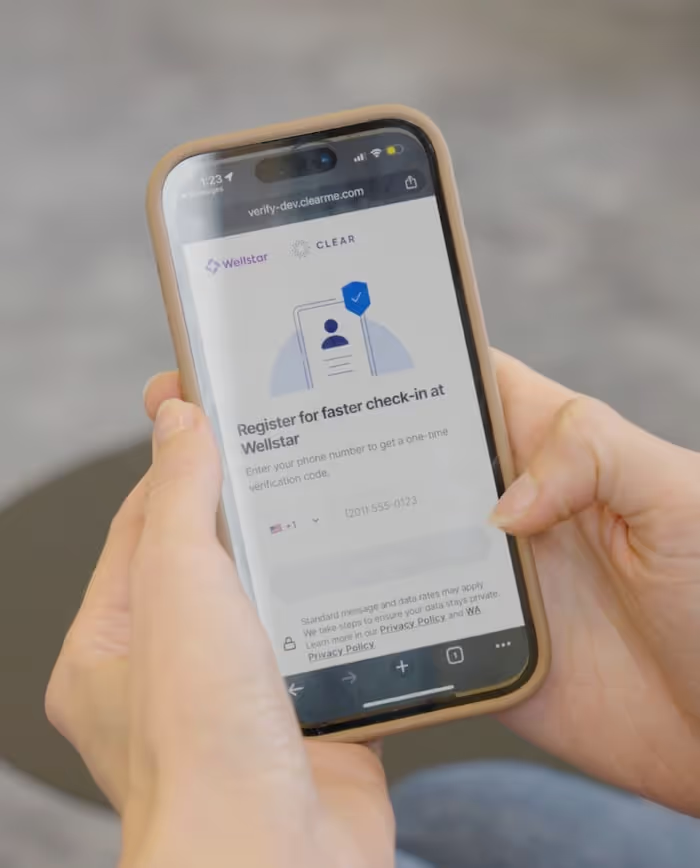
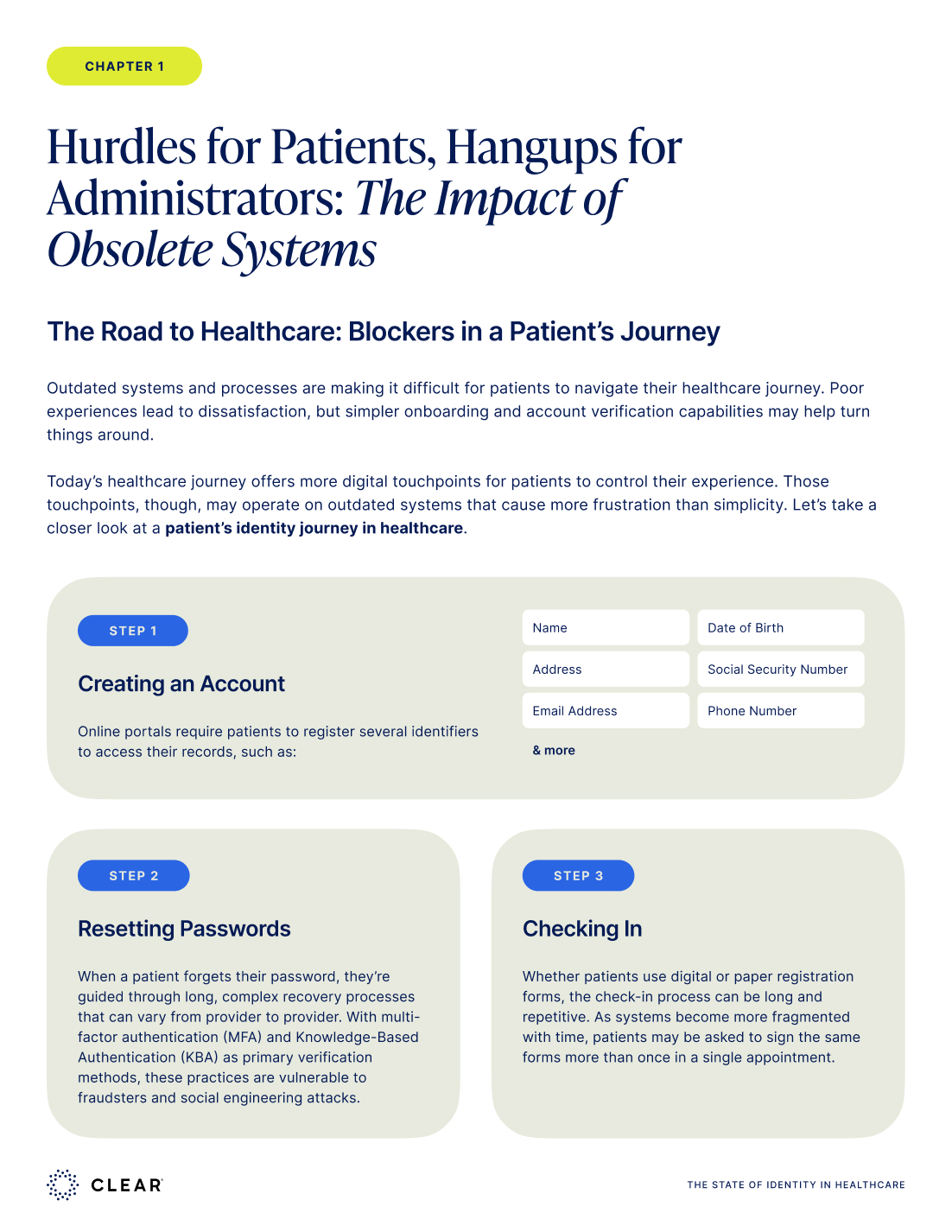
Patient portal creation, account recovery, check-in, and sensitive record access all depend on connecting the request to the right person. Healthcare teams need a transparent consent experience alongside appropriate assurance, accessibility, privacy, and integration controls.
Consumer Touchpoints
Marketplaces, travel, rental, hospitality, media, and other digital businesses may need to verify a customer, seller, applicant, or returning user at several points in the relationship. The relevant question isn't only how to verify someone once; it's how to protect the moments that follow across CLEAR1 use cases.
How to Evaluate a Digital Identity Program or Platform
Compare digital identity verification companies across the full lifecycle—not feature by feature. Start with four questions:
Does the Platform Protect More Than Onboarding?
Look for support for account recovery, step-up verification, sensitive actions, MFA enrollment, and other high-risk workflows. A strong first check has limited value if the next important interaction starts from zero.
Can Identity Be Reused Without Removing Appropriate Controls?
Evaluate the returning-user experience, not only first-time completion. Ask when a selfie is enough, when a document or additional source check is required, and how the platform responds when risk changes.
Does the Platform Fit the Existing Identity Stack?
Review integrations with IAM, customer identity, HR, healthcare, and workflow systems already in use. Compare APIs, hosted flows, low-code options, reporting, and the effort required to test and maintain the deployment.
Is Biometric Privacy Part of the Design?
Ask what the provider collects, controls, stores, shares, deletes, and returns. Users should be informed and explicitly consent before each verification. The organization should understand whether it receives raw biometric data, a verification result, or only the attributes the user has consented to share.
These workforce identity resources offer a deeper evaluation framework. Although it focuses on workforce requirements, its questions apply to any high-assurance digital identity platform.
How CLEAR1 Supports the Full Digital Identity Lifecycle
CLEAR1 takes a multi-layered approach to identity, bringing together biometric verification, document authenticity, source validation, and device security signals. By assessing evidence across the person, document, identity data, and session, it helps organizations verify the person beyond the device and build a more complete picture of identity than any single credential can provide. That identity can then be reused beyond onboarding—from account recovery and step-up actions to sensitive access.
More than 46 million existing CLEAR users can verify with a selfie, while new users complete a one-time setup before re-verifying wherever CLEAR is accepted. Pre-built integrations with Okta, Ping, and Microsoft Entra, along with native mobile and web deployment, fit CLEAR1 into existing authentication and access workflows.
CLEAR handles biometrics, so your organization doesn’t have to. Users explicitly consent before each verification, and CLEAR shares only the information requested and consented to by the user. Organizations remain responsible for their own privacy, security, compliance, retention, and access obligations. This approach helps organizations build trust into high-stakes digital interactions without making security feel like a barrier.
Extend Identity Assurance Beyond Onboarding
Onboarding is only the beginning. CLEAR1 gives organizations a reusable identity layer for the high-stakes moments that follow—from account recovery and step-up actions to sensitive access—so stronger assurance doesn’t have to mean more friction.
Frequently Asked Questions
What is digital identity?
A digital identity lifecycle tracks how a person’s attributes, evidence, credentials, and activity are established, authenticated, used, updated, and deactivated across digital systems.
What is the difference between digital identity and identity verification?
Digital identity spans the attributes, evidence, credentials, and activity associated with a person across systems. Identity verification is the process of establishing or strengthening the connection between that person and a real-world identity using evidence such as a document, biometric sample, authoritative source, or device signal.
What is step-up authentication?
Step-up authentication is an additional authentication challenge triggered by a sensitive action, unusual context, or elevated risk. A step-up challenge may require another code, push approval, passkey, or factor. Step-up verification adds a person-based check to help confirm who is making the request.
Why is account recovery a security risk?
Recovery begins when a normal authentication method is unavailable or untrusted. If the fallback relies on a compromised channel, easily researched information, or a manual judgment call, an attacker may use recovery to take control of a legitimate account.
What is continuous identity verification?
Continuous identity verification means applying identity checks throughout the relationship instead of treating onboarding as the only proofing event. The right cadence depends on the workflow and risk. Common moments include account recovery, sensitive changes, privileged access, MFA enrollment, and high-value transactions.
What is a digital identity lifecycle?
A digital identity lifecycle is the sequence through which an identity is established, authenticated, re-verified at high-risk moments, recovered when access fails, updated as circumstances change, and deactivated when the relationship ends. The lifecycle extends beyond creating and deleting an account record.
Organizations have invested in passwordless credentials, multifactor authentication, device intelligence, and adaptive access policies to make digital access safer and easier, but secure access and verified identity aren't the same thing.
A credential or device can grant access without confirming who's behind the request. That gap matters when someone loses a device, replaces an authenticator, or requests access to something sensitive. At that point, the organization may need to reset a password, replace an MFA factor, or grant access to sensitive information without the credential or device it normally employs to verify the user.
That's why identity assurance needs to extend beyond the first sign-in, across ongoing authentication, step-up verification, account recovery, sensitive actions, and access changes.
This guide begins with the foundations of digital identity, follows the lifecycle from onboarding through offboarding, examines where assurance can break down, and closes with a framework for evaluating platforms that protect high-risk moments.
What is Digital Identity?
Digital identity connects a person to the evidence, credentials, and access decisions associated with them over time. This may include a name and date of birth, a verified document, device information, permissions, access changes, and identity verification results.
Understanding digital identity starts with three questions:
- Who is this person?
- Is the person returning with an approved credential or factor?
- What should this person be allowed to do in this context?
Digital identity verification is the process of establishing or strengthening the connection between a person and a real-world identity. A verification flow may examine a government-issued ID, compare a live selfie to the document portrait, validate identity details against credible or authoritative sources, and evaluate device signals. This assessment determines whether the person presenting the evidence matches the identity being claimed.
Digital identity authentication recognizes a returning user through a password, passkey, security key, device, biometric, or another factor. Authentication is essential for routine access, but possession of a factor doesn't always prove that the current user is the person associated with the account.
Digital identity management connects these elements across the lifecycle, from establishing the identity and connecting the account to governing access and closing the relationship when access should end.
CLEAR1’s digital identity solutions are designed to support each stage.
The Digital Identity Lifecycle
Many digital lifecycle models stop at account provisioning: create, modify, deactivate. That matters for access management, but it doesn't tell the whole identity story.
Organizations need to establish, test, and re-confirm identity across five connected stages of the lifecycle. Each stage addresses a different point in the relationship, and a mistake could expose sensitive data, change account control, move money, or grant privileged access.
1. Proofing at Onboarding
The lifecycle starts with identity proofing. An organization collects evidence, checks whether the document is authentic, connects the document to the person presenting it, and corroborates key details when the use case calls for corroboration.
A document can confirm certain details, but it can't establish identity on its own. Person-based verification, source validation, and device signals add context when additional evidence is warranted.
2. Ongoing Authentication
After onboarding, authentication helps a returning user access an account or service. Passwords, passkeys, security keys, biometrics, and device signals each address a different part of the access problem.
Each authentication method serves a different purpose. The key is understanding what it proves—and what remains unverified.
3. Step-Up Verification at High-Risk Moments
A user may need stronger assurance before changing a payout account, enrolling a new MFA factor, viewing sensitive information, increasing privileges, or completing a high-value transaction.
Step-up authentication typically asks for another credential or factor. Step-up verification goes further by re-confirming the person behind the request. The two approaches can work together, but they're not interchangeable.
4. Account Recovery
Recovery begins when a normal authentication method is unavailable or no longer trusted. A lost phone, forgotten password, compromised inbox, or expired authenticator can push a user into a weaker path precisely when the organization most needs confidence.
Treat recovery as part of the lifecycle, not as an exception outside the main controls.
5. Offboarding and Deactivation
Offboarding is an identity moment, not only an access task. Deactivation policies help prevent dormant accounts and permissions from becoming an overlooked path into sensitive systems.
The assurance question continues here, too. Organizations need accurate identity records and defined ownership when roles change, accounts transfer, or access is revoked.
Why Verifying Identity Only at Account Creation Isn't Enough
Organizations have gotten better at securing initial access. The harder work begins after onboarding, when a credential is already in place.
The MFA Paradox
MFA adoption is rising, as demonstrated by Okta's report that workforce MFA adoption reached 70% as of January 2025. That progress strengthens authentication, but it doesn't answer the next question: who is using the credential?
Microsoft reported a 32% increase in identity-based attacks during the first half of 2025 and described blocking roughly 7,000 password attacks per second across Entra ID. Verizon’s 2025 Data Breach Investigations Report adds another dimension, pointing to the growing role of stolen session tokens and post-authentication abuse in breaches.
These findings don't mean MFA has failed. MFA makes passwords less useful to attackers, but authentication still isn't identity assurance. Control of a phone, security key, or enrolled device doesn't necessarily show that the person using it completed the original proofing process. An attacker may move through a stolen session or reset the authenticator without defeating MFA itself.
Digital identity security adds a person-based layer alongside authentication. That layer complements MFA by protecting the moments when a new factor is enrolled, an existing factor is reset, or a sensitive action requires more confidence.
Step-Up Authentication Solves “When,” Not “Who”
Step-up authentication responds to context. A sensitive transaction, unusual location, new device, privilege change, or profile update can trigger an additional check.
But another code, push approval, or credential may confirm control of an authentication method without confirming the person behind the request. Step-up verification adds that person-based check by asking whether the requester matches the verified identity tied to the account.
A live selfie with liveness detection can provide person-based evidence, while document, source, device, and session signals add corroboration when the use case warrants additional assurance. Authentication controls the access path; identity verification strengthens confidence in the person behind the request.
Account Recovery is the Weak Link
The same gap often widens during account recovery. A user might complete document-backed verification during onboarding, then recover the account through a knowledge-based question, backup email, SMS code, or help desk conversation.
Those channels can be useful signals, but they aren't reliable stand-ins for a person. An inbox can be compromised, a phone can be lost or transferred, and personal details can be researched or purchased. A convincing caller can also manipulate a support team into resetting MFA to a device under someone else's control—a pattern of identity fraud entering through the workforce.
TransUnion reported a 141% increase in global digital account-takeover volume between the first half of 2021 and the first half of 2025 within its customer network. Public reporting on the 2023 attacks against MGM Resorts and Caesars Entertainment likewise showed how social engineering, help desk impersonation, and MFA resets can turn a support interaction into an account takeover path.
Recovery should be risk-matched. High-impact requests need stronger evidence than routine logins, and reusable identity can make that evidence practical without forcing users through a full document workflow every time.
What a Complete Digital Identity Program Covers
Turning the lifecycle into a working program means supporting each stage with the right controls.
Proofing at Onboarding
At onboarding, confirm that a real person is present, that the person matches the identity document, that the document is genuine, and that identity details are consistent with trusted, real-world sources. This creates a stronger baseline for the account and reduces the chance that future workflows inherit a weak or synthetic identity.
Ongoing Authentication
Use appropriate credentials and factors for everyday access. Authentication remains central to digital access. Teams should know what each factor establishes and when person-based verification is still needed.
Step-Up Verification
Add person-based assurance before high-value transactions, changes to payment or recovery details, privileged actions, sensitive data access, or new authenticator enrollment. Risk signals can help determine when more evidence is appropriate.
Account Recovery
Give people a safer way to regain access when their normal factor is unavailable. A recovery flow shouldn't force help desk agents to make an identity decision using only personal details, compromised channels, or an urgent story.
Offboarding and Deactivation
Connect identity records, employment or customer status, roles, and access decisions so organizations can remove permissions when the relationship changes. Identity protection isn't complete if dormant accounts remain active after access should end.
The same model applies to account verification services, reverification, recovery, and sensitive actions.
Reusable Identity: Making Lifecycle-Wide Verification Practical
Reusable identity makes lifecycle-wide verification more practical. Users complete a more thorough setup once, then can often return with a selfie instead of repeating document capture or data entry. Organizations keep a stronger connection between the current requester and the previously verified identity, while users get a faster path through the next sensitive interaction.
Reusable identity isn't a permanent approval. Organizations can request additional evidence when risk changes, circumstances are unusual, or a workflow requires a higher assurance level. Authentication, session security, transaction monitoring, and access policies still matter. With biometric verification, teams can apply this model from account creation through recovery, step-up access, MFA enrollment, and other moments where identity matters.
Digital Identity Across the Business
The same identity gaps appear across industries, even when the workflows look different.
Workforce
The help desk is often the highest-risk recovery point in the employee lifecycle. Teams need person-based checks for hiring, onboarding, MFA enrollment, lost-device recovery, privileged access, and offboarding—core workforce identity use cases.
Financial Services
In financial services, institutions may need stronger assurance at account opening, beneficiary changes, payment-method updates, high-value transactions, and account recovery. Identity verification supports KYC and AML programs but doesn't replace screening, transaction monitoring, or the organization’s broader compliance obligations.
Healthcare
Patient portal creation, account recovery, check-in, and sensitive record access all depend on connecting the request to the right person. Healthcare teams need a transparent consent experience alongside appropriate assurance, accessibility, privacy, and integration controls.
Consumer Touchpoints
Marketplaces, travel, rental, hospitality, media, and other digital businesses may need to verify a customer, seller, applicant, or returning user at several points in the relationship. The relevant question isn't only how to verify someone once; it's how to protect the moments that follow across CLEAR1 use cases.
How to Evaluate a Digital Identity Program or Platform
Compare digital identity verification companies across the full lifecycle—not feature by feature. Start with four questions:
Does the Platform Protect More Than Onboarding?
Look for support for account recovery, step-up verification, sensitive actions, MFA enrollment, and other high-risk workflows. A strong first check has limited value if the next important interaction starts from zero.
Can Identity Be Reused Without Removing Appropriate Controls?
Evaluate the returning-user experience, not only first-time completion. Ask when a selfie is enough, when a document or additional source check is required, and how the platform responds when risk changes.
Does the Platform Fit the Existing Identity Stack?
Review integrations with IAM, customer identity, HR, healthcare, and workflow systems already in use. Compare APIs, hosted flows, low-code options, reporting, and the effort required to test and maintain the deployment.
Is Biometric Privacy Part of the Design?
Ask what the provider collects, controls, stores, shares, deletes, and returns. Users should be informed and explicitly consent before each verification. The organization should understand whether it receives raw biometric data, a verification result, or only the attributes the user has consented to share.
These workforce identity resources offer a deeper evaluation framework. Although it focuses on workforce requirements, its questions apply to any high-assurance digital identity platform.
How CLEAR1 Supports the Full Digital Identity Lifecycle
CLEAR1 takes a multi-layered approach to identity, bringing together biometric verification, document authenticity, source validation, and device security signals. By assessing evidence across the person, document, identity data, and session, it helps organizations verify the person beyond the device and build a more complete picture of identity than any single credential can provide. That identity can then be reused beyond onboarding—from account recovery and step-up actions to sensitive access.
More than 46 million existing CLEAR users can verify with a selfie, while new users complete a one-time setup before re-verifying wherever CLEAR is accepted. Pre-built integrations with Okta, Ping, and Microsoft Entra, along with native mobile and web deployment, fit CLEAR1 into existing authentication and access workflows.
CLEAR handles biometrics, so your organization doesn’t have to. Users explicitly consent before each verification, and CLEAR shares only the information requested and consented to by the user. Organizations remain responsible for their own privacy, security, compliance, retention, and access obligations. This approach helps organizations build trust into high-stakes digital interactions without making security feel like a barrier.
Extend Identity Assurance Beyond Onboarding
Onboarding is only the beginning. CLEAR1 gives organizations a reusable identity layer for the high-stakes moments that follow—from account recovery and step-up actions to sensitive access—so stronger assurance doesn’t have to mean more friction.


