











Gartner®, Deepfake Identity Threats: Mitigate Risk in Identity Verification and Face Biometrics, Akif Khan, Nayara Sangiorgio, James Hoover, 11 May 2026
Gartner® is a trademark of Gartner, Inc. and/or its affiliates.



Share


Share
Key Takeaways
- Identity verification uses evidence to confirm that a person is who they claim to be. A valid document or working credential alone doesn't verify the person making a request.
- Document analysis, biometrics, source validation, and device checks answer different questions. Together, these signals help organizations assess the evidence and verify the person presenting the information.
- Deepfakes, synthetic identities, and account takeover exploit different weaknesses. Combining complementary controls helps address gaps that a single method can miss.
- Verification establishes identity; authentication checks an enrolled credential or factor when a user returns. Sensitive recovery requests and account changes may require additional person-based verification.
- Reusable identity lets returning users re-verify without repeating the full document process. Organizations can request additional evidence when the circumstances warrant stronger checks.
- CLEAR1 combines biometric, document, device, and authoritative data signals to verify the person beyond the device. Reusable identity extends that assurance across onboarding, recovery, and other sensitive interactions.
Before opening an account, granting access, or moving money, businesses need to verify the person making the request. A valid document or working credential alone isn't enough.
Deepfakes, synthetic identities, and stolen credentials exploit different gaps in single-method checks. Strong identity verification combines evidence about the person, document, and session to identify inconsistencies a single check can miss.
This guide explains how verification works, where individual methods fall short, and how a multi-layered approach strengthens assurance across onboarding, recovery, and sensitive account changes.
What is Identity Verification?
Identity verification uses evidence to confirm that a person is who they claim to be. Digital identity verification establishes that connection remotely through factors such as a government-issued ID, a live selfie, real-world records, and device security signals.
A thorough process asks several questions: Is the document authentic? Does the person presenting the ID match the portrait? Do the identity details align with real-world sources? Does the session show signs of capture manipulation? The answers help businesses decide whether to activate an account, grant sensitive access, or request further review.
A successful identity check doesn’t replace controls to detect fraud, manage access, and monitor transactions.
Verification vs. Authentication
Verification establishes a person's connection to an identity. Authentication checks a credential or factor associated with an enrolled account, such as a password, passkey, security key, or biometric.
Strong authentication can protect account access without establishing the account holder's real-world identity. Likewise, a successful onboarding check doesn't confirm that the rightful user is requesting a password reset months later.
The distinction matters when someone loses a phone, replaces an MFA factor, or contacts support for help. Before restoring access, person-based verification helps confirm that the requester matches the account's verified identity.
How Does Identity Verification Work?
Online identity verification typically follows six steps. Several checks may run together, allowing users to complete a short guided experience while the system evaluates the supporting evidence.
- Capture the evidence. The user takes a selfie and scans a government-issued ID. Step-by-step instructions explain what information the business and provider collect, why they need those details, and how consent works.
- Authenticate the document. The system extracts relevant information and examines formatting, security features, expiration, and signs of alteration or counterfeiting.
- Evaluate the biometric sample. Facial matching compares the selfie with the ID portrait. Liveness and Presentation Attack Detection (PAD), Image Attack Detection (IAD), and capture-path protections address different biometric attack risks, as explained below.
- Check device and session signals. Device, phone, and interaction data can reveal inconsistencies or signs that an attacker has manipulated the capture environment.
- Corroborate the identity. Authoritative or credible sources help establish whether submitted details and information from the ID align with real-world records and with one another.
- Return a decision. The business receives a result and applies its policies to proceed, deny access, request another check, or route the case for review.
Automated identity verification can accelerate routine checks, but organizations still need a defined process for handling exceptions. An inconclusive result doesn't necessarily indicate fraud: poor capture quality, missing records, and accessibility barriers can also affect legitimate users.
The process should provide useful evidence for audit and support teams without distributing unnecessary personal information. Identity management solutions connect these decisions to the systems that manage access.
Types of Identity Verification Methods
Each method answers a different question. An identity verification service should combine complementary controls in a single verification process instead of treating document, biometric, and device evidence as interchangeable options.
Document Verification
Document checks evaluate a government-issued credential for authenticity and extract attributes such as name and date of birth. The system examines security features, formatting, and signs of tampering, giving businesses a familiar way to assess identity evidence.
An authentic document doesn’t prove that the person presenting it is the rightful holder. An attacker may use a stolen or borrowed license, while an incomplete review may miss a convincing forgery. Sensitive decisions therefore require additional evidence connecting the credential to the person presenting the ID.
Biometric Verification
Biometric verification often compares a live selfie with an ID portrait. Facial matching links the two images, while liveness controls help assess whether a real person is present.
PAD addresses physical presentation attacks such as photos, screen replays, and masks. IAD provides protection against image-based attacks. Injection defense protects the capture and processing path, where attackers may use software to substitute manipulated media for genuine camera input. These controls serve different purposes; PAD certification alone doesn't establish resistance to injection attacks.
Organizations also need appropriate consent, secure biometric-data handling, accuracy testing, and accessible alternatives. A reliable process depends on those safeguards as well as accurate facial matching.
Knowledge-Based Verification
Knowledge-based verification asks users to recall personal details, past addresses, account information, or answers to security questions. These prompts can simplify implementation, but attackers may obtain the responses through breaches, public records, or social engineering.
Correct responses don't establish ownership of an identity. Legitimate users may also struggle to recall outdated details. For sensitive access and recovery, knowledge-based questions provide weaker evidence than controls that directly connect the requester to a previously verified person.
Database and Data Checks
Source validation compares submitted details with independent records, including issuing-authority information and other credible data sources. These checks can reveal mismatched attributes, unsupported identity combinations, and inconsistencies that an ID image alone may not expose.
Independent records can help reveal synthetic identities built from details that don’t belong to one real person. Coverage and record quality vary, however. A missing match doesn't automatically indicate fraud, and a successful match doesn't verify the person presenting the information. Identity verification software should assess source results alongside document, biometric, and session evidence.
Two-Factor and Device-Based Checks
One-time codes and possession checks establish control of a phone number, inbox, or enrolled device. Device fingerprinting and behavioral signals add context about the session and possible manipulation.
These controls can strengthen access decisions without requiring another document upload. However, an attacker who controls an inbox or device may still pass a possession check. Two-factor authentication protects account access, while device intelligence evaluates context. Neither replaces evidence that connects the requester to a real-world identity.
Why Document-Only and Single-Point Checks Are Failing in 2026
In 2024, Gartner predicted that by 2026, 30% of enterprises would consider identity verification and authentication solutions unreliable in isolation because of AI-generated deepfakes.
The forecast underscores the limits of single-point checks. Deepfakes target biometric capture, synthetic identities exploit plausible records, and account takeover bypasses the assurance established at onboarding. Each requires evidence beyond the signal under attack.
Deepfakes
A deepfake can imitate a real person's face or generate a convincing synthetic one. Attackers can deliver that media through different channels. A screen replay places an image or video in front of a camera; an injection attack feeds manipulated media directly into the verification process.
Entrust's 2026 Identity Fraud Report identified deepfakes in one in five biometric fraud attempts in its dataset. Deepfaked selfie attempts increased 58%, while injection attacks rose 40% year over year. These findings describe attempts within Entrust's network, not all users or digital interactions.
A face match alone can't establish that the sample came from a genuine capture. PAD and IAD help ensure the image from the capture is from a real, live, present person. Source and device checks add independent context.
Synthetic Identities
Synthetic identity fraud combines real and fabricated information into a persona that may not correspond to a single real person. Attackers can cultivate these profiles over time, building histories that make individual details appear credible.
Mitek and Datos Insights research found that 84% of surveyed fraud executives considered synthetic identities a moderate or high risk to application processes. The research described roughly 16% baseline annual growth. Mitek projected that U.S. unsecured-credit losses from synthetic identity fraud would reach $3.12 billion in 2026, up from $1.8 billion in 2020.
A matching face and plausible document don’t establish that the underlying identity is real. Checks against issuing-authority records and other independent sources can reveal details that don’t belong together. Fabricated identities can also build a history in databases over time, so finding a matching record isn’t enough. Businesses need to assess whether the document, selfie, personal details, and device signals support the same identity.
Account Takeover
Account takeover exploits an existing account. Attackers may obtain credentials, compromise a recovery channel, or persuade support to replace an MFA factor. A legitimate user may have completed onboarding successfully, but the current requester may be someone else.
TransUnion reported a 141% increase in global digital account-takeover volume between the first half of 2021 and the first half of 2025 within its customer network.
Onboarding alone can't protect a later recovery or account change. Before resetting a password, changing payout details, or granting privileged access, businesses need to verify the person against the account's established identity. Reusable verification makes those checks practical alongside authentication, session security, and monitoring, while reducing the burden on help desks and streamlining account recovery.
What Multi-Layered Identity Assurance Actually Means
Multi-layered identity assurance addresses the gaps that document-only and credential-based checks leave unresolved. Businesses need corroborating evidence across the person, document, independent records, and session. Each layer helps establish whether the person, document, and supporting details belong together.
An authentic document provides identity attributes. A biometric match connects the portrait to the requester. Source validation checks identity details with real-world sources, while device and session analysis provides context about the interaction. PAD and IAD strengthen the biometric layer.
An effective identity verification platform helps businesses assess conflicting evidence. A genuine document with a mismatched face presents a different problem from a matching face with unsupported identity data. Organizations need enough information to determine whether to proceed, request additional evidence, or review the case.
This combined evidence forms the verification baseline, with additional checks for higher-risk interactions.
Reusable Identity
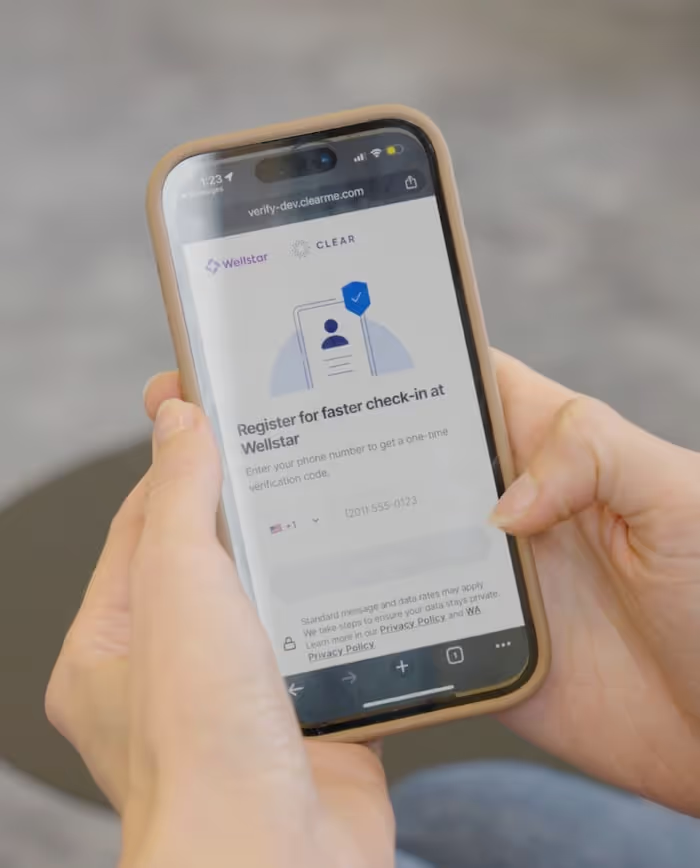
Reusable identity connects future checks to an established identity, reducing the need for repeated document capture. After the initial setup, returning users can re-confirm their identity with a selfie across their organization or anywhere CLEAR exists. Organizations can request more evidence when circumstances change, such as an unusual recovery request or a sensitive transaction. Business policies determine when to re-verify, how to obtain consent, and which results require review.
Identity Verification Regulations and Standards
Requirements vary by industry, jurisdiction, data type, and business activity. Identity verification companies should explain which obligations and standards a deployment supports and which responsibilities remain with the customer.
- NIST identity assurance levels describe the rigor of identity proofing. Identity Assurance Level 2 (IAL2) addresses evidence-based proofing, while Authentication Assurance Level 2 (AAL2) concerns authentication. Stronger sign-in controls don't automatically establish stronger enrollment.
- KYC and AML programs require covered financial institutions to identify customers and manage financial-crime risk. Verification supports those programs but doesn't replace due diligence, screening, transaction monitoring, or reporting.
- HIPAA requires covered entities to verify identity and authority in applicable requests for protected health information. The rule doesn't prescribe a universal biometric method or mandate IAL2 by name. Organizations must select appropriate procedures for their workflows.
- ISO/IEC 30107-3 supports testing and reporting for presentation attack detection. Level 2 PAD testing provides evidence about the evaluated biometric component, not blanket protection against deepfakes or digital injection.
- Privacy requirements govern collection, consent, use, retention, and sharing. GDPR and applicable biometric laws may create additional obligations depending on the deployment.
Evaluate each requirement separately. Ask providers for supporting evidence, confirm the relevant product configuration, and review how the implementation meets your organization's obligations. Standards provide a useful evaluation framework, but legal and compliance teams still need to assess the deployment.
Benefits of Strong Identity Verification
Well-designed identity verification solutions can strengthen security while improving the experience for legitimate users. Organizations should evaluate the impact through measurable outcomes:
- Fraud and loss reduction: corroborating evidence helps identify impersonation, inconsistent applications, and unauthorized recovery requests before businesses grant access.
- Regulatory support: documented checks and detailed decision records help organizations demonstrate how identity controls support a broader compliance program.
- Customer trust: straightforward explanations of data collection, meaningful consent, and responsible handling help users understand how organizations protect their information.
- Higher completion rates: easy-to-follow capture instructions and simpler returning-user flows can reduce avoidable abandonment without removing necessary safeguards.
- Lower operating costs: automated checks can reduce manual review and routine support requests, allowing teams to focus on exceptions.
Evaluate security and usability together. Track confirmed fraud, completion rates, manual review, recovery time, and support demand.
Common Identity Verification Challenges
Strong verification requires deliberate choices about security, accessibility, implementation, and privacy. Organizations should understand those tradeoffs before deployment and monitor the effects over time.
Security and Completion
Additional checks can prevent abuse, but confusing instructions, poor capture quality, and repeated requests may cause legitimate users to abandon the process. Match the evidence to the decision, explain unsuccessful results in plain language, and provide a secure alternative when the standard flow doesn't work.
False Matches and False Rejections
A false match can accept the wrong person, while a false rejection can block the right one. Evaluate performance across relevant populations, devices, and capture conditions. Separate inconclusive results from confirmed fraud so teams can distinguish security outcomes from usability problems.
International Coverage
Document formats, issuing practices, source records, languages, and privacy rules vary. People with limited credit or identity records may need another way to provide evidence. A provider's geographic coverage doesn't guarantee consistent document support or performance across every market.
Integration and Privacy
Legacy systems can complicate deployment, identity matching, and exception handling. Define responsibilities for policy changes, support, audit records, consent, and retention. Confirm which organization controls biometric data and what information reaches downstream systems.
A successful pilot should demonstrate an effective verification flow and a workable support process. Continue reviewing both as users, threats, and business requirements change.
Identity Verification Across the Business
Organizations apply the same core principles across industries, but each workflow needs identity checks that match the risk and a defined process for handling exceptions.
Workforce
Verify employees and contractors during hiring, onboarding, MFA enrollment, help desk recovery, and privileged access.
Healthcare
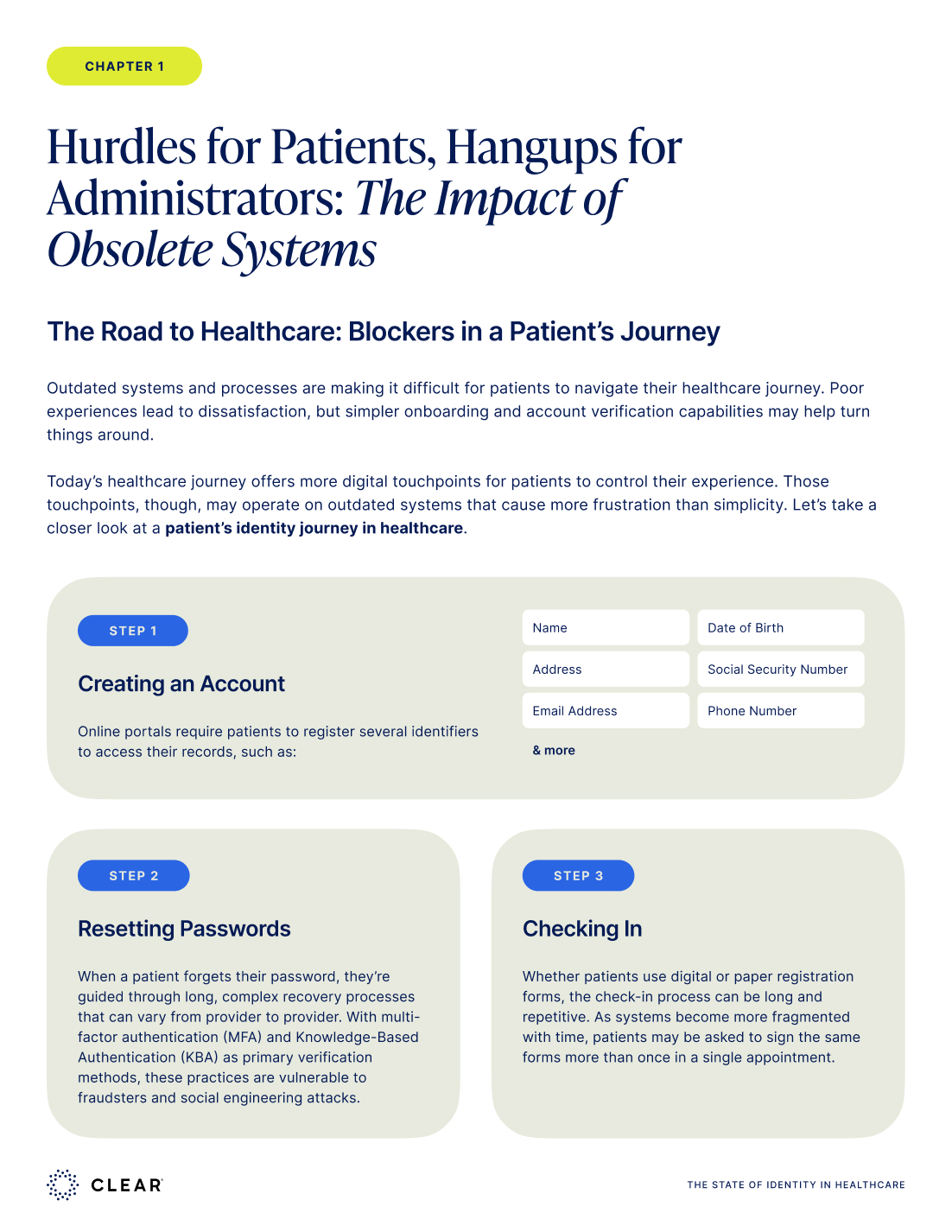
Patient onboarding, portal recovery, and sensitive record access require a reliable connection between the requester and the correct identity. Health systems must also address HIPAA obligations, accessibility, and appropriate assurance levels. Patient identity management integrates verification into healthcare workflows.
Financial Services and KYC
Customer verification supports account opening and subsequent events such as recovery, payment-method changes, and high-value payouts. An identity verification service for KYC provides identity evidence within a broader financial-crime prevention program.
Consumer Verification
Consumer verification helps marketplaces and other digital businesses confirm the person creating an account, requesting account recovery, or changing sensitive account details.
Age Verification
Age verification confirms whether a person meets the required age threshold before accessing restricted products, services, or content. Businesses can apply these checks at signup, checkout, or entry to age-gated experiences.
How to Evaluate an Identity Verification Solution
Compare identity verification companies against the decisions your organization needs to protect. Four questions can guide an initial evaluation:
- How do the signals work together? Review how the provider connects the requester, document, independent records, and session. Confirm which controls establish the baseline and which checks depend on the workflow.
- What happens when users return? Test recovery and sensitive account changes alongside onboarding. Assess whether reusable identity reduces repeated capture while supporting additional checks when needed.
- Does the implementation fit? Review integrations, coverage, accessibility, retries, support, consent, and biometric-data responsibilities. Include exception handling and maintenance in the cost assessment.
- What evidence supports the claims? Examine relevant testing, certification scope, performance across user groups, and audit records. Distinguish identity proofing from authentication, and assess protections against presentation, image, and injection attacks separately.
How CLEAR1 Approaches Identity Verification
CLEAR1 applies a multi-layered identity approach across customer onboarding, workforce access, account recovery, and other sensitive interactions. The platform analyzes hundreds of real-time signals across biometrics, government-issued IDs, devices, and authoritative data sources to verify the person behind each request.
The selfie flow includes PAD certified at ISO/IEC 30107-3 Level 2. Presentation Attack Detection (PAD) adds another layer of biometric protection, while capture-path defenses used for IAD address injected inputs. Together, these controls help detect manipulated biometric samples and protect the verification process against different attack methods.
Backed by more than 16 years of CLEAR's experience in highly regulated environments, CLEAR1 connects initial verification with ongoing identity assurance. More than 46 million existing CLEAR users can verify with a selfie, while new users complete a quick, one-time setup, then reuse their identity across supported workflows. That reusable identity supports account recovery and sensitive access requests.
APIs and pre-built integrations connect CLEAR1 with enterprise systems. With the appropriate configuration and deployment scope, CLEAR1 supports IAL2- and AAL2-aligned workflows and HIPAA requirements. As the controller, CLEAR handles the sensitive biometric layer and shares only requested information with users’ explicit consent.
Power Trust at Every Touchpoint
From account creation to account recovery and every moment in between, verify the person beyond the device with CLEAR1.
{{cta-block}}
Frequently Asked Questions
What is identity verification?
Identity verification connects a person to a claimed identity using evidence such as identity documents, biometrics, independent records, and device signals. Organizations select the appropriate level of assurance for the decision.
How does identity verification work?
A digital flow collects evidence, evaluates the document and biometric sample, checks supporting signals, and returns a result. The business then applies its policies to proceed, deny access, request more evidence, or review the case.
What are the different types of identity verification?
Common methods include document analysis, biometrics, knowledge-based questions, database checks, and device or possession signals. Complementary checks provide a more complete assessment than any single method alone.
Is identity verification the same as authentication?
Verification connects a person to a claimed identity, while authentication checks a credential or factor associated with an account. Sensitive recovery requests may require both.
What is multi-layered identity verification?
Multi-layered verification combines corroborating evidence across the person, document, independent sources, and session. Organizations use that evidence to identify inconsistencies and make stronger decisions at high-risk moments.
What is KYC identity verification?
KYC verification establishes customer identity within a Know Your Customer program. Covered financial institutions also need appropriate due diligence, screening, monitoring, and other controls to meet their KYC and AML obligations.
What is biometric identity verification?
Biometric verification compares a sample, often a selfie, with a trusted reference such as an ID portrait. Liveness and PAD, complementary IAD, and injection defenses strengthen the process; facial matching alone doesn't address every attack path.
Is identity verification required by law?
Some financial-services, healthcare, and other regulated activities require organizations to verify identity. Obligations vary by jurisdiction and workflow, so legal and compliance teams should determine the applicable evidence, consent, retention, and recordkeeping requirements.
Power Trust at Every Touchpoint
Get a DemoBefore opening an account, granting access, or moving money, businesses need to verify the person making the request. A valid document or working credential alone isn't enough.
Deepfakes, synthetic identities, and stolen credentials exploit different gaps in single-method checks. Strong identity verification combines evidence about the person, document, and session to identify inconsistencies a single check can miss.
This guide explains how verification works, where individual methods fall short, and how a multi-layered approach strengthens assurance across onboarding, recovery, and sensitive account changes.
What is Identity Verification?
Identity verification uses evidence to confirm that a person is who they claim to be. Digital identity verification establishes that connection remotely through factors such as a government-issued ID, a live selfie, real-world records, and device security signals.
A thorough process asks several questions: Is the document authentic? Does the person presenting the ID match the portrait? Do the identity details align with real-world sources? Does the session show signs of capture manipulation? The answers help businesses decide whether to activate an account, grant sensitive access, or request further review.
A successful identity check doesn’t replace controls to detect fraud, manage access, and monitor transactions.
Verification vs. Authentication
Verification establishes a person's connection to an identity. Authentication checks a credential or factor associated with an enrolled account, such as a password, passkey, security key, or biometric.
Strong authentication can protect account access without establishing the account holder's real-world identity. Likewise, a successful onboarding check doesn't confirm that the rightful user is requesting a password reset months later.
The distinction matters when someone loses a phone, replaces an MFA factor, or contacts support for help. Before restoring access, person-based verification helps confirm that the requester matches the account's verified identity.
How Does Identity Verification Work?
Online identity verification typically follows six steps. Several checks may run together, allowing users to complete a short guided experience while the system evaluates the supporting evidence.
- Capture the evidence. The user takes a selfie and scans a government-issued ID. Step-by-step instructions explain what information the business and provider collect, why they need those details, and how consent works.
- Authenticate the document. The system extracts relevant information and examines formatting, security features, expiration, and signs of alteration or counterfeiting.
- Evaluate the biometric sample. Facial matching compares the selfie with the ID portrait. Liveness and Presentation Attack Detection (PAD), Image Attack Detection (IAD), and capture-path protections address different biometric attack risks, as explained below.
- Check device and session signals. Device, phone, and interaction data can reveal inconsistencies or signs that an attacker has manipulated the capture environment.
- Corroborate the identity. Authoritative or credible sources help establish whether submitted details and information from the ID align with real-world records and with one another.
- Return a decision. The business receives a result and applies its policies to proceed, deny access, request another check, or route the case for review.
Automated identity verification can accelerate routine checks, but organizations still need a defined process for handling exceptions. An inconclusive result doesn't necessarily indicate fraud: poor capture quality, missing records, and accessibility barriers can also affect legitimate users.
The process should provide useful evidence for audit and support teams without distributing unnecessary personal information. Identity management solutions connect these decisions to the systems that manage access.
Types of Identity Verification Methods
Each method answers a different question. An identity verification service should combine complementary controls in a single verification process instead of treating document, biometric, and device evidence as interchangeable options.
Document Verification
Document checks evaluate a government-issued credential for authenticity and extract attributes such as name and date of birth. The system examines security features, formatting, and signs of tampering, giving businesses a familiar way to assess identity evidence.
An authentic document doesn’t prove that the person presenting it is the rightful holder. An attacker may use a stolen or borrowed license, while an incomplete review may miss a convincing forgery. Sensitive decisions therefore require additional evidence connecting the credential to the person presenting the ID.
Biometric Verification
Biometric verification often compares a live selfie with an ID portrait. Facial matching links the two images, while liveness controls help assess whether a real person is present.
PAD addresses physical presentation attacks such as photos, screen replays, and masks. IAD provides protection against image-based attacks. Injection defense protects the capture and processing path, where attackers may use software to substitute manipulated media for genuine camera input. These controls serve different purposes; PAD certification alone doesn't establish resistance to injection attacks.
Organizations also need appropriate consent, secure biometric-data handling, accuracy testing, and accessible alternatives. A reliable process depends on those safeguards as well as accurate facial matching.
Knowledge-Based Verification
Knowledge-based verification asks users to recall personal details, past addresses, account information, or answers to security questions. These prompts can simplify implementation, but attackers may obtain the responses through breaches, public records, or social engineering.
Correct responses don't establish ownership of an identity. Legitimate users may also struggle to recall outdated details. For sensitive access and recovery, knowledge-based questions provide weaker evidence than controls that directly connect the requester to a previously verified person.
Database and Data Checks
Source validation compares submitted details with independent records, including issuing-authority information and other credible data sources. These checks can reveal mismatched attributes, unsupported identity combinations, and inconsistencies that an ID image alone may not expose.
Independent records can help reveal synthetic identities built from details that don’t belong to one real person. Coverage and record quality vary, however. A missing match doesn't automatically indicate fraud, and a successful match doesn't verify the person presenting the information. Identity verification software should assess source results alongside document, biometric, and session evidence.
Two-Factor and Device-Based Checks
One-time codes and possession checks establish control of a phone number, inbox, or enrolled device. Device fingerprinting and behavioral signals add context about the session and possible manipulation.
These controls can strengthen access decisions without requiring another document upload. However, an attacker who controls an inbox or device may still pass a possession check. Two-factor authentication protects account access, while device intelligence evaluates context. Neither replaces evidence that connects the requester to a real-world identity.
Why Document-Only and Single-Point Checks Are Failing in 2026
In 2024, Gartner predicted that by 2026, 30% of enterprises would consider identity verification and authentication solutions unreliable in isolation because of AI-generated deepfakes.
The forecast underscores the limits of single-point checks. Deepfakes target biometric capture, synthetic identities exploit plausible records, and account takeover bypasses the assurance established at onboarding. Each requires evidence beyond the signal under attack.
Deepfakes
A deepfake can imitate a real person's face or generate a convincing synthetic one. Attackers can deliver that media through different channels. A screen replay places an image or video in front of a camera; an injection attack feeds manipulated media directly into the verification process.
Entrust's 2026 Identity Fraud Report identified deepfakes in one in five biometric fraud attempts in its dataset. Deepfaked selfie attempts increased 58%, while injection attacks rose 40% year over year. These findings describe attempts within Entrust's network, not all users or digital interactions.
A face match alone can't establish that the sample came from a genuine capture. PAD and IAD help ensure the image from the capture is from a real, live, present person. Source and device checks add independent context.
Synthetic Identities
Synthetic identity fraud combines real and fabricated information into a persona that may not correspond to a single real person. Attackers can cultivate these profiles over time, building histories that make individual details appear credible.
Mitek and Datos Insights research found that 84% of surveyed fraud executives considered synthetic identities a moderate or high risk to application processes. The research described roughly 16% baseline annual growth. Mitek projected that U.S. unsecured-credit losses from synthetic identity fraud would reach $3.12 billion in 2026, up from $1.8 billion in 2020.
A matching face and plausible document don’t establish that the underlying identity is real. Checks against issuing-authority records and other independent sources can reveal details that don’t belong together. Fabricated identities can also build a history in databases over time, so finding a matching record isn’t enough. Businesses need to assess whether the document, selfie, personal details, and device signals support the same identity.
Account Takeover
Account takeover exploits an existing account. Attackers may obtain credentials, compromise a recovery channel, or persuade support to replace an MFA factor. A legitimate user may have completed onboarding successfully, but the current requester may be someone else.
TransUnion reported a 141% increase in global digital account-takeover volume between the first half of 2021 and the first half of 2025 within its customer network.
Onboarding alone can't protect a later recovery or account change. Before resetting a password, changing payout details, or granting privileged access, businesses need to verify the person against the account's established identity. Reusable verification makes those checks practical alongside authentication, session security, and monitoring, while reducing the burden on help desks and streamlining account recovery.
What Multi-Layered Identity Assurance Actually Means
Multi-layered identity assurance addresses the gaps that document-only and credential-based checks leave unresolved. Businesses need corroborating evidence across the person, document, independent records, and session. Each layer helps establish whether the person, document, and supporting details belong together.
An authentic document provides identity attributes. A biometric match connects the portrait to the requester. Source validation checks identity details with real-world sources, while device and session analysis provides context about the interaction. PAD and IAD strengthen the biometric layer.
An effective identity verification platform helps businesses assess conflicting evidence. A genuine document with a mismatched face presents a different problem from a matching face with unsupported identity data. Organizations need enough information to determine whether to proceed, request additional evidence, or review the case.
This combined evidence forms the verification baseline, with additional checks for higher-risk interactions.
Reusable Identity
Reusable identity connects future checks to an established identity, reducing the need for repeated document capture. After the initial setup, returning users can re-confirm their identity with a selfie across their organization or anywhere CLEAR exists. Organizations can request more evidence when circumstances change, such as an unusual recovery request or a sensitive transaction. Business policies determine when to re-verify, how to obtain consent, and which results require review.
Identity Verification Regulations and Standards
Requirements vary by industry, jurisdiction, data type, and business activity. Identity verification companies should explain which obligations and standards a deployment supports and which responsibilities remain with the customer.
- NIST identity assurance levels describe the rigor of identity proofing. Identity Assurance Level 2 (IAL2) addresses evidence-based proofing, while Authentication Assurance Level 2 (AAL2) concerns authentication. Stronger sign-in controls don't automatically establish stronger enrollment.
- KYC and AML programs require covered financial institutions to identify customers and manage financial-crime risk. Verification supports those programs but doesn't replace due diligence, screening, transaction monitoring, or reporting.
- HIPAA requires covered entities to verify identity and authority in applicable requests for protected health information. The rule doesn't prescribe a universal biometric method or mandate IAL2 by name. Organizations must select appropriate procedures for their workflows.
- ISO/IEC 30107-3 supports testing and reporting for presentation attack detection. Level 2 PAD testing provides evidence about the evaluated biometric component, not blanket protection against deepfakes or digital injection.
- Privacy requirements govern collection, consent, use, retention, and sharing. GDPR and applicable biometric laws may create additional obligations depending on the deployment.
Evaluate each requirement separately. Ask providers for supporting evidence, confirm the relevant product configuration, and review how the implementation meets your organization's obligations. Standards provide a useful evaluation framework, but legal and compliance teams still need to assess the deployment.
Benefits of Strong Identity Verification
Well-designed identity verification solutions can strengthen security while improving the experience for legitimate users. Organizations should evaluate the impact through measurable outcomes:
- Fraud and loss reduction: corroborating evidence helps identify impersonation, inconsistent applications, and unauthorized recovery requests before businesses grant access.
- Regulatory support: documented checks and detailed decision records help organizations demonstrate how identity controls support a broader compliance program.
- Customer trust: straightforward explanations of data collection, meaningful consent, and responsible handling help users understand how organizations protect their information.
- Higher completion rates: easy-to-follow capture instructions and simpler returning-user flows can reduce avoidable abandonment without removing necessary safeguards.
- Lower operating costs: automated checks can reduce manual review and routine support requests, allowing teams to focus on exceptions.
Evaluate security and usability together. Track confirmed fraud, completion rates, manual review, recovery time, and support demand.
Common Identity Verification Challenges
Strong verification requires deliberate choices about security, accessibility, implementation, and privacy. Organizations should understand those tradeoffs before deployment and monitor the effects over time.
Security and Completion
Additional checks can prevent abuse, but confusing instructions, poor capture quality, and repeated requests may cause legitimate users to abandon the process. Match the evidence to the decision, explain unsuccessful results in plain language, and provide a secure alternative when the standard flow doesn't work.
False Matches and False Rejections
A false match can accept the wrong person, while a false rejection can block the right one. Evaluate performance across relevant populations, devices, and capture conditions. Separate inconclusive results from confirmed fraud so teams can distinguish security outcomes from usability problems.
International Coverage
Document formats, issuing practices, source records, languages, and privacy rules vary. People with limited credit or identity records may need another way to provide evidence. A provider's geographic coverage doesn't guarantee consistent document support or performance across every market.
Integration and Privacy
Legacy systems can complicate deployment, identity matching, and exception handling. Define responsibilities for policy changes, support, audit records, consent, and retention. Confirm which organization controls biometric data and what information reaches downstream systems.
A successful pilot should demonstrate an effective verification flow and a workable support process. Continue reviewing both as users, threats, and business requirements change.
Identity Verification Across the Business
Organizations apply the same core principles across industries, but each workflow needs identity checks that match the risk and a defined process for handling exceptions.
Workforce
Verify employees and contractors during hiring, onboarding, MFA enrollment, help desk recovery, and privileged access.
Healthcare
Patient onboarding, portal recovery, and sensitive record access require a reliable connection between the requester and the correct identity. Health systems must also address HIPAA obligations, accessibility, and appropriate assurance levels. Patient identity management integrates verification into healthcare workflows.
Financial Services and KYC
Customer verification supports account opening and subsequent events such as recovery, payment-method changes, and high-value payouts. An identity verification service for KYC provides identity evidence within a broader financial-crime prevention program.
Consumer Verification
Consumer verification helps marketplaces and other digital businesses confirm the person creating an account, requesting account recovery, or changing sensitive account details.
Age Verification
Age verification confirms whether a person meets the required age threshold before accessing restricted products, services, or content. Businesses can apply these checks at signup, checkout, or entry to age-gated experiences.
How to Evaluate an Identity Verification Solution
Compare identity verification companies against the decisions your organization needs to protect. Four questions can guide an initial evaluation:
- How do the signals work together? Review how the provider connects the requester, document, independent records, and session. Confirm which controls establish the baseline and which checks depend on the workflow.
- What happens when users return? Test recovery and sensitive account changes alongside onboarding. Assess whether reusable identity reduces repeated capture while supporting additional checks when needed.
- Does the implementation fit? Review integrations, coverage, accessibility, retries, support, consent, and biometric-data responsibilities. Include exception handling and maintenance in the cost assessment.
- What evidence supports the claims? Examine relevant testing, certification scope, performance across user groups, and audit records. Distinguish identity proofing from authentication, and assess protections against presentation, image, and injection attacks separately.
How CLEAR1 Approaches Identity Verification
CLEAR1 applies a multi-layered identity approach across customer onboarding, workforce access, account recovery, and other sensitive interactions. The platform analyzes hundreds of real-time signals across biometrics, government-issued IDs, devices, and authoritative data sources to verify the person behind each request.
The selfie flow includes PAD certified at ISO/IEC 30107-3 Level 2. Presentation Attack Detection (PAD) adds another layer of biometric protection, while capture-path defenses used for IAD address injected inputs. Together, these controls help detect manipulated biometric samples and protect the verification process against different attack methods.
Backed by more than 16 years of CLEAR's experience in highly regulated environments, CLEAR1 connects initial verification with ongoing identity assurance. More than 46 million existing CLEAR users can verify with a selfie, while new users complete a quick, one-time setup, then reuse their identity across supported workflows. That reusable identity supports account recovery and sensitive access requests.
APIs and pre-built integrations connect CLEAR1 with enterprise systems. With the appropriate configuration and deployment scope, CLEAR1 supports IAL2- and AAL2-aligned workflows and HIPAA requirements. As the controller, CLEAR handles the sensitive biometric layer and shares only requested information with users’ explicit consent.
Power Trust at Every Touchpoint
From account creation to account recovery and every moment in between, verify the person beyond the device with CLEAR1.
{{cta-block}}


